
具体描述
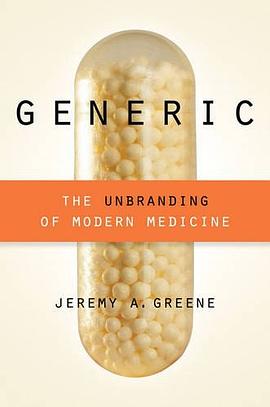
Generic drugs are now familiar objects in clinics, drugstores, and households around the world. We like to think of these tablets, capsules, patches, and ointments as interchangeable with their brand-name counterparts: why pay more for the same? And yet they are not quite the same. They differ in price, in place of origin, in color, shape, and size, in the dyes, binders, fillers, and coatings used, and in a host of other ways. Claims of generic equivalence, as physician-historian Jeremy Greene reveals in this gripping narrative, are never based on being identical to the original drug in all respects, but in being the same in all ways that matter.
How do we know what parts of a pill really matter? Decisions about which differences are significant and which are trivial in the world of therapeutics are not resolved by simple chemical or biological assays alone. As Greene reveals in this fascinating account, questions of therapeutic similarity and difference are also always questions of pharmacology and physiology, of economics and politics, of morality and belief.
Generic is the first book to chronicle the social, political, and cultural history of generic drugs in America. It narrates the evolution of the generic drug industry from a set of mid-twentieth-century "schlock houses" and "counterfeiters" into an agile and surprisingly powerful set of multinational corporations in the early twenty-first century.
The substitution of bioequivalent generic drugs for more expensive brand-name products is a rare success story in a field of failed attempts to deliver equivalent value in health care for a lower price. Greene’s history sheds light on the controversies shadowing the success of generics: problems with the generalizability of medical knowledge, the fragile role of science in public policy, and the increasing role of industry, marketing, and consumer logics in late-twentieth-century and early twenty-first century health care.
作者简介
Jeremy A. Greene, M.D., Ph.D., is associate professor of medicine and the history of medicine and the Elizabeth Treide and A. McGehee Harvey Chair in the History of Medicine at the Johns Hopkins University School of Medicine. He is the author of Prescribing by Numbers: Drugs and the Definition of Disease and coeditor of Prescribed: Writing, Filling, Using, and Abusing the Prescription in Modern America, both published by Johns Hopkins.
目录信息
读后感
用户评价
《Generic》是一本值得反复品读的书。每一次重读,都能从中发现新的亮点,获得新的启示。 我毫不犹豫地向所有热爱文学的朋友推荐这本书,相信你们也一定会为它所折服。
评分阅读《Generic》的过程,就像是在经历一场心灵的洗礼。我感受到了文字的力量,它能够唤醒沉睡的情感,能够启迪蒙昧的心灵。 书中对于复杂人际关系的刻画,尤其令我印象深刻。它展现了人与人之间那微妙而又深刻的联系,以及这些联系所带来的影响。
评分《Generic》给我留下了深刻的印象,它以一种非凡的艺术造诣,探讨了人类生存的永恒主题。书中的每一个情节、每一个人物,都经过了精心打磨,散发着独特的光芒。 我特别喜欢作者对环境的细致描绘,它们不仅是故事发生的背景,更是烘托人物情感、推动情节发展的重要元素。
评分《Generic》以一种极其引人入胜的方式,描绘了一幅宏大的社会图景。作者对细节的捕捉堪称完美,无论是街头巷尾的市井气息,还是人物内心深处的微妙情感,都被描绘得栩栩如生。我仿佛亲身置身于那个时代、那个场景,感受着角色的喜怒哀乐。 书中的叙事节奏把握得恰到好处,时而舒缓,时而紧张,总能牢牢抓住我的注意力。我迫不及待地想知道接下来会发生什么,这种悬念的设置极大地增强了阅读的沉浸感。
评分我为《Generic》所展现出的思想深度而惊叹。它不仅仅是在讲述一个故事,更是在引发读者对人生、对社会、对世界的思考。 书中关于成长与蜕变的描绘,让我看到了生命的力量,以及在经历风雨后重生的希望。
评分《Generic》是一本能够触动灵魂的书。它用真挚的情感,描绘了人生中的种种可能,以及我们在追求幸福过程中所经历的酸甜苦辣。 我被那些充满力量的对话所吸引,它们不仅仅是角色的言语,更是他们内心真实的写照。
评分《Generic》是一本能够让你沉浸其中,忘却时间的书。它以其独特的魅力,将我带入了一个充满想象和情感的世界。 我欣赏作者在叙事上的大胆创新,它打破了传统的束缚,为我带来了全新的阅读体验。
评分我很难用简单的词汇来概括《Generic》带给我的震撼。它不仅仅是一本小说,更像是一次对生命意义的深刻反思。书中传递出的关于爱、关于失去、关于希望的主题,在我心中激荡起久久不能平息的波澜。 作者用一种近乎诗意的语言,触碰了我内心最柔软的部分。我被那些充满哲思的句子所打动,它们仿佛是穿越时空的智慧之光,照亮了我前行的道路。
评分读完《Generic》这本书,我内心的感受复杂而又难以言喻。它就像一扇窗,让我窥见了人类内心深处那片既熟悉又陌生的土地。作者在字里行间流淌出的细腻情感,如同涓涓细流,缓缓渗透进我的心扉,激起层层涟漪。我被书中角色的命运所牵引,为他们的挣扎而揪心,为他们的成长而欣慰。每一次翻页,都仿佛在与书中人物进行一场深刻的灵魂对话。 这本书最令我着迷的,莫过于它对人性的多维度探索。它没有简单地将人物划分为善与恶,而是深入挖掘了他们行为背后的动机、恐惧以及潜藏的欲望。这种复杂性让我看到了一个更加真实、更加立体的世界。我看到了角色在道德困境中的挣扎,看到了他们在面对选择时的犹豫,更看到了他们在逆境中爆发出的惊人力量。
评分《Generic》给我带来了一场前所未有的阅读盛宴。我沉醉于作者精妙的文笔,沉醉于书中人物的命运。 这本书让我重新审视了自己,也让我对生活有了更深的理解和感悟。
评分被文化史的执着带得有点飘起来了
评分被文化史的执着带得有点飘起来了
评分需要改变的问题
评分需要改变的问题
评分被文化史的执着带得有点飘起来了