
具体描述
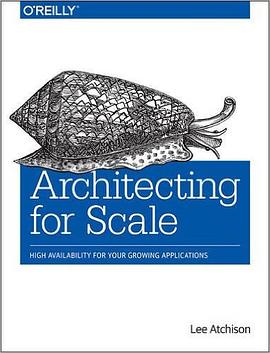
Every day, companies struggle to scale critical applications. As traffic volume and data demands increase, these applications become more complicated and brittle, exposing risks and compromising availability. This practical guide shows IT, devops, and system reliability managers how to prevent an application from becoming slow, inconsistent, or downright unavailable as it grows.Scaling isn’t just about handling more users; it’s also about managing risk and ensuring availability. Author Lee Atchison provides basic techniques for building applications that can handle huge quantities of traffic, data, and demand without affecting the quality your customers expect.In five parts, this book explores:Availability: learn techniques for building highly available applications, and for tracking and improving availability going forwardRisk management: identify, mitigate, and manage risks in your application, test your recovery/disaster plans, and build out systems that contain fewer risksServices and microservices: understand the value of services for building complicated applications that need to operate at higher scaleScaling applications: assign services to specific teams, label the criticalness of each service, and devise failure scenarios and recovery plansCloud services: understand the structure of cloud-based services, resource allocation, and service distribution
作者简介
Lee Atchison is a Principal Engineer and Architecture Lead at New Relic. He’s been with New Relic for nearly four years where, among other things, he designed and lead the building of the New Relic Platform and infrastructure products. As architect lead, Lee has helped New Relic build a solid service-based system architecture that scales as they have grown from a simple SaaS startup to a high traffic public enterprise.
Lee has committed his career to architecting and building high scale, cloud-based, service oriented, SaaS applications. He has a specific expertise in building highly available systems.
Lee learned cloud-based, scalable systems while working seven years as a Senior Manager and Principal Program Manager at Amazon.com. At Amazon, he led the creation of the company’s first software download store (app store), created AWS Elastic Beanstalk offering (Platform as a Service), and lead the team that managed the migration of Amazon’s retail platform from a monolith to an SOA-based architecture.
Additionally, Lee spent several years in the network management space working for two different startups, and twelve years in the Test & Measurement space at Hewlett Packard. At Hewlett Packard, among other things, he lead standardization work for key IEEE and industry standards in the T&M sector, and wrote a book on building T&M software systems published by Prentice Hall.
Overall, Lee has 28 years of industry experience. He has worked in companies of all size, from very small startups to very large corporate enterprises (such as Hewlett Packard), and all sizes in between. He has multiple patents, including a patent for dynamically managing compute capacity for web page requests at Amazon/AWS (patent #20140156835).
目录信息
读后感
Every day, companies struggle to scale critical applications. As traffic volume and data demands increase, these applications become more complicated and brittle, exposing risks and compromising availability. This practical guide shows IT, devops, and syste...
评分Every day, companies struggle to scale critical applications. As traffic volume and data demands increase, these applications become more complicated and brittle, exposing risks and compromising availability. This practical guide shows IT, devops, and syste...
评分Every day, companies struggle to scale critical applications. As traffic volume and data demands increase, these applications become more complicated and brittle, exposing risks and compromising availability. This practical guide shows IT, devops, and syste...
评分Every day, companies struggle to scale critical applications. As traffic volume and data demands increase, these applications become more complicated and brittle, exposing risks and compromising availability. This practical guide shows IT, devops, and syste...
评分Every day, companies struggle to scale critical applications. As traffic volume and data demands increase, these applications become more complicated and brittle, exposing risks and compromising availability. This practical guide shows IT, devops, and syste...
用户评价
翻开这本书,一股强烈的实战气息扑面而来,它彻底颠覆了我之前对“高可用”的刻板印象。过去我总觉得高可用就是多部署几台服务器,加个负载均衡器就完事大吉了,但这本书用无可辩驳的实例证明了,真正的规模化是系统思维的较量。作者对于复杂系统中的“瓶颈识别”环节着墨颇多,他们提出了一套系统的度量框架,不再仅仅依赖CPU和内存指标,而是深入到请求延迟分布、尾部延迟(P99, P99.9)的捕获与优化上。这套方法论对于优化用户体验至关重要,因为最终决定用户感受的往往是那少数几个慢请求。书中还探讨了灰度发布和蓝绿部署在超大规模环境下的自动化部署流水线如何协同工作,确保新版本上线时对现有流量的影响降至最低。我特别欣赏作者在描述消息队列设计模式时所展现出的细腻:如何处理消息丢失、如何应对生产者和消费者的速率不匹配,以及如何利用事件溯源(Event Sourcing)来构建可回溯的业务状态。对于任何渴望将自己的应用带入“百万级用户”俱乐部的技术领导者来说,这本书提供的洞察力是无价的。
评分令人振奋的是,本书并没有拘泥于单一的技术栈,它保持了极高的技术中立性,专注于解决底层架构挑战,这使得它的适用范围极其广泛。我尤其赞赏作者对“全局容灾”策略的深度剖析。书中不仅仅提到了传统的主备切换,而是深入探讨了基于RPO/RTO目标设定的多活数据中心架构的复杂权衡,以及在跨云环境或混合云部署中,如何安全有效地实现数据同步和治理。对于那些正在为全球化扩张做准备的公司来说,这一部分内容简直是及时雨。此外,书中关于安全性和合规性融入高可用流程的章节也十分出色,它阐述了如何在不牺牲性能的前提下,实现身份验证的分布式化以及数据加密的透明化处理。这种对所有非功能性需求的综合考量,体现了作者对现代企业级应用复杂性的深刻理解。这本书读起来像是一次长途但充实的学习之旅,每翻过一页,都能感受到自己的技术视野在不断拓宽。
评分这本书的叙事风格非常严谨,但又不失亲和力,它像是资深专家在向一群有抱负的工程师传授“内功心法”。我发现它在处理跨职能协作方面也提供了极具价值的见解。在高可用架构的构建过程中,开发、运维(DevOps)和安全团队之间的界限往往非常模糊,这本书清晰地界定了每个角色的责任范围,尤其是在自动化治理和SRE(站点可靠性工程)实践的落地方面。它详细描述了如何通过基础设施即代码(IaC)工具链,实现对弹性资源的秒级伸缩,这不仅仅是技术实现,更是一种组织效率的提升。书中对服务网格(Service Mesh)的介绍,特别是它在流量管理、熔断和故障注入测试(Chaos Engineering)中的应用,展现了现代云原生架构的复杂性和美感。读到关于“非功能性需求驱动的设计决策”的那一章时,我深有感悟,它强调了在项目初期就必须将可用性、可观测性和可扩展性纳入核心设计范畴,而非事后打补丁。这本书无疑是一部关于如何构建“活着的、自我修复的”系统的操作手册。
评分这本新书简直是为那些正被应用规模不断膨胀所困扰的架构师和开发团队量身定做的指南。我手里拿着的这本《面向规模的架构设计:为您的成长型应用构建高可用性》与其说是一本书,不如说是一张精密的路线图。它深入浅出地剖析了在系统负载呈指数级增长时,如何从根本上重塑应用的基础设施和设计哲学。尤其让我印象深刻的是,作者并没有仅仅停留在理论层面,而是提供了大量基于真实世界案例的实践性建议。例如,它详尽地阐述了分布式事务处理的几种主流模式,并对比了它们在不同一致性要求下的性能权衡,这一点对于任何想要从单体应用向微服务迁移的团队都是至关重要的参考。书中对数据持久化层的高级优化策略,比如跨地域的数据复制拓扑、故障转移的自动化流程设计,都进行了非常细致的讲解,远超一般教程的深度。读完之后,我感觉自己对于“韧性”的理解上升到了一个新的高度,不再是简单地堆砌冗余硬件,而是通过智能化的设计,让系统能够在面对不可预见的故障时,依然能优雅地自我修复和维持服务。这无疑是一本能直接转化为生产力的案头必备工具书。
评分这本书最让我感到震撼的是其对“可观测性(Observability)”的全面覆盖和深度挖掘。在传统监控的基础上,作者构建了一套基于Tracing、Metrics和Logging三位一体的闭环反馈系统,并着重强调了如何利用这些数据来预测潜在的容量危机,而不是被动响应已发生的宕机。书中提供的关于分布式追踪的实现细节,特别是如何高效地采样和聚合海量追踪数据,对于优化微服务间的调用链至关重要。他们甚至探讨了如何将这些观测数据接入到机器学习模型中,以实现更精准的自动扩缩容和故障根因分析。这种前瞻性的视角,让我意识到我们当前的监控实践可能还停留在“看仪表盘”的初级阶段。这本书不仅仅是教授如何“构建”高可用系统,更重要的是教授如何“维护和进化”这些系统,确保它们能够持续应对不断变化的市场需求和技术挑战。这是一部极具前瞻性和实操价值的杰作,强烈推荐给所有致力于构建下一代互联网服务的工程师。
评分中文版,可伸缩架构
评分中文版,可伸缩架构
评分中文版,可伸缩架构
评分中文版,可伸缩架构
评分中文版,可伸缩架构