
具体描述
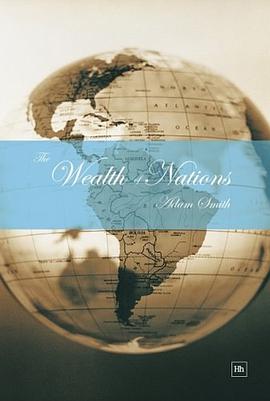
"The Wealth of Nations" is a treasured classic of political economy. First published in March of 1776, Adam Smith wrote the book to influence a special audience - the British Parliament - and its arguments in the early spring of that year pressed for peace and cooperation with Britain's colonies rather than war. Smith's message was that economic exploitation, through the monopoly trade of empire, stifled wealth-creation in both home and foreign lands. Moreover, protectionism preserved the status quo, and privileged a few elites at the expense of long run growth. Smith wrote, 'It is the industry which is carried on for the benefit of the rich and the powerful that is principally encouraged by our mercantile system. That which is carried on for the benefit of the poor and the indigent is too often either neglected or oppressed.' This edition, based on the classic Cannan version of the text, includes a foreword by George Osborne MP and an introduction by Jonathan B. Wight, University of Richmond, which aims to place the work in a business context. Wight also provides an invaluable 'Notable Quotes' section where he extracts and categorises some of the most famous and pertinent sections of Smith's work. This classic work is as essential today as it was when it first written.
作者简介
亚当·斯密(Adam Smith, 1723-1790)是经济学的主要创立者。他于1723年出生在苏格兰的克科底,青年时就读于牛津大学。1751年到1764年在格斯哥大学担任哲学教授。在此期间发表了他的第一部著作《道德情操论》,确立了他在知识界的威望。但是他的不朽名声主要在于他在1776年发表的伟大著作《国家财富的性质和原因的研究》。该书一举成功,使他在余生中享受着荣誉和爱戴。1790年,亚当·斯密在克科底去逝。他一生未娶,没有子女。
目录信息
读后感
大学时候,迷上了经济学,其实在高中就喜欢政治,历史。不过直到接触到经济学之后,才发现,原来社会竟然能够被分析的这样淋漓透彻。 大学期间,读了很多的经济学的著作,不过开始的时候都是读最近期的,可是近期的著作数学用的越来越高深,我虽然学的是工科,可是大学的时候...
评分几日前在Frankling同学一席话的提点下,思绪又不自觉的在Shadow Kingdom的意念城墙边流连。神游无伤大雅,不想那蜉蝣天地、沧海一粟的悲凉绕呀绕,竟绕出了一桩珍藏已久的暖心事情来。 多年前和夫人还只是好友时,有一回心血来潮,结伴前往西什库天主教堂,期望目睹我主之荣光...
评分几日前在Frankling同学一席话的提点下,思绪又不自觉的在Shadow Kingdom的意念城墙边流连。神游无伤大雅,不想那蜉蝣天地、沧海一粟的悲凉绕呀绕,竟绕出了一桩珍藏已久的暖心事情来。 多年前和夫人还只是好友时,有一回心血来潮,结伴前往西什库天主教堂,期望目睹我主之荣光...
评分很佩服该书的两位译者!两位译者有一项独特的能力,他们写的每一个字你都能看懂,但是你就是不知道他这句话是什么意思。妈的!
评分老子曾经说,“太上,下知有之。其次,亲而誉之。其次,畏之。其次,侮之。信不足,焉有不信。犹兮其贵言,功成事遂,百姓皆谓我自然。”老子理想中的政治是一种放任无为的政治,最好的政府(统治者)应是一个无为的政府,老百姓知道他的存在就可以了。好政府是很少发...