
具体描述
Front Flap In business and investing, risk has traditionally been viewed negatively: investors and companies can lose money due to risk and therefore we typically penalize companies for taking risks. That's why most books on risk management focus strictly on hedging or mitigating risk. But the enterprise's relationship with risk should be far more nuanced. Great companies become great because they seek out and exploit intelligent risks, not because they avoid all risk. Strategic Risk Taking: A Framework for Risk Management is the first book to take this broader view, encompassing both risk hedging at one end of the spectrum and strategic risk taking on the other. World-renowned financial pioneer Aswath Damodaran--one of BusinessWeek's top 12 business school professors--is singularly well positioned to take this strategic view. Here, Damodaran helps you separate good risk (opportunities) from bad risk (threats), showing how to utilize the former while protecting yourself against the latter. He introduces powerful financial tools for evaluating risk, and demonstrates how to draw on other disciplines to make these tools even more effective. Simply put, Damodaran has written the first book that helps you use risk to increase firm value, drive higher growth and returns, and create real competitive advantage. / Risk: the history and the psychology The non-financial realities you must understand to successfully manage risk / Risk assessment: from the basics to the cutting edge Risk Adjusted Value, probabilistic approaches, Value at Risk, and more / Utilizing the power of real options Extending option pricing models to reflect the potential upside of risk exposure / Risk management: the big picture Integrating traditional finance with corporate strategy--and using risk strategically Back Flap About the Author Aswath Damodaran, Professor of Finance at NYU's Stern School of Business, has been profiled in BusinessWeek as one of the United States' top twelve business school professors. His researchinterests include valuation, portfolio management, and applied corporate finance. He is the author of Damodaran on Valuation; Investment Valuation; The Dark Side of Valuation; Corporate Finance: Theory and Practice; Applied Corporate Finance; and most recently, Investment Fables. Damodaran has published in The Journal of Financial and Quantitative Analysis, The Journal of Finance, The Journal of Financial Economics, and The Review of Financial Studies. Back Cover Beyond Traditional Hedging: How to Use Risk Management Financial Techniques Strategically! /How to determine which risks to ignore, which to protect against, and which to actively exploit /By Aswath Damodaran, leading finance authority and one of BusinessWeek's top 12 business school professors /For every corporate finance executive, manager, analyst, consultant, researcher, and student In recent years, risk management has been defined as merely eliminating or reducing risk exposure. Companies are learning today that is far too narrow and constraining a definition. Risk, exploited judiciously, is absolutely central to business success. In Strategic Risk Taking: A Framework for Risk Management, Aswath Damodaran covers both sides of the risk equation, offering a complete framework for maximizing profit by limiting some risks and exploiting others. Damodaran presents a thorough and insightful review of the state-of-the-art in risk measurement, hedging, and mitigation. He covers a broad spectrum of risk assessment tools, including risk adjusted value, scenario analysis, decision trees, VAR, and real options. But Damodaran goes far beyond other treatments of the subject, helping you decide when to deliberately increase exposure to certain risks, and clearly assess the potential dangers and payoffs of doing so. http://pages.stern.nyu.edu/~adamodar/
作者简介
目录信息
读后感
用户评价
如果非要给这本书下一个定义,我想它更像是一面镜子,而不是一张地图。它不会告诉你具体的路线,但会清晰地反射出你自身在面对不确定性时的偏见和盲点。我发现,书中最发人深省的部分,在于它对“风险偏好”的心理学基础的剖析。作者深入探讨了文化、个人经历乃至大脑化学反应如何影响我们对风险信号的解读。这使得这本书具备了一种强大的自我认知工具属性。例如,它提出了一个观点:许多组织声称追求创新,但其内部的激励机制和问责体系却无形中惩罚了所有承担合理风险的人。读到这里,我不得不反思我们公司内部的晋升体系和绩效评估,看看它们是不是在鼓励平庸而非卓越。这本书的价值在于它的反常识性,它挑战了许多被奉为圭臬的“最佳实践”。它鼓励读者去质疑权威,去重新审视那些被认为是“常识”的风险规避手段,是否在特定情境下反而成了增长的枷锁。总的来说,这是一本需要反复咀嚼,并且每一次都能从中发掘出新层次含义的深刻作品。
评分这本书的叙事节奏把握得非常巧妙,它不像那种教科书式的、平铺直叙的论述,反而更像是一部精彩的商业传记混搭了深刻的战略分析。我特别喜欢它对“可逆性”与“不可逆性”决策的区分。作者用一种近乎侦探小说的笔法,层层剥开那些重大商业失误的表象,直指决策者在信息不完全状态下所做出的权衡。举例来说,书中对某次大型并购案的分析,不仅仅关注了财务报表上的数字,而是深入挖掘了管理层在文化融合和市场预判上的那些“软性”风险点。这些分析的精妙之处在于,它们强调了风险承担不仅仅是关于概率计算,更是关于组织韧性和领导力的体现。读完相关章节,我感觉自己仿佛置身于那些高层会议室中,感受着决策者在巨大压力下的思维拉扯。这本书对“灰度地带”的描绘尤为出色,它承认世界并非简单的黑白对立,真正的战略大师总是在不确定性中寻找那个微妙的平衡点。对我而言,它提供了一种更成熟的心态:接受风险是常态,关键在于如何结构化地去拥抱它,而不是一味地去规避它。它促使我去审视自己团队过去的一些保守做法,是否因为过度追求确定性,反而错失了关键的增长窗口。
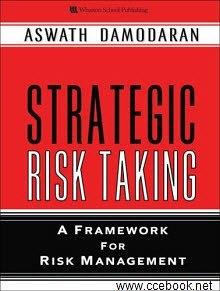
评分《战略风险承担》这本书,说实话,我看完之后心里五味杂陈。首先映入眼帘的是它那封面设计,那种深沉的色调和大胆的字体选择,给人的第一印象是专业、严肃,甚至有点挑战性。我原本期待能从中学到一些经过时间考验的、扎实的风险评估模型,或者至少是一些可以直接套用到我日常工作中的决策框架。然而,这本书更多地像是一场哲学思辨,而不是一本操作手册。作者似乎更热衷于探讨“为什么”要承担风险,而不是“如何”精确地量化和管理风险。书中充斥着大量的案例分析,这些案例横跨了科技、金融乃至地缘政治等多个领域,深度剖析了那些看似鲁莽却最终带来巨大回报的决策背后的驱动力。比如,它详细阐述了在“柯达时刻”面前,固守既有优势的惰性如何成为最大的风险,而那些看似孤注一掷的创新举措,实则是在用小风险博取颠覆性的未来。阅读过程中,我时常需要停下来,结合我自己的行业经验去反思,这种深度的内省体验是很多同类书籍所不具备的。它挑战了我们对于“风险厌恶”这一根深蒂固的商业本能的看法,引导读者去思考,在某些情况下,不作为本身才是最危险的策略。它没有直接给出万能公式,而是提供了一套更具弹性、更适应复杂多变环境的思维工具箱,让我在合上书本后,对“机会成本”和“潜在损失”这两个概念有了全新的理解和权衡视角。
评分说实话,这本书的某些章节读起来颇具挑战性,因为它要求读者具备一定的宏观视角和跨学科知识储备。它没有试图简化复杂的商业世界,反而毫不避讳地展示了其中的复杂性与内在的矛盾性。我印象最深的是它对“非线性回报”机制的探讨,作者引用了大量物理学和复杂系统理论的观点,来解释为什么在某些领域,投入与产出不成比例,而高风险往往伴随着指数级增长的可能性。这种跨界融合的分析方法,让这本书的深度远超一般的管理学读物。它更像是一套高级思维训练手册。我个人认为,对于那些渴望突破现有业务瓶颈、寻求下一轮颠覆式增长的企业高管而言,这本书是极具价值的。它迫使你跳出季度报告的束缚,去思考未来五年甚至十年布局中的“必要冒险”。书中对“最小可行性风险测试”(MVP R-Test,一个类比概念)的讨论,给了我一个非常实用的启发:如何在不押上全部身家的情况下,通过设计巧妙的实验来测试核心假设的有效性。这是一种对资源部署的艺术化处理,而不是简单的成本控制。整体而言,它构建了一个系统的框架,来理解和驾驭那些非传统、高杠杆的战略选择。
评分这本书的语言风格非常沉稳有力,字里行间透露着一种历经沧桑后的洞察力,绝非初出茅庐的学者的肤浅论断。它极少使用空泛的流行词汇来堆砌篇幅,而是用精确的动词和具有画面感的描述来构建论点。我尤其欣赏作者在处理“失败案例”时的态度——它们不是用来指责的,而是作为最宝贵的教学材料被精心解剖。书中对一些著名企业在危机边缘的决策过程进行了深入的模拟还原,让我得以窥见当时决策者所面临的巨大信息不对称和时间压力。例如,在探讨特定技术路线的取舍时,作者详细描绘了内部不同利益集团之间的博弈,以及最终的“战略豪赌”是如何在重重阻力下得以通过的。这种对决策情境的细致刻画,极大地增强了阅读的沉浸感和代入感。它让我意识到,伟大的战略决策往往不是在风平浪静时做出的,而是在风暴眼中,通过对风险的精准识别和勇气,强行扭转局势的结果。这本书成功地将风险管理从一个技术性的职能部门工作,提升到了组织战略核心的高度。
评分被Damodaran的ERP研究带入坑,但知识门槛颇高,所以看之前来刷了遍他的risk书。
评分被Damodaran的ERP研究带入坑,但知识门槛颇高,所以看之前来刷了遍他的risk书。
评分被Damodaran的ERP研究带入坑,但知识门槛颇高,所以看之前来刷了遍他的risk书。
评分被Damodaran的ERP研究带入坑,但知识门槛颇高,所以看之前来刷了遍他的risk书。
评分被Damodaran的ERP研究带入坑,但知识门槛颇高,所以看之前来刷了遍他的risk书。