
具体描述
Book Description
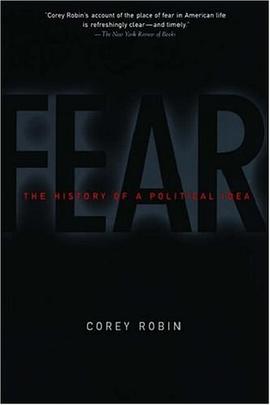
For many commentators, September 11 inaugurated a new era of fear. But as Corey Robin shows in his unsettling tour of the Western imagination--the first intellectual history of its kind--fear has shaped our politics and culture since time immemorial. From the Garden of Eden to the Gulag Archipelago to today's headlines, Robin traces our growing fascination with political danger and disaster. As our faith in positive political principles recedes, he argues, we turn to fear as the justifying language of public life. We may not know the good, but we do know the bad. So we cling to fear, abandoning the quest for justice, equality, and freedom. But as fear becomes our intimate, we understand it less. In a startling reexamination of fear's greatest modern interpreters--Hobbes, Montesquieu, Tocqueville, and Arendt--Robin finds that writers since the eighteenth century have systematically obscured fear's political dimensions, diverting attention from the public and private authorities who sponsor and benefit from it. For fear, Robin insists, is an exemplary instrument of repression--in the public and private sector. Nowhere is this politically repressive fear--and its evasion--more evident than in contemporary America. In his final chapters, Robin accuses our leading scholars and critics of ignoring "Fear, American Style," which, as he shows, is the fruit of our most prized inheritances--the Constitution and the free market. With danger playing an increasing role in our daily lives and justifying a growing number of government policies, Robin's Fear offers a bracing, and necessary, antidote to our contemporary culture of fear.
Review
"A worthy, if gloomy, contribution to the political-philosophical literature." --Kirkus Reviews
"Given daily terror alerts and news reports of violence, Robin, professor of political science and contributor to New York Times Magazine, offers a sober analysis of fear's Janus-faced potential as a catalyst for economic progress and the raison d'etre of repressive regimes. A brilliant synthesis of historical perspective and the critically revealing story of 'Fear, American Style,' the account explores the classics of political thought by Hobbes, Montesquieu and Tocqueville and the portrayal of evil by Arendt." --Publishers Weekly
"Robin's account of the place of fear in American life is refreshingly clear--and timely." --Tony Judt, New York Review of Books
"Brilliant.... What he does in Fear is show us, by carefully plotting the progress of modern fear politics from the Enlightenment to present day, that we are as dependent on fear as a political vehicle, if not more so, as we are the charades of left/right/middle factionalism." --National Post
"A thoughtful, often brilliant, radical polemic against the insufficiencies and pitfalls of liberalism.... Let us hope that in his next work he will try to construct a defense against political fear as spirited as this provocative and discouraging dissection of its multiple forms." --Stanley Hoffman, Foreign Affairs
"By means of an innovative rereading of four influential political theorists--Thomas Hobbes, Montesquieu, Alexis de Tocqueville and Hannah Arendt--Corey Robin offers a fascinating analysis of how we have formed many of our ideas about the role of fear in society." --New Statesman
"Learned and original, Robin argues that whereas Hobbes and Arendt appreciated the political dimensions of fear, Montesquieu and Tocqueville relegated the idea to the realm of the psychological--a view of fear that has endured, blinding us to the self-serving ways elites deploy fear for political ends. Along the way, Robin delivers trenchant and original critiques of writers who deal with fear. The journalists Michael Ignatieff, Philip Gourevitch and their ilk, who have made a cottage industry of condemning genocide, come under withering criticism for implicitly romanticizing the mass killings they deplore.... When...Robin takes on a congealed conventional wisdom, he is at his best." --Newsday
"His book is an appeal for social democracy which American intellectuals and the political elite have abandoned since the New Deal.... With great lucidity, Robin identifies many disturbing excesses in thought and travesties in deed, all of which are bound up in some way with fear." --Michael Kimmage, New York Times Book Review
"Liberalism, he insists, sends working men and women unprotected into battle against the forces of privilege, a battle they are bound to lose. Defeating fear, US-style, requires a new politics that actively confronts power rather than the current apologetic, ameliorative American liberalism. He may not be right that only a strong state can protect its citizens from fear (which is what, with Hobbes, he ends up arguing), but he makes a strong case that the job is too important to be left to the market." --Financial Times
"Fear is a central, but little investigated, concept in modern political thought. In a deft and well-written analysis of this crucial concept and its political implications, Corey Robin not only gives us a masterful survey of its history but also, of its current abuse by the Bush administration. Passionate, erudite, and partisan, this book is an original contribution to our political vocabulary." --Seyla Benhabib, Eugene Meyer Professor of Political Science and Philosophy, Yale University
作者简介
About the Author
Corey Robin teaches political science at Brooklyn College, City University of New York. His writings have appeared in The New York Times Magazine, The Washington Post, Raritan, Dissent , The Times Literary Supplement and American Political Science Review.
目录信息
读后感
在政治理论里,对恐惧的政治的讨论在9/11之后达到过一个巅峰。例如,2004年Social Research (Vol. 71, No. 4, Winter 2004)出版过一期题为Fear: Its Political Uses and Abuses的特刊,包括Corey Robin在内的一些政治理论家(Andrew Arato、Cass Sunstein、George Kateb)都参...
评分在政治理论里,对恐惧的政治的讨论在9/11之后达到过一个巅峰。例如,2004年Social Research (Vol. 71, No. 4, Winter 2004)出版过一期题为Fear: Its Political Uses and Abuses的特刊,包括Corey Robin在内的一些政治理论家(Andrew Arato、Cass Sunstein、George Kateb)都参...
评分在政治理论里,对恐惧的政治的讨论在9/11之后达到过一个巅峰。例如,2004年Social Research (Vol. 71, No. 4, Winter 2004)出版过一期题为Fear: Its Political Uses and Abuses的特刊,包括Corey Robin在内的一些政治理论家(Andrew Arato、Cass Sunstein、George Kateb)都参...
评分在政治理论里,对恐惧的政治的讨论在9/11之后达到过一个巅峰。例如,2004年Social Research (Vol. 71, No. 4, Winter 2004)出版过一期题为Fear: Its Political Uses and Abuses的特刊,包括Corey Robin在内的一些政治理论家(Andrew Arato、Cass Sunstein、George Kateb)都参...
评分在政治理论里,对恐惧的政治的讨论在9/11之后达到过一个巅峰。例如,2004年Social Research (Vol. 71, No. 4, Winter 2004)出版过一期题为Fear: Its Political Uses and Abuses的特刊,包括Corey Robin在内的一些政治理论家(Andrew Arato、Cass Sunstein、George Kateb)都参...
用户评价
这本书的封面设计简直是一场视觉的盛宴,那种深邃的蓝与突兀的暗红交织在一起,像极了暴风雨来临前海面的景象,一下子就把读者的心绪拉扯到了某种不安的边缘。我迫不及待地翻开扉页,期待着一场文字构建的迷宫。故事的开篇节奏把握得极好,作者没有急于抛出惊天动地的事件,而是用一种近乎散文诗的笔调,细腻地勾勒出主人公在日常生活中那种挥之不去的“预感”。那种感觉,就好像你明明站在阳光下,却总觉得背后有一块阴影在慢慢拉长。我特别欣赏作者对于环境描写的功力,无论是潮湿的南方小镇,还是冷峻的现代都市,每一个场景都仿佛被赋予了生命和某种特定的情绪,它们不仅仅是故事发生的背景,更像是无声的参与者,烘托着人物内心的挣扎。读到中间部分时,情节开始像多股细流汇入大江,看似平淡的日常对话中,埋藏着无数的伏笔和暗示,需要你全神贯注地去捕捉那些一闪而过的细节。这种阅读体验是极其迷人的,它要求你不仅仅是接受信息,更是主动参与到解谜的过程中去,不断地猜测和推翻自己的假设。那种被作者牵着鼻子走,却又心甘情愿的感觉,是真正优秀文学作品的标志。
评分从结构上看,这本书采取了一种非线性叙事的手法,这对于一些习惯于顺藤摸瓜的读者来说,可能会构成一定的挑战。但是,如果你愿意投入时间去梳理那些散落在不同章节的线索,你会发现作者构建了一个极其精密的沙漏模型。看似混乱的时间碎片,实际上是通过精心设计的意象和反复出现的主题符号(比如某种特定的气味、一段重复的旋律)相互连接起来的。我花了很长时间试图构建一个完整的时间轴,但最终我意识到,作者想传达的重点可能并非“发生了什么”,而是“它如何影响了现在”。这种多层次的结构,使得每次重读都能发现新的联系和先前忽略的暗示,这无疑大大增加了这本书的耐读性。尤其是那些看似与主线无关的支线人物,他们的命运或言语,往往在故事的终局以一种令人唏嘘的方式与主角交汇,形成一种命运的巨大循环感。这种复杂而又自洽的结构设计,体现了作者对整体构思的强大掌控力。
评分坦白说,我原本以为这会是一部充斥着激烈冲突和直白恐怖的类型小说,但事实远比我想象的要复杂和深刻得多。作者的叙事视角转换得非常巧妙,时而沉浸在第一人称的极端主观体验中,让我们真切地感受到那种被困住的窒息感;时而又拉回到一个近乎冷漠的第三人称观察者角度,用一种近乎病理学的精确度来解剖人物的行为动机。最让我震撼的是其中关于“记忆的不可靠性”这一主题的处理。书中的主人公似乎正在与某些被遗忘或被篡改的往事搏斗,你永远无法确定,你此刻读到的情节,究竟是真实发生的,还是仅仅是人物在极度压力下构建出的虚假叙事框架。这种对真实与幻觉边界的模糊处理,使得整部作品的张力始终维持在一个高位。我甚至需要时不时地停下来,喝口水,平复一下自己因为过度思考而产生的疲惫感。这种文字构建的迷宫,没有明确的出口标识,却让人流连忘返,因为它提供的不是简单的答案,而是关于存在本质的哲学诘问。
评分这部作品的语言风格,简直是教科书级别的“克制之美”。它没有冗长拖沓的形容词堆砌,但每一个用词都精准地击中了要害。我特别留意了作者在描绘角色内心波澜时所使用的句式结构,那种破碎的、跳跃的、充满省略号的内部独白,完美地模拟了人在极度焦虑或恐惧时思维断裂的状态。你读着那些句子,仿佛能听到人物急促的呼吸声和心脏的擂鼓。例如,书中有一段描绘主角在深夜独自面对镜子时的场景,仅仅用了不到一百字的篇幅,却将那种自我怀疑和对外界威胁的警惕,刻画得入木三分,那种无声的尖叫比任何大声的呼喊都更具穿透力。另外,作者对“沉默”的运用也达到了炉火纯青的地步。书中有大量留白,不是情节的缺失,而是有意识地让读者填补那些可怕的空白,让想象力成为最锋利的刀刃。这种对叙事节奏的精妙拿捏,显示出作者深厚的文学功底,它拒绝廉价的感官刺激,转而诉诸于更深层次的心理共鸣。
评分这部作品的真正价值,在于它对人性深处“不确定性”的探讨。它不像传统的悬疑小说那样提供一个清晰的罪犯画像或者一个确凿的真相,相反,它抛出了一个更令人不安的问题:我们如何确定我们所感知到的一切是真实的?书中塑造的角色,无论是主角还是配角,都带有一种深刻的“缺陷美”和“可疑性”。他们都有着不为人知的过去,以及在巨大压力下扭曲的道德观。我尤其欣赏作者对那种“被孤立感”的描绘,主角仿佛被整个世界抛弃,连最亲密的人都可能成为威胁的来源。这种深刻的社会疏离感,在这个快速连接的时代读来,更显得格外刺痛人心。它迫使读者反思自己在面对困境时,是否也会为了自保而选择性地遗忘或扭曲事实。这本书读完后,并不会让你感到一种“尘埃落定”的解脱感,反而会留下一股淡淡的、挥之不去的寒意,让你在接下来的很长一段时间里,都会不自觉地审视自己周围的影子。它不仅仅是一部引人入胜的故事,更像是一面照向内心的镜子,略显模糊,却真实得可怕。
评分 评分 评分 评分 评分