
具体描述
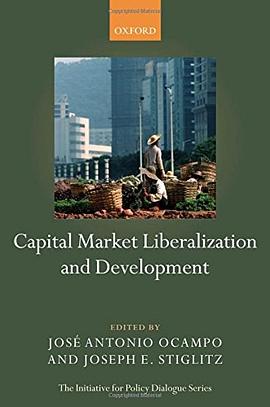
Capital market liberalization has been a key battle in the debate on globalization for much of the previous two decades. Many developing countries, often at the behest of international financial institutions such as the IMF, opened their capital accounts and liberalized their domestic financial markets as part of the wave of liberalization that characterized the 1980s and 1990s and in doing so exposed their economies to increased risk and volatility. Now with even the IMF acknowledging the risks inherent in capital market liberalization, the central intellectual battle over the effects of capital market liberalization has for the most part ended. Though this new understanding of the consequences of capital market liberalization is reshaping many policy discussions among academics and international institutions, ideological and vested interests remain.
Critical policy debates also remain, such as how much government should intervene and what tools are available. Although capital market liberalization might not produce the promised benefits, many economists and policymakers still worry about the costs of intervention. Do these costs exceed the benefits? What are the best kinds of interventions, under what circumstances? To answer these questions, we have to understand why capital market liberalization has failed to enhance growth, why it has resulted in greater instability, why the poor appear to have borne the greatest burden, and why the advocates of capital market liberalization were so wrong. Bringing together some of the leading researchers and practitioners in the field, this volume provides an analysis of both the risks associated with capital market liberalization and the alternative policy options available to enhance macroeconomic management.
作者简介
Joseph E. Stiglitz was awarded the Nobel Prize in economics in 2001 and is University Professor at Columbia University where he founded the Initiative for Policy Dialogue in 2000. He was Chair of President Bill Clinton's Council of Economic Advisors from 1995-97 and Chief Economist and Senior Vice-President of the World Bank from 1997-2000.His best known recent publications include 'Making Globalization Work' (2006), 'Fair Trade for All' (2005), 'Globalization and its Discontents' (2002) and 'The Roaring Nineties' (2003). Jose Antonio Ocampo is United Nations Under-Secretary-General for Economic and Social Affairs. Prior to assuming his present position in the United Nations, he held a number of posts in the Government of Colombia, including those of Minister of Finance and Public Credit, Director of the National Planning Department and Minister of Agriculture and was former Executive Secretary of the UN Economic Commission for Latin America and the Caribbean (ECLAC). His academic pursuits have included service as Director of the Foundation for Higher Education and Development, Professor of Economics at the Universidad de los Andes and the Universidad Nacional de Colombia, and Visiting Professor at Cambridge, Yale and Oxford Universities.
目录信息
读后感
用户评价
这本书的语言风格颇为学术化,充满了严谨的计量分析和数据支撑,这使得它在讨论一些高度敏感的政策问题时,更具说服力。它没有使用煽动性的语言,而是通过一系列翔实的图表和回归模型,层层推进,最终指向一个审慎的结论:资本市场的开放绝非目的本身,而是服务于更宏大、更长远的发展目标。最让我印象深刻的是,书中对“金融中介效率”与“金融市场波动性”之间负相关关系的论证。它似乎在暗示,一个高效的金融体系,并不必然是一个最“自由”的体系;相反,适当的摩擦和必要的管制,可能是在不稳定的全球环境中维持经济稳健增长的关键所在。这本书更像是一份对决策者的“清醒剂”,提醒人们在追求短期资本流入的诱惑时,不能以牺牲长期的金融主权和经济韧性为代价。它是一部需要细读、反复咀嚼的严肃作品。
评分这本书的叙事风格极其冷静和克制,但其内蕴的情绪却是对现有主流经济学范式的深刻质疑。作者似乎并不急于为资本自由化正名,反而更像是一位经验丰富的外科医生,在小心翼翼地解剖一个被过度神化的概念。我发现,作者在分析不同国家经验时,展现出了一种罕见的跨学科视野,将政治权力结构、文化传统对金融风险偏好的影响,都纳入了分析框架。例如,书中对于一些特定文化背景下,家庭储蓄如何被“金融创新”转化为高风险投资的路径分析,令人耳目一新。它巧妙地将宏观的资本流动与微观的个体决策联系起来,使得抽象的金融理论变得触手可及,也更加真实可信。对于那些希望从历史脉络中寻找未来金融监管方向的政策制定者而言,这本书提供了必要的历史参照系和反面教材,它强调了“自下而上”的制度构建远比“自上而下”的政策强加更为持久有效。
评分读完这本关于资本市场进程的书,我的脑海中浮现出的是一幅幅在经济转型期挣扎的国家的生动画卷。它对金融自由化带来的“双刃剑效应”的描绘,极其精准而富有洞察力。作者不仅关注了外资流入带来的技术溢出和效率提升,更毫不留情地揭示了其背后的结构性风险——比如,国际热钱的“快进快出”如何加剧了国内流动性的剧烈波动,以及对本土新兴产业的挤出效应。书中对于金融衍生品市场在发展中国家监管缺位下的异化,有着令人不安的论述。它仿佛在警示我们,如果没有对金融科技和全球化金融工具的深刻理解和有效管控,所谓的“市场接入”可能更像是敞开了一扇让洪水肆虐的大门。我尤其喜欢其中对监管部门“学习曲线”的分析,探讨了各国政府在面对瞬息万变的全球资本流动时,其认知速度与实际政策应对速度之间的巨大鸿沟。这本书迫使读者跳出教科书式的完美市场假设,直面现实的灰度。
评分对于一个长期关注全球金融秩序演变的人来说,这本书的价值在于它提供了一套严谨的分析框架,用以解构后冷战时代“华盛顿共识”的实践后果。它的论证逻辑如同一部精密的钟表,每一个齿轮——从汇率制度的选择到资本利得税的征收——都必须精确配合,否则整个系统就会失衡。我尤其欣赏作者对“金融深化”与“金融抑制”之间微妙平衡点的探讨。书中指出,在特定发展阶段,适度的“抑制”反而可能是保护本土产业成长的必要屏障,而过早或过度的自由化,只会让本土金融机构成为国际巨头的附庸。阅读过程中,我多次停下来,对照自己熟悉的案例进行思考,发现书中揭示的许多潜在风险点,往往是在事件爆发后才被外界察觉的。这种前瞻性的洞察力,是这本书最宝贵的财富,它超越了对已发生事件的简单记录,直指深层次的结构性矛盾。
评分这本关于资本市场自由化的巨著,篇幅浩瀚,初翻时便让人感到一种压迫感。作者显然投入了巨大的心血去梳理和分析全球范围内,尤其是在新兴市场中,资本账户开放与国家经济发展轨迹之间那些错综复杂、非线性的关系。我特别欣赏书中对“渐进式改革”与“大爆炸式休克疗法”这两种路径的细致对比。它没有简单地将自由化视为灵丹妙药,而是深入探讨了在缺乏足够国内金融监管和法律框架支撑的情况下,资本的快速涌入如何可能加剧资产泡沫,甚至最终导致系统性金融危机。书中引用的案例,从东南亚金融风暴到拉美债务危机,无不佐证了其论点的审慎性。对于那些热衷于宏大叙事和教条式经济模型的读者来说,这本书可能会显得有些繁琐,因为它坚持回归到微观的制度基础和政治经济学的现实考量,指出技术层面的开放绝不等同于实质性的发展,前者必须建立在稳固的、可信赖的国内制度基础之上。这种对“时机”和“顺序”的强调,使得这本书更像是一份行动指南,而非简单的学术总结。
评分 评分 评分 评分 评分