
具体描述
PREFACE<br >Aims and objectives<br > Books on the broad topics of international marketing and international business manage-<br > ment strategy continue to be published each year. In many parts of the world this<br > development has paralleled the changing attitudes of business firms about the importance<br > of having an international perspective in their business operations. This only reinforces<br > what companies in other countries have been doing for many years. Internationalization<br > of business firms is fashionable both for practitioners and for academics at university<br > and non-university institutions. Thus, it is not surprising that books on international<br > marketing/business management appear more or less regularly.<br > Many of the books are oriented toward managing multinational (or global) com-<br > panies, which tend to be rather large. In terms of numbers of companies doing some<br > type of international business, however, small- and medium-sized companies are most<br > prevalent. Most of these companies may never diversify their international operations and<br > grow to the size where being a multinational (or global) company is desirable or even<br > feasible. The major international activity of most small- and medium-sized companies<br > is exporting. Even large multinational ftrms with global operations are involved in exten-<br > sive exporting.<br > International marketing and international business management strategy books<br > devote little space to the subject of export management, most often only a chapter. In<br > addition, there has been little written in recent years that is devoted entirely to export<br > management. This new edition of International Marketing and Export Management con-<br > tinues the first edition s objective of filling this void. Moreover, we view export as<br > involving marketing processes and activities. This is the central theme of the book. The<br > book, however, is not a how to treatment of the procedural aspect of exporting. It<br > is oriented toward understanding the management of export operations and decision-<br > making. Necessarily, a certain amount of description must be included. But we continue<br > approaching the material from the perspective of the process by which a company can<br > creatively adapt to the international environment. To enhance the discussion of each<br > topic, case studies are provided at the end of most chapters. We have retained some of<br > the cases from the first edition and added newer ones where needed. Also, we have added<br > a small number of longer cases, providing the opportunity for more in-depth analysis.<br > The experiences of these companies illustrate points made in the text and provide a vehicle<br > for (1) integrating material from throughout the book and (2) making decisions. The<br > book is relevant to any exporting company.<br > This edition of International Marketing and Export Management has some notable<br > changes. First, the book has been thoroughly rewritten and updated with events that<br > have occurred in the international environment during the past few years. Second, three<br > new chapters have been written to address concerns of prior users and to make the book<br > more complete as an international marketing book. We have not changed our orientation<br > toward export. The material on international market(ing) research has been expanded<br > and presented as a separate chapter (Chapter 5). Material on non-export entry modes<br >
作者简介
目录信息
读后感
用户评价
这本书的案例研究部分,是我最为诟病的一点。它们陈旧得让人想叹气。我期待的是对近五年内发生的重大国际营销失败或成功的深度剖析,比如某个跨国公司在印度市场遭遇的文化抵触事件,或者某科技公司如何成功地将一个全新的SaaS产品推向欧盟的复杂监管环境。然而,书中引用的例子大多是八十年代甚至九十年代的经典案例,比如某些汽车制造商在北美市场的初期扩张,或者上世纪末的日本电子产品全球化浪潮。这些历史性的记录固然有其教育意义,但它们几乎无法为今天的读者提供任何可立即转化的指导原则。在人工智能和全球贸易摩擦日益常态化的今天,仅仅复述过去成功的“公式”是远远不够的。我需要的是关于如何驾驭不确定性、如何利用大数据进行实时定价和库存管理的鲜活经验。这本书提供的背景知识仿佛是为一位准备参加冷战后贸易谈判的学者准备的,对于一个需要应对快速变化的全球电商格局的从业者来说,它的时效性几乎为零。这种对“新”的抗拒,使得整本书的价值大打折扣。
评分这本书的语气和口吻,透露出一种居高临下的权威感,但这种“权威”似乎是建立在过时的知识基础之上的,因此显得缺乏真正的说服力。作者的措辞严谨到近乎刻板,总是使用诸如“毋庸置疑”、“所有合理的管理者都应当遵循”之类的绝对化表达,这在快速变化的环境中,恰恰是最大的陷阱。我本想从这本书中汲取一些关于如何培养谈判灵活性和适应性思维的洞见,然而,它提供给我的更多是关于“应该如何”的标准操作程序,而非“在意外情况发生时如何”的变通之道。它没有提供任何可以激发批判性思维的挑战性观点,所有的结论似乎都已是既定的、不可动摇的真理。这种单向度的灌输,对于一个渴望在国际竞争中寻找“蓝海”策略的读者来说,是极其压抑的。我需要的是能引发我思考“为什么”和“有没有更好的方法”的书籍,而不是一份简单罗列“是什么”和“怎么做”的旧手册。这本书最终给我的感觉是,它适合放在图书馆的深处作为历史参考资料,而不是摆在案头作为当下的商业指南。
评分从学术严谨性的角度来看,这本书的结构显得过于僵硬和线性。它似乎完全遵循了传统的“理论—模型—应用”的教学大纲,缺乏将不同知识模块进行有机整合的能力。例如,在讨论市场进入策略时,它将政治风险评估、消费者行为分析和物流布局割裂开来,分别用独立的章节进行阐述,使得读者难以构建一个全面的、多维度的战略视图。我更欣赏那些能够将政治经济学、数字人机交互设计和全球金融结算工具整合起来,共同构建一个动态决策框架的著作。这本书在阐述如何选择分销渠道时,依旧主要聚焦于传统的代理商和直销模式,对新兴的平台经济驱动的零边际成本分销体系几乎避而不谈,仿佛这些创新从未发生过。这种学科壁垒式的划分,不仅拖慢了读者的思维节奏,更重要的是,它没有体现出当代国际市场管理的复杂性和跨界性。阅读体验像是在走一条被精确规划但极其迂腐的单行道,错过了沿途所有充满活力的、互相交织的可能性。
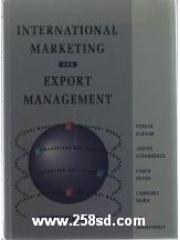
评分这本书的封面设计简直是教科书式的沉闷,那种深蓝配上白字的排版,散发着一股浓厚的学术气息,让人在书店里一眼扫过就想转向那些色彩鲜艳、设计更具现代感的商业书籍。我本来是对国际贸易和出口管理抱有极大的热情和期待的,希望能找到一些关于全球化背景下新兴市场战略、数字营销在跨境电商中的应用,或者至少是关于文化差异如何影响跨国谈判的深度案例分析。然而,这本书的目录给我的第一印象是:它似乎停留在上个世纪的贸易模式里。我翻阅了几个章节的导言部分,发现它充斥着大量的理论模型和宏观经济术语,缺乏与当下瞬息万变商业环境的有效连接。例如,关于供应链韧性的讨论,我期望看到的是如何利用AI和物联网技术来应对地缘政治带来的不确定性,而不是对传统国际物流流程的冗长描述。总而言之,如果一个读者,特别是像我这样,更侧重于实操和前沿趋势的年轻商业人士,这本书给出的知识结构显得过于陈旧和缺乏迫切性,它更像是一份需要被彻底重构的旧版说明书,而非指引未来的路线图。我更愿意花时间去研究那些聚焦于新兴经济体快速迭代的本土化策略的著作,而不是沉溺于这些基础但缺乏新意的框架之中。
评分这本书的文字密度高得令人发指,几乎每页都被密密麻麻的小字和密集的图表占据,阅读体验简直是一场折磨。我尝试在通勤的地铁上阅读,但仅仅读了十几页,我的眼睛就开始产生强烈的疲劳感,仿佛在硬啃一本未经优化的法律条文集。真正让人感到失望的是,这种高密度的信息堆砌似乎并没有带来等价的知识深度。很多关键概念的阐述都是浅尝辄止,很快就跳到了下一个定义或者一个复杂的、已经过时的统计数据分析。我特别想了解的是,在当前全球去中心化趋势下,中小企业如何利用社交媒体平台(比如TikTok Shop或Instagram Checkout)直接进行无中间商的国际分销,这本书里完全没有涉及这方面的实战经验或战略框架。相反,它花费了大量的篇幅去解释一些非常基础的贸易术语,这些内容在任何一个免费的在线商业词典里都能更快地查到。对于一个希望快速获取可执行见解的读者来说,这本书更像是一个需要耗费巨大精力去“挖掘”才能找到零星有价值信息的矿井,而不是一个知识清晰、逻辑流畅的向导。我不得不承认,我最终放弃了深度阅读,只是随机翻阅了几个章节标题,以便确认我的判断:它不是我需要的那种能提升效率的工具书。
评分 评分 评分 评分 评分