
具体描述
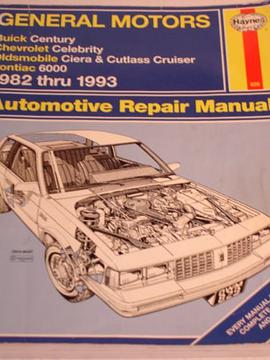
About this manual<br > Its purpose lines. Each Section consists of consecutively numbered paragraphs.<br > ]71e purpose of this manual is to help you get the best value from At the beginning of each numbered Section you will be referred to<br > your vehicle, It can do so in several ways. It can help you decide what any iUustrations which apply to the procedures in that Section The ref-<br > work must be done, even if you choose to have it done by a desist ser. erence numbers used in illustration captions pinpdint the pertinent<br > vice department or a repair shop; it provides information and proce- Section and the Step within that Section. That is, illustration 3.2 means<br > dures for routine maintenance and servicing; and it offers diagnostic the illustration refers to Section 3 and Step (or paragraph) 2 within that<br > and repair procedures to follow when trouble occurs. Section.<br > We hope you use the manual to tackle the work yourself. For Procedures, once described in the text, are not normally re-<br > many simpler jobs, doing it yourself may be quicker than arranging an peated. When it s necessary to refer to another Chapter, the reference<br > appointment to get the vehicle into a shop and making the trips to will be given as Chapter and Section number. Cross references given<br > leave it and pick it up. More importantly, a lot of money can be saved without use of the word =Chapter" apply to Sections and/or para-<br > by avoiding the expense the shop must pass on to you to cover its ]a- graphs in the same Chapter. For example, "see Section 8" means in<br > bor and overhead costs. An added benefit is the sense of satisfaction the same Chapter~<br > and accomplishment that you feel after doing the job yourself. References to the left or right side of the vehicle assume you are<br > Using the manual sifting in the driver s seat, facing forward.<br > Even though we have prepared this manual with extreme care,<br > The manual is divided into Chapters. Each Chapter is divided into neither the publisher nor the author can accept responsibility for any<br > numbered Sections, which are headed in bold type between horizontal errors in, or omissions from, the information given.<br > NOTE<br > A Note provides information necessary to propedy complete a procedure or information which will make the procedure easier<br > to understand.<br > CAUTION<br > A Caution provides a special procedure or special steps which must be taken while completing the procedure where the Cau-<br > tion iS found. Not heeding a Caution can result in damage to the assembly being worked on.<br > WARNING<br > A Warning provides a special procedure or special steps which must be taken while completing the procedure where the<br > Warning is found. Not heeding a Warning can result in personal injury.<br >Introduction to the General Motors A-cars<br > Since its introduction in 1982 the popular GM A-body design has Most models use a Throttle Body Injection (TBI) or multi-port fuel<br >gone through many changes. Although the basic chase s deal n has injection system, although some 1985 and earlier V6 models are car-<br >changed little I engines, fuel syst d ignition syst e~gsI have bureted.<br >~o. oneran.<br > The engine ddves the front wheels through either a manua or au-<br > Most four-cylinder models are equipped with the 2.5 liter over* tomatie transaxle via unequalqength driveaxles. The power assisted<br >head Valve (OHV) four-cylinder engine sometime~ referred to as the rack and pinion steering gear assembly is mounted behind the engine.<br >"iron Duke " because of its all-cast-iron cons ruction. In 1993 this en- The front suspension is composed of MacPherson struts, three*<br >glne was replaced by a 2.2L OHV four-cylinder eng ne with a cast-iron point control arms and a stabilizer bar. The rear suspension consists of<br >block and aluminum cylinder head.<br > a solid axis with integral trailing arms, coil springs and shock ab-<br > Two different OHV V6 engine designs have been used in these sorbers.<br >models. The narrower 2.0 liter and 3.1 liter V6 engines are from the The brakes are disc at the front and drum at the rear on most<br >same general eng ne family they have a 6g-de rae an le betw models (some models have rear disc brakes), with power assist start-<br >cylinder banks Th . . g g een<br > . e second V6 eng ne faro y (3.0 I er, 3.3 liter and 3.8 dard. Some later models are equipped with an Anti-lock Brake System<br >,~=el engines) are wider because of e 9g-degree angle between cylin- (ABS).<br >de banks.<br >
作者简介
目录信息
读后感
用户评价
啊,这本书,拿到手的时候我可是带着一种近乎朝圣般的心情。《**钢铁帝国风云录**》——如果我没记错的话,这名字本身就带着一种史诗般的厚重感。我一直对那种从零开始,靠着工程创新和近乎野蛮的商业手腕崛起的工业巨头的故事痴迷不已。这本书的叙事方式,简直就像是把一张巨大的、布满了油污和汗水的蓝图,在你面前徐徐展开。它没有直接堆砌那些枯燥的财报数据,而是通过描绘那些早期开拓者的侧脸,那些面对技术瓶颈时的彻夜不眠,以及第一次流水线成功运转时,车间里爆出的欢呼,来构建起这个商业帝国的骨架。作者似乎对早期的技术革新有着一种近乎偏执的关注,对于活塞行程的改进、车身材料的尝试,甚至是那个时代油漆工艺的微小进步,都着墨颇深。读起来,我仿佛能闻到旧工厂里弥漫的机油味和金属摩擦的火花味。特别是关于亨利·福特和后来的斯隆之间的理念冲突那段,那简直是一场关于效率与多样性的哲学辩论,只不过战场是装配线和经销商网络。这本书的厉害之处在于,它把冰冷的商业决策,转化成了充满人性挣扎和远见卓识的戏剧。它让你理解,每一次车型迭代背后,都不是简单的市场调研,而是对未来出行方式的一种近乎先知的断言。我尤其欣赏它对供应链管理早期雏形的梳理,那种在铁路网络和港口物流之间寻找最佳平衡点的智慧,即便放在今天,也让人拍案叫绝。
评分说实话,这本书的阅读体验,更像是一场关于**美国梦破碎与重塑**的社会学田野调查,远超了一本单纯的企业传记范畴。它没有那种高高在上的精英视角,反而充满了对底层工人群体的关注。我记得其中一个章节,详细描述了底特律郊区工人家庭的生活状态,从他们如何从南方迁徙而来,到他们对“一份稳定蓝领工作”的全部希望与寄托。作者巧妙地将宏观经济周期与微观家庭叙事交织在一起,读到经济大萧条来临时,那些曾经引以为傲的工厂突然变得死寂,工人们茫然站在厂门外,那种失落感几乎要穿透纸页。这本书的叙事节奏掌握得极其精准,它不会让你在沉重的历史细节中迷失,而是总能在适当的时候插入一些幽默或者尖锐的评论,来调剂气氛,保持读者的思考。比如,对于战后“大车时代”的批判,作者的笔锋犀利得像手术刀,直指那种对过度消费和城市规划短视的盲目崇拜。它迫使你思考,一个产业巨头在塑造了人类生活方式的同时,也带来了哪些难以逆转的社会代价。这本书的价值就在于,它提供了一个多维度的观察窗口,让你看到那辆光鲜亮丽的汽车下面,是无数双沾满泥泞的脚,和被时代洪流推搡的命运。
评分这本书最让我感到震撼的,是它对于**政治与产业的共生关系**的揭露,它毫不避讳地展示了巨型企业是如何在幕后深刻影响国家政策的。书中关于政府补贴、贸易壁垒的章节,读起来让人脊背发凉,因为它揭示了自由市场光环下隐藏的权力运作逻辑。作者的笔触冷静、客观,但其揭示的事实却极具颠覆性。它将这家企业描绘成一个游走在商业竞争与地缘政治之间的巨型棋手,其每一个重大决策,都必须同时考量华尔街的反应、工会的压力,以及国际条约的约束。这种多重约束下的战略博弈,使得这本书的战略分析层面达到了一个极高的水准。它教给我的不仅仅是商业历史,更是如何在一个被强大势力塑造的宏大背景下,去理解和定位自身的行动。它没有给出简单的道德审判,而是让你自己去权衡,在一个追求效率和利润最大化的体系中,公共利益与企业责任究竟该如何界定。读完之后,我对“大公司”这个概念的理解,彻底被重塑了。
评分从纯粹的**工程美学**角度来看,这本书简直是一本视觉盛宴的文字描述。虽然它不是一本图片集,但作者对产品设计的描述达到了近乎诗意的境界。他不会简单地说“这款车很流线型”,而是会细致入微地描述工程师是如何与风洞中的气流搏斗,如何为了将一个车灯的角度调整几度而引发内部关于空气动力学效率和制造成本的激烈争论。我读到关于设计部门内部“风格之争”的部分时,简直感同身受。那是艺术与工程的永恒碰撞——一方追求极致的造型突破,另一方则被模具的限制和成本的铁律所束缚。这本书清晰地展示了,即便在一个被认为高度标准化的工业领域,依然充满了创造性的火花和坚持自我的勇气。它让我重新审视那些我们习以为常的汽车造型,意识到每一个弧度和比例的背后,都凝结着无数次妥协与坚持。对于那些对手工艺精神和设计细节有执念的读者来说,这本书简直是精神食粮,它让人敬畏于人类对“完美机械形态”的不懈追求。
评分这本书的结构安排,尤其令人称奇,它根本不是按照时间线简单线性铺陈的,更像是一部**交响乐的复调结构**。它在讲述关键技术突破的同时,会立刻切换到对竞争对手的战略部署的分析,然后又忽然转入对特定高管性格侧写的部分。这种跳跃感,一开始让我有点不适应,但很快就被那种浑然一体的复杂性所吸引。它不是在“告诉你”发生了什么,而是在“重建”那个决策时刻的氛围。例如,在描述一次至关重要的并购案时,作者用了大量的篇幅去描绘高层会议室里香烟的烟雾浓度,以及关键人物之间眼神交流的细微变化,而不是直接跳到交易完成的结果。这使得整个过程充满了悬念和张力,仿佛置身于一场高风险的牌局之中。我特别喜欢书中对于“品牌”和“营销心理学”早期应用的探讨。它深入剖析了如何通过色彩、广告语乃至经销商的着装礼仪,来塑造消费者的潜意识,将一个冰冷的机械产品,包装成一种身份、一种理想生活方式的投射。这种对无形资产价值的洞察,使得这本书的商业分析部分,其深度和广度远超一般的行业案例研究。
评分 评分 评分 评分 评分