
具体描述
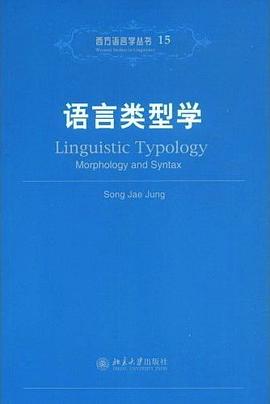
《语言类型学》作者在大量不同语言的资料和例证的基础上,对语言类型学作了全新和深入的介绍。《语言类型学》的特色是着重对此领域中的主要问题,如基本语序、格标记、关系从句、致使构式等进行了具体而详细的研究,通过具体案例研究,揭示了如何发现和解释语言类型的系统模式,以及这些模式所受的限制。另外,《语言类型学》还讨论了一些实用的问题和方法,如语料的采集和语言样本的制作,最后《语言类型学》探讨了语言类型学在历时语言学、语言习得等其他领域中的应用问题。
对于研究兴趣在语言类型和语言共性、语言比较、历时语言学、语言习得、语言认知等领域的读者而言,《语言类型学》都是一部有价值的著作。
-------
目录
给中国读者的前言
Preface
导读
Abbreviario掰
Acknowledgements
1 Introducing linguistic typology
1.1 What do linguistic typologists study?
1.2 Typological analysis
13 Typology of language universals
1.4 Language universals and linguistic typology
1.5 Assumptions and problems in typological analysis
1.5.1 Cross-linguistic comparability
1.5.2 The Principle of Uniformitarianism
1.5.3 Approaches to language sampling
1.5.4 Determining language sample sizes
1.5.5 Problems with data
1.6 Partial typology VS.holistic typology
1.7 Organization ofthe rest ofthe book
2 Basic WOrd Order
2.1What is basic word order?
2.2 Early research on basic word order
2.2.1 The inception of word order typology
2.2.2 The OV-VO typology
2.2.3 Making language universals exceptionless
2.3 Explaining the distribution of the basic clausal word orders
2.4 Back to the OV-VO typology:the Branching Direction Theory
2.5 Seeking a global explanation:the Early Immediate Constituents Theory
2.6 From word order to morpheme order:the suffixing preference
2.7 Closing remarks
3 Case marking
3.1 Introduction
3.2 AS and P, and types of case marking
3.2.1 Nominative-accusative system
3.2.2 Ergative-absolutive system
3.2.3 Tripartite system
3.2.4 AP/S system
3.2.5 Neutral system
3.3 More types of case marking
3.3.1 Split-ergative system
3.3.2 Active-stative system
3.3.3 Direct-inverse system
3.4 Distribution of the case marking systems
3.5 The discriminatory view of case marking
3.6 The indexing view of case marking
3.7 The discriminatory view vs. the indexing view
3.8 The Nominal Hierarchy and the split-ergative system
3.9 Towards a unified explanation: attention flow and viewpoint
3.10 Ergativity from discourse to grammar
3.11 Case marking in altered or non-basic constructions
3.11.1 Passive
3.11.2 Antipassive
3.11.3 Noun incorporation
3.11.4 Advancement of obliques to P
3.12 Syntactic ergativity
3.13 Head marking vs. dependent marking
3.14 Case marking type and word order type
4 Relative clauses
4.1 Introduction
4.2 The position of the head noun vis-a-vis the restricting clause
4.3 Expression of the head noun
4.3.1 The obliteration strategy
4.3.2 The pronoun-retention strategy
4.3.3 The relative-pronoun strategy
4.3.4 Language-internal distribution of the relativization strategies
4.4 Accessibility Hierarchy: accessibility to relativization
4.5 Conspiracy in relativization
4.6 Correlations between RC-related properties
4.7 The head noun in the main clause
4.8 Subject primacy vs. discourse preferences in relativization
4.9 RC type and word order type
4.10 The role of processing in the distribution of RC types
4.11 The All and structural complexity
5 Causatives
5.1 Introduction
5.2 The morphologically based typology of causative constructions
5.3 The syntax of the causee NP: the Case Hierarchy
5.4 Conspiracy in causativization
5.5 Doubling: coding vs. grammatical relation
5.6 Causation types and causative types
5.7 The case marking of the causee NP
5.8 The conceptual integration of the causee in the causative event
5.9 Towards a typology of causative constructions
6 The application of linguistic typology
6.1 Introduction
6.2 Linguistic typology and historical linguistics
6.2.1 Early attempts at word order reconstruction
6.2.2 Linguistic typology as a control on, and a tool in,reconstruction
6.2.3 Linguistic typology and linguistic prehistory
6.3 Linguistic typology and language acquisition
6.3.1 Accessibility to relativization in FLA
6.3.2 Accessibility to relativization in SLA
6.3.3 Two potential FLA/SLA areas of application
6.3.4 Closing remarks
7 European approaches to linguistic typology
7.1 Introduction
7.2 The Leningrad Typology Group
7.3 The Cologne UNITYP Group
7.4 The Prague School Typology
7.5 Epilogue
Bibliography
Author Index
Language Index
Subject Index
作者简介
目录信息
Preface
导读
Abbreviario
Acknowledgements
1 Introducing linguistic typology
1.1 What do linguistic typologists study?
1.2 Typological analysis
13 Typology of language universals
1.4 Language universals and linguistic typology
1.5 Assumptions and problems in typological analysis
1.5.1 Cross-linguistic comparability
1.5.2 The Principle of Uniformitarianism
1.5.3 Approaches to language sampling
1.5.4 Determining language sample sizes
1.5.5 Problems with data
1.6 Partial typology VS.holistic typology
1.7 Organization ofthe rest ofthe book
2 Basic WOrd Order
2.1What is basic word order?
2.2 Early research on basic word order
2.2.1 The inception of word order typology
2.2.2 The OV-VO typology
2.2.3 Making language universals exceptionless
2.3 Explaining the distribution of the basic clausal word orders
2.4 Back to the OV-VO typology:the Branching Direction Theory
2.5 Seeking a global explanation:the Early Immediate Constituents Theory
2.6 From word order to morpheme order:the suffixing preference
2.7 Closing remarks
3 Case marking
3.1 Introduction
3.2 AS and P, and types of case marking
3.2.1 Nominative-accusative system
3.2.2 Ergative-absolutive system
3.2.3 Tripartite system
3.2.4 AP/S system
3.2.5 Neutral system
3.3 More types of case marking
3.3.1 Split-ergative system
3.3.2 Active-stative system
3.3.3 Direct-inverse system
3.4 Distribution of the case marking systems
3.5 The discriminatory view of case marking
3.6 The indexing view of case marking
3.7 The discriminatory view vs. the indexing view
3.8 The Nominal Hierarchy and the split-ergative system
3.9 Towards a unified explanation: attention flow and viewpoint
3.10 Ergativity from discourse to grammar
3.11 Case marking in altered or non-basic constructions
3.11.1 Passive
3.11.2 Antipassive
3.11.3 Noun incorporation
3.11.4 Advancement of obliques to P
3.12 Syntactic ergativity
3.13 Head marking vs. dependent marking
3.14 Case marking type and word order type
4 Relative clauses
4.1 Introduction
4.2 The position of the head noun vis-a-vis the restricting clause
4.3 Expression of the head noun
4.3.1 The obliteration strategy
4.3.2 The pronoun-retention strategy
4.3.3 The relative-pronoun strategy
4.3.4 Language-internal distribution of the relativization strategies
4.4 Accessibility Hierarchy: accessibility to relativization
4.5 Conspiracy in relativization
4.6 Correlations between RC-related properties
4.7 The head noun in the main clause
4.8 Subject primacy vs. discourse preferences in relativization
4.9 RC type and word order type
4.10 The role of processing in the distribution of RC types
4.11 The All and structural complexity
5 Causatives
5.1 Introduction
5.2 The morphologically based typology of causative constructions
5.3 The syntax of the causee NP: the Case Hierarchy
5.4 Conspiracy in causativization
5.5 Doubling: coding vs. grammatical relation
5.6 Causation types and causative types
5.7 The case marking of the causee NP
5.8 The conceptual integration of the causee in the causative event
5.9 Towards a typology of causative constructions
6 The application of linguistic typology
6.1 Introduction
6.2 Linguistic typology and historical linguistics
6.2.1 Early attempts at word order reconstruction
6.2.2 Linguistic typology as a control on, and a tool in,reconstruction
6.2.3 Linguistic typology and linguistic prehistory
6.3 Linguistic typology and language acquisition
6.3.1 Accessibility to relativization in FLA
6.3.2 Accessibility to relativization in SLA
6.3.3 Two potential FLA/SLA areas of application
6.3.4 Closing remarks
7 European approaches to linguistic typology
7.1 Introduction
7.2 The Leningrad Typology Group
7.3 The Cologne UNITYP Group
7.4 The Prague School Typology
7.5 Epilogue
Bibliography
Author Index
Language Index
Subject Index
· · · · · · (收起)
读后感
用户评价
这本书的封面设计得非常有质感,那种深邃的蓝色调,配上简约而富有力量感的字体排版,初次拿到手时,就给人一种沉甸甸的学术气息。我尤其喜欢封面上那些抽象的符号和线条组合,似乎在暗示着语言结构内部的复杂脉络和隐藏的规律。内页的纸张质量也是上乘,阅读体验极佳,即使长时间翻阅也不会感到眼睛疲劳。装帧工艺看得出非常用心,书脊的粘合牢固,一看就是能够长久保存的精装本。光是这本书的物理形态,就足以让我感受到作者和出版社对这部作品的尊重与投入,它不仅仅是一本书,更像是一件值得收藏的艺术品。当我把它摆在书架上时,它立刻成为视觉焦点,那种低调而又充满智慧的光芒,非常吸引人。
评分这本书的案例分析部分简直是教科书级别的典范。作者似乎拥有一种神奇的魔力,能够将那些原本枯燥的语言现象,通过精妙的对比和深入的剖析,变得生动起来。我印象特别深刻的是其中关于某一小语种的词汇演变路径的探讨,作者没有停留在表面现象的描述,而是追溯到了数个世纪前该族群的迁徙历史,将地理、文化和语音变化奇妙地编织在一起。这种跨学科的视野,极大地拓宽了我对语言研究边界的想象。读到那些详细的图表和数据可视化时,我甚至能够“看”到语言是如何在时间的洪流中进行自我修正和适应的。它让我意识到,语言绝非一成不变的规则集合,而是一个鲜活的、不断呼吸和进化的有机体,每一个小的语法结构变化背后,都隐藏着人类社会活动的深刻印记。
评分我花了整整一个周末的时间来梳理这本书的绪论部分,那种感觉就像是走入了一个从未涉足的知识迷宫,充满了惊喜与挑战。作者的行文风格极其严谨,每一个论点都建立在坚实的经验证据之上,逻辑推导链条环环相扣,几乎不留任何可以质疑的空隙。我必须承认,初读时会有一些地方需要反复揣摩,特别是涉及到一些比较前沿的理论模型时,那种需要调动高中时期的逻辑思维能力去跟进的紧迫感,着实让人兴奋。它没有那种故作高深的晦涩,但其深度的专业性要求读者必须保持高度的专注力。对我来说,阅读它更像是一场智力上的马拉松,需要我不断地激活和重构自己对语言本质的认知框架。每次读完一个章节,都会有一种豁然开朗的满足感,仿佛自己刚刚解开了一个困扰已久的谜团,那种成就感是阅读其他大众读物无法比拟的。
评分坦率地说,这本书的阅读体验是有些“费脑”的,但绝对物超所值。它没有试图用简化、口语化的语言来迎合读者,而是坚定地站在了学术前沿,以一种近乎挑战的姿态面对每一个严肃的求知者。我感觉自己像是在攀登一座知识的高峰,虽然过程气喘吁吁,但每登上一级台阶,视野就开阔一分。在讨论到不同语言之间的普遍性与特殊性辩证关系时,作者的论述极具穿透力,它迫使我跳出自己熟悉的母语思维定势,去用更广阔的视角审视人类心智运作的机制。这本书已经成为了我案头常备的参考书目,我确信,在未来很长一段时间内,无论我进行何种学术探讨,都会不自觉地回溯到这本书中所建立起来的那些坚实的基础概念和分析工具。
评分与我过去读过的某些语言学入门读物相比,这本书在理论体系的完整性上达到了一个令人惊叹的高度。它不是零散知识点的堆砌,而是一座精心构建的知识大厦,从基础的音位理论到高级的语用学高阶模型,每层结构都承载着清晰的理论功能,并且上下层之间有着极其平滑的过渡。尤其是关于句法深层结构的讨论部分,作者巧妙地引入了最新的计算语言学成果作为佐证,这使得整本书的论述既古典又现代,充满了生命力。阅读过程中,我发现自己不时地停下来,拿起笔记本,试图用自己的语言重新表述作者的核心观点,这是一种非常积极的学习状态。它促使读者从一个被动的接受者,转变为一个主动的构建者,去参与到这场学术对话之中。
评分俺读的是原版 内容跟这个北大影印版一样 但北大版多了导读和原作者为中文版写的前言
评分俺读的是原版 内容跟这个北大影印版一样 但北大版多了导读和原作者为中文版写的前言
评分俺读的是原版 内容跟这个北大影印版一样 但北大版多了导读和原作者为中文版写的前言
评分俺读的是原版 内容跟这个北大影印版一样 但北大版多了导读和原作者为中文版写的前言
评分俺读的是原版 内容跟这个北大影印版一样 但北大版多了导读和原作者为中文版写的前言