具体描述
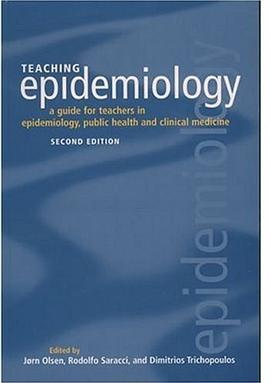
Teaching epidemiology is a task that requires skills and knowledge. The overriding requirement is knowledge, which, should be combined with a clear teaching strategy and good pedagogic skills. The general advice is simple: if you are not an expert on a topic, try to enrich your background knowledge before you start teaching it. Teaching Epidemiology 2e helps you to locate the most important sources of knowledge you need to study before you start, by providing the world expert teachers' advice on how best to structure teaching - a unique insight in to what has worked in their hands. The book will help you plan your own tailored teaching programme. The book is a guide to new teachers in the field at two levels, those teaching basic courses for undergraduates and those teaching more advanced courses for students at postgraduate level. Each chapter provides key concepts and a list of key references. Subject specific methodology and disease specific issues (from cancer to genetic epidemiology) are dealt with in detail. In this day and age no book is complete without a focussed chapter on the principles and practice of computer assisted learning. This new edition is published in collaboration with the International Association of Epidemiology (IEA) and the European Programme in Epidemiology (EEPA).
Epidemiology: A Practical Guide to Understanding Disease Patterns and Public Health Interventions This comprehensive volume delves into the fundamental principles and essential methodologies of epidemiology, offering a clear and accessible exploration of how we study the distribution and determinants of health and disease within populations. Far from a mere theoretical treatise, this book is designed to equip readers with a practical understanding of epidemiological concepts, enabling them to critically analyze public health challenges and appreciate the evidence-based strategies employed to address them. At its core, epidemiology is the study of "that which befalls the people." This book unpacks this foundational definition by meticulously dissecting the key components of epidemiological inquiry. We begin by establishing a robust framework for understanding disease occurrence, moving beyond simple counts to explore the vital metrics that quantify health and disease burden. Measures of frequency, such as incidence and prevalence, are explained in detail, illustrating how they provide snapshots of disease activity and long-term trends. The importance of understanding these measures in their proper context is emphasized, highlighting how variations in case definitions, diagnostic capabilities, and population dynamics can influence their interpretation. Beyond simply measuring how much disease exists, epidemiology seeks to understand why it exists. This necessitates a deep dive into the concept of causality and the various factors that influence health outcomes. The book systematically introduces the epidemiological triad of agent, host, and environment, providing a foundational model for understanding infectious disease transmission. However, it quickly expands this perspective to encompass the broader spectrum of chronic diseases and non-communicable conditions, where a more complex interplay of biological, behavioral, social, and environmental determinants comes into play. Readers will be guided through the nuances of risk factors, protective factors, and the often-subtle pathways through which these elements contribute to population health. A significant portion of this book is dedicated to the cornerstone of epidemiological research: study design. Understanding the strengths and limitations of different epidemiological approaches is paramount to interpreting research findings accurately. We explore observational studies, starting with descriptive designs like case reports and case series, which provide valuable initial insights into novel or unusual health events. This naturally leads to the discussion of analytic observational studies, where the focus shifts to identifying associations between exposures and outcomes. Cross-sectional studies, ecological studies, case-control studies, and cohort studies are presented with clear explanations of their methodologies, advantages, and potential biases. The practical considerations of conducting these studies, from sample selection to data collection, are illuminated, ensuring readers can appreciate the real-world challenges faced by researchers. The book then transitions to experimental study designs, with a particular emphasis on randomized controlled trials (RCTs). The principles of randomization, blinding, and control groups are explained in depth, underscoring why RCTs are often considered the gold standard for establishing causality. The ethical considerations and practical feasibility of conducting RCTs in various public health settings are also addressed. Furthermore, the book provides guidance on understanding and interpreting the results of these studies, including the statistical measures used to assess the strength of evidence. Data analysis and interpretation form another crucial pillar of this work. Readers will gain an understanding of the fundamental statistical concepts that underpin epidemiological research. Measures of association, such as odds ratios and relative risks, are meticulously explained, alongside confidence intervals and p-values, to help readers assess the statistical significance and precision of observed associations. The importance of considering confounding variables and methods for their control is highlighted, as is the concept of effect modification. This section aims to demystify statistical jargon and empower readers to engage critically with quantitative data, distinguishing between genuine associations and those that may be due to chance or bias. The application of epidemiological principles to real-world public health practice is a recurring theme. The book illustrates how epidemiological data informs disease surveillance systems, enabling public health officials to monitor disease trends, detect outbreaks, and allocate resources effectively. The process of outbreak investigation is described step-by-step, from initial case identification and hypothesis generation to data analysis and control measure implementation. Readers will learn about the critical role of epidemiology in the evaluation of public health interventions, from screening programs and vaccination campaigns to policy changes aimed at improving population health. A dedicated section explores the complexities of screening and diagnostic testing. The concepts of sensitivity, specificity, positive predictive value, and negative predictive value are thoroughly examined, along with the principles of test accuracy and the challenges of implementing effective screening programs in diverse populations. The ethical implications of screening, including the potential for overdiagnosis and the psychological impact of false positives, are also discussed. The book also addresses the growing importance of specialized areas within epidemiology. The principles of infectious disease epidemiology are explored in detail, including the concepts of R0, herd immunity, and the dynamics of epidemic spread. The challenges of understanding and controlling emerging infectious diseases are discussed, drawing upon historical examples and contemporary threats. Similarly, the principles of chronic disease epidemiology are examined, focusing on the multifactorial nature of conditions such as cardiovascular disease, cancer, and diabetes. The role of lifestyle, genetics, and environmental exposures in shaping the burden of these diseases is investigated. Furthermore, the evolving landscape of epidemiology is acknowledged. The book touches upon the increasing integration of advanced analytical techniques, including spatial epidemiology and bioinformatics, in understanding disease patterns. The challenges and opportunities presented by big data in public health are also considered, alongside the ethical considerations surrounding data privacy and accessibility. Ultimately, this volume seeks to foster a deeper appreciation for the discipline of epidemiology as a vital tool for understanding and improving the health of communities. It aims to empower readers, whether they are aspiring epidemiologists, public health professionals, healthcare providers, policymakers, or simply engaged citizens, with the knowledge and critical thinking skills necessary to navigate the complex world of health and disease. By demystifying epidemiological concepts and providing practical insights into its methodologies, this book serves as an indispensable resource for anyone seeking to contribute to the advancement of public health.