
具体描述
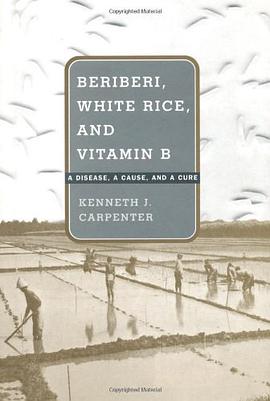
In this comprehensive account of the history and treatment of beriberi, Kenneth Carpenter traces the decades of medical and chemical research that solved the puzzle posed by this mysterious disease. Caused by the lack of a minute quantity of the chemical thiamin, or vitamin B1 in the diet, beriberi is characterized by weakness and loss of feeling in the feet and legs, then swelling from fluid retention, and finally heart failure. Western doctors working in Asia after 1870 saw it as the major disease in native armed forces and prisons. It was at first attributed to miasms (poisonous vapors from damp soil) or to bacterial infections. In Java, chickens fed by chance on white rice lost the use of their legs. On brown rice, where the grain still contained its bran and germ, they remained healthy. Studies in Javanese prisons then showed beriberi also occurring where white (rather than brown) rice was the staple food. Birds were used to assay the potency of fractions extracted from rice bran and, after 20 years, highly active crystals were obtained. In another 10 years their structure was determined and 'thiamin' was synthesized. "Beriberi" is a story of contested knowledge and erratic scientific pathways. It offers a fascinating chronicle of the development of scientific thought, a history that encompasses public health, science, diet, trade, expanding empires, war, and technology. From the preface: this is a medical detective story - beginning with the investigation of a disease that has killed or crippled at least a million people, and then following up clues that ranged much wider. One outcome was the production of a synthetic chemical that we now, nearly all of us, consume in small quantities each day in our food. The detectives had a variety of professions and spoke different languages. Their work ranged from studying the health of laborers in a primitive jungle to the painstaking dissection of individual grains of rice under a microscope. The integrated story of their struggles and successes, culled from old volumes in scattered libraries, forms the subject of this book.
作者简介
目录信息
读后感
用户评价
这本书,**《Beriberi, White Rice, and Vitamin B》**,光是书名就带着一种古典的、仿佛能闻到旧世界气息的韵味。我是在一个偶然的机会下接触到这本书的,当时我正在寻找一些关于早期营养学发展史的文献。坦白说,我对这类主题的期待值通常不会太高,总觉得会是一堆枯燥的科学名词堆砌。然而,这本书却完全颠覆了我的印象。它的叙事节奏非常引人入胜,作者似乎拥有一种魔力,能将那些原本冰冷的实验数据和医学观察,编织成一幕幕鲜活的历史剧。我特别欣赏作者在描述当时的社会背景时所下的功夫,那种将营养学突破置于全球贸易、殖民扩张和民众生活困境的大背景下的处理方式,使得整个阅读体验充满了厚重感。阅读过程中,我仿佛能真切地感受到那些早期研究者在面对未知疾病时的那种焦灼与坚持,以及他们是如何一步步抽丝剥茧,最终揭开“脚气病”背后那层神秘面纱的。它不仅仅是一部科学史,更像是一部关于人类智慧如何战胜愚昧的史诗。
评分这本书的文字风格非常犀利而富有洞察力,读起来让人有一种酣畅淋漓的感觉。它没有采取那种温吞水式的科普介绍,而是直接切入了问题的核心,用一种近乎批判性的眼光审视了历史进程中那些被忽略的关键节点。尤其是作者对“精制食品”的社会经济影响所进行的探讨,简直是一剂猛药。他不仅仅停留在解释维生素缺乏的生理机制上,更深入剖析了工业化、农业生产效率提升与公共健康之间那条错综复杂的利益链条。我记得有一章专门分析了十九世纪末期亚洲部分地区稻米加工方式的改变如何直接冲击了底层民众的生存状态,那段描写极其精准有力,让我不得不重新审视我们今天习以为常的“方便”与“效率”背后的代价。这本书的论证逻辑严密得像是精密的钟表,每一个论点都建立在扎实的历史证据之上,让人无法辩驳,却又不得不深思。
评分我通常对这种聚焦于单一主题的学术性著作抱持着敬而远之的态度,总担心内容会过于偏窄,难以引发广泛的共鸣。但**《Beriberi, White Rice, and Vitamin B》**的广度着实出乎我的意料。它巧妙地将一个看似局限的营养学问题,延展到了公共卫生政策、国际医学交流,乃至文化习俗的变迁等多个维度。阅读这本书就像是在进行一次多学科的“导览”,时而是微观的细胞生理学,时而又是宏观的全球史视角。作者在引用大量一手史料的同时,其叙事的声音却始终保持着一种充满激情的学人本色,绝不故作高深。对我来说,最大的收获在于,它提供了一个看待现代健康问题的全新框架——即任何单一的健康危机背后,往往都隐藏着复杂的社会结构性因素。这本书的价值,远超出了对单一疾病的知识普及。
评分让我印象最深的是这本书所展现出的那种对“人”的关怀。尽管它涉及严谨的科学论证,但其核心始终是对那些因无知而遭受苦难的普通人的深切同情。作者在描述那些因缺乏维生素B1而濒临死亡的患者时,文字没有丝毫的煽情,却反而更具震撼力。那种冷静的笔触下,流淌着对生命尊严的最高敬意。它让我反思,我们今天享受的营养学成果,是建立在多少前人的痛苦和探索之上的。这本书成功地在“科学的精确性”和“人文的温度”之间找到了一个近乎完美的平衡点。读完之后,我不仅仅是对一种维生素的缺乏有了清晰的认识,更是对医学进步的历史充满了敬畏。它是一部沉甸甸的著作,值得每一位关注人类福祉的读者细细品味。
评分这本书的结构安排极为考究,它不是简单的时间线叙述,而更像是一部层层递进的悬疑剧。作者不断设置“谜团”,引导读者跟随他的思路去探索。他会先抛出一个看似无法解释的医学现象,然后带领读者审视当时主流的错误认知,最后才揭示科学突破的瞬间。这种叙事上的张力,使得即便是对科学史不太感兴趣的读者,也能被牢牢地吸引住。尤其是在讨论到早期营养学家如何克服来自既有学术权威的阻力和质疑时,那种“以卵击石”的勇气和智慧,读来令人热血沸腾。我发现自己时不时地会停下来,翻阅那些引用文献的附注,试图去挖掘更多关于那些被历史光环掩盖的先驱者的故事。这本书的阅读体验是主动的、探索性的,而不是被动接受信息的过程。
评分日(陆)军深受其害,森鸥外作得一手好死
评分日(陆)军深受其害,森鸥外作得一手好死
评分日(陆)军深受其害,森鸥外作得一手好死
评分日(陆)军深受其害,森鸥外作得一手好死
评分日(陆)军深受其害,森鸥外作得一手好死