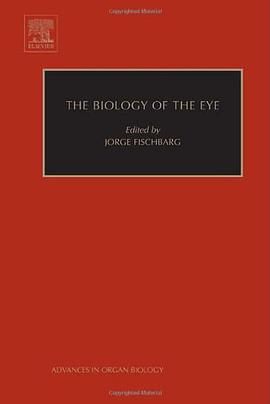
This book is the result of a collective effort. Due to an oversight, mention of three of the contributors who played an especially decisive role in bringing the work to fruition was omitted from the book. They should share fully in the intellectual credits accruing from this publication. I would therefore like to acknowledge and thank the following for their outstanding contributions to editing the work: Dr. Morten Dornonville la Cour (MD, Dr. Med. Sci.) solicited and edited the chapters on retina, RPE, choroid, vitreous, immunology, and sclera. Dr. la Cour is a Lecturer, Eye Department, Copenhagen University Hospital, specializes in vitreoretinal surgery, and frequently lectures in the international scene. A trained mathematician, he has done research in retinal pigment epithelial physiology in the laboratories of Drs. Thomas Zeuthen and Sheldon Miller. Dr. Friedrich P.J. Diecke and Dr. Elliott M. Kanner also provided invaluable editorial assistance. Dr Diecke, who was formerly Professor and Chairman of the Department of Physiology, UMDNJ-New Jersey Medical School, is a Professor Emeritus at that institution. His research has concentrated on membrane transport mechanisms in lens epithelial cells, corneal endothelial cells and peripheral nerve and on the regulation of vascular smooth muscle contraction. Dr. Elliott M. Kanner was born in Canada in 1970. He graduated from Yale University in 1992 with a BS/MS degree in Molecular Biophysics and Biochemistry. He received his PhD degree from the Rockefeller University in 1999 and his MD degree from Weill/Cornell in 2001. He is currently an Ophthalmology resident at Columbia University. Jorge Fischbarg, December 2005. This book explores the many recent novel ideas about the eye in a systematic and synthetic way. It includes both basic sciences and applications towards clinical research. Chapters include both anatomical and functional descriptions of the different ocular tissues and treatments of a few subjects of practical importance for ophthalmologists. This book is intended for students in basic biomedical science interested in the eye, as well as ophthalmologists a comprehensive source on recent developments in ocular research. It combines basic science and practical opthalmological subjects. It is written with the simplicity of a textbook, while maintaining the comprehensive and rigorous approach of science papers. It also includes contributions by well-known experts.
视网膜的光电转换:从分子到信号的精妙旅程 本书深入探讨了视觉系统中最核心、最令人惊叹的机制之一——视网膜上的光电信号转导过程。我们不聚焦于眼球的整体解剖结构,而是将视角聚焦于光感受器细胞(视杆细胞和视锥细胞)内部发生的复杂分子事件,以及这些事件如何精确地将进入眼睛的光子转化为神经电信号。 第一部分:感光色素与膜电位动态学 本章首先详细解析了视网膜中存在的两大类感光色素——视紫红质(Rhodopsin)和视锥蛋白(Photopsins)的结构与组成。我们探究了它们的核心辅基:11-顺式视黄醛(11-cis-retinal)与 opsin 蛋白的共价结合,以及这种结合如何维持光感受器细胞的暗适应状态。 活性光子的触发:异构化与构象变化 关键的转折点在于光子的捕获。本书详述了紫外-可见光波段的光子如何精确地被视黄醛分子吸收,引发其从11-顺式到全反式(all-trans)的快速几何异构化。这种异构化随后诱导了 opsin 蛋白的构象变化,形成活性状态——元视紫红质II(Meta-rhodopsin II, $ ext{M}_{ ext{II}}$)。我们提供了分子动力学模拟的最新数据,展示 $ ext{M}_{ ext{II}}$ 暴露的信号转导域与其他下游蛋白的结合界面。 G 蛋白级联的激活:从 $ ext{M}_{ ext{II}}$ 到 $ ext{G}_{ ext{t}}$ $ ext{M}_{ ext{II}}$ 的生成是整个信号放大的起点。本部分详细阐述了 $ ext{G}$ 蛋白——视转导蛋白(Transducin, $ ext{G}_{ ext{t}}$)——如何被激活。我们分析了 $ ext{G}_{ ext{t}}$ 的 $alpha$ 亚基如何与 $ ext{M}_{ ext{II}}$ 结合,释放出与 $ ext{GDP}$ 结合的 $ ext{G}_{ ext{t}}�etagamma$ 二聚体,并将能量传递给下一个关键酶:cGMP 磷酸二酯酶(cGMP Phosphodiesterase, PDE$alpha�etagamma_2$)。 离子通道的关闭:超极化机制的建立 在黑暗状态下,光感受器细胞维持着较高的 cGMP 浓度,这些 cGMP 分子是维持细胞膜去极化状态的关键。它们结合并打开位于细胞外节膜上的 cGMP 门控阳离子通道(cGMP-gated Cation Channels),允许 $ ext{Na}^+$ 和 $ ext{Ca}^{2+}$ 内流,使细胞膜保持在相对正电位的水平(约 $-40 ext{mV}$)。 光信号的转导核心在于 PDE 活化。PDE 水解 cGMP,导致 cGMP 浓度迅速下降。本书细致地分析了 cGMP 浓度下降如何导致这些阳离子通道关闭。离子内流的停止使得细胞膜上的 $ ext{K}^+$ 通道(维持静息电位的主要通道)占据主导地位,导致细胞膜电位发生显著的超极化,从 $-40 ext{mV}$ 漂移至 $-70 ext{mV}$ 甚至更负。 第二部分:信号的调控与适应性 视觉系统必须能够在极宽的光照范围内(从星光到强日光)保持反应的线性度和灵敏度。这一适应性依赖于精密的反馈回路和酶促失活机制。 信号的终止:磷酸化与脱敏 为了防止单个光子引发的信号无限期持续,必须迅速关闭 $ ext{M}_{ ext{II}}$ 的活性。本书重点介绍了视网膜激酶(Rhodopsin Kinase, RK)的作用。RK 在 $ ext{M}_{ ext{II}}$ 上磷酸化多个丝氨酸和苏氨酸残基,这些磷酸化位点作为“停止信号”,促使阻遏蛋白(Arrestin)与 $ ext{M}_{ ext{II}}$ 结合。阻遏蛋白的结合有效地阻止了 $ ext{G}_{ ext{t}}$ 蛋白的进一步激活,完成了信号的初级关闭。我们对比了不同物种中阻遏蛋白的结构差异及其对 $ ext{M}_{ ext{II}}$ 结合效率的影响。 钙离子的反馈调控 在强光刺激下,持续的离子内流会导致胞内 $ ext{Ca}^{2+}$ 浓度升高。这种 $ ext{Ca}^{2+}$ 浓度的变化本身就作为重要的负反馈信号。钙离子除了影响通道关闭外,还通过激活钙调素依赖性蛋白激酶 II ($ ext{CaMKII}$),间接调控 PDE 的活性,并可能影响视紫红质的再循环效率,确保细胞对后续光刺激的敏感性得到重置。 视黄醛的再生:视觉循环(Visual Cycle) 光子将 11-顺式视黄醛转化为全反式视黄醛后,必须将其还原并重新异构化回活性形式,这一过程称为视觉循环。本书详细解析了发生在视网膜色素上皮细胞(RPE)中的关键酶促步骤,特别是 $ ext{RPE65}$ 酶在将全反式视黄醇酯转化为11-顺式视黄醇中的核心作用,以及转运蛋白在视杆细胞和 RPE 之间的视黄醛转运机制。 第三部分:信号的传播与细胞间通讯的生物物理学基础 光感受器细胞将光化学信号转化为电信号后,必须将其准确地传递给双极细胞。这一部分着重于膜电位变化如何转化为神经递质的释放。 静息电流与递质释放 在黑暗中,持续的 $ ext{Na}^+$ 内流维持了高水平的谷氨酸(Glutamate)释放。超极化意味着这种“持续释放”状态被抑制。本书精确描述了超极化如何导致电压依赖性钙离子通道 ($ ext{VDCC}$) 的关闭。钙离子的内流减少直接触发了突触前膜囊泡与突触后膜的融合频率下降,从而导致谷氨酸释放量的显著减少。 跨膜信号的耦合 我们分析了光感受器细胞的独特之处:它们的突触传递是“电位依赖性递质释放的抑制”,而不是标准的兴奋性突触中的“电位依赖性递质释放的增强”。这种“关灯”模式是光信号能够在视网膜中快速建立对比度的生物物理学基础。 本书通过整合电生理记录数据、高分辨率冷冻电镜结构解析和遗传学模型,描绘了一幅从单一光子接触视网膜到神经信号起始输出的完整、高精度的分子图景。它旨在为高级研究人员和研究生提供对光电转导机制深入的、跨学科的理解。