
具体描述
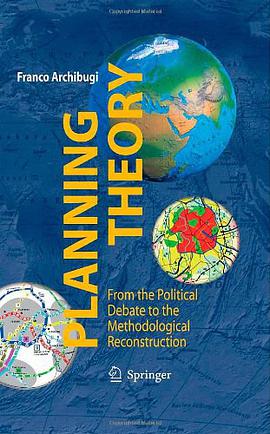
'...This book makes two really compelling arguments: Firstly, that planning theory has lost its focus on the planning process itself and how it can be used effectively to help people figure out what they want, how to get it, and why...Secondly, that planning theory also has lost its focus on the institutional interconnections of planning processes from national, to state or regional, to local levels, and back up again. I think the author is quite right on both counts...It strikes me that what is needed now is an integration of macro and micro perspectives, which is a point that the book makes at various stages' - Prof. John M. Bryson, Hubert H. Humphrey Institute of Public Affairs, University of Minnesota. 'In this book Archibugi criticises current planning theory literature and the current planning debate. His idea is that many authors use a notion of planning that is too ample and generic, with the consequence that their theory of planning is itself too ample and generic, and consequently of scant operative use for practitioners. Instead of a theory of planning (and in planning) we therefore have, today, some kind of theory on planning or about planning; a sort of meta-analysis or meta-debate that takes us nowhere. This is, in Archibugi's view, the main reason of the limited advances we have had in this field and of the loss of identity we - as planners and planning theorists - frequently experience...To find a remedy for this situation, Archibugi proposes returning to the idea of planning as a method of making rational decision; a method that is, to some extent, common to many areas. In this perspective...planning is essentially oriented toward optimisation. In the ex-ante voluntaristic perspective adopted, planning cannot be anything but an effort to achieve the best possible result, within given constraints, with regard to the objectives undertaken...In this perspective, forms of participative, collaborative, co-operative planning are not a new mode or kind of planning, but, instead, they are procedures for a viable form of planning intended as a good decision process (not exactly new procedures, and yet still relevant in particular situations). From this idea of planning we can derive some fundamental consequences for planning theory itself...Planning theory is not a philosophical, sociological or politological enterprise, but a methodological one. Planning theory can be seen as a theory dealing with the logical and operational frame of any planning procedure intended as a rational method of decision and choice...Planning theory is essentially interested in exploring and showing what is useful to correctly decide and act, and not simply how to know the world as it is. Archibugi's book is both stimulating and provocative, and also courageous in challenging many new orthodoxies in the planning field (note how criticising the rational approach has become a kind of universal sport)' - Stefano Moroni, Professor of planning, 'Polytechnic University' of Milan [from "Planning Theory Volume 4, 2005", Sage Pubblications].
作者简介
目录信息
读后感
用户评价
这本书的语言风格呈现出一种极强的学者气质,它的措辞精准,逻辑链条严密得如同瑞士钟表一般。作者在行文中表现出对概念的绝对控制力,没有一句多余的话,每一个术语的引入和使用都经过了深思熟虑,似乎是经过了无数次推敲和打磨。这种风格使得文本的密度非常高,信息量饱和,你很难从中挑出可以轻松略过的“水分”。我必须承认,这意味着我阅读的速度被极大地拖慢了,因为我需要频繁地停下来,对照着其他资料来核实或深化对某些关键概念的理解。这种严谨性是其专业性的有力证明,它保证了论证的可靠性,不容许任何模糊不清的解释蒙混过关。然而,也正因为这种极致的精炼,使得文本的“可亲近性”相对较低,它更像是写给领域内已经具备一定基础的同行们看的一份深度报告,而不是面向大众的科普读物。它要求读者必须以一种近乎“解构”的姿态去对待每一个句子。
评分这本书的排版和装帧设计也值得称道,它散发出一种低调而扎实的学术气息。纸张的质感很好,拿在手里沉甸甸的,这在如今很多追求轻薄的出版物中已属难得。内页的字体选择非常考究,大小适中,行距设置合理,即便是长时间阅读也不会感到眼睛疲劳。但更让我印象深刻的是那些随处可见的留白处理。这种克制的留白,使得原本密集的文字内容得以呼吸,为读者的目光提供了一个短暂的歇脚点,这在阅读过程中起到了至关重要的作用,它潜移默化地降低了阅读的认知负荷。而且,书中的图表(虽然我不会在这里具体描述那些图表本身的内容)绘制得极其清晰、逻辑性强,它们不是作为点缀出现的,而是作为论证的重要组成部分,与文字完美地融合在一起,共同构建了强大的说服力。这本实体书本身,就仿佛是一件精心制作的工具,它尊重读者的阅读体验,这种对细节的关注,无疑提升了阅读的整体品质。
评分我必须指出,这本书在批判性思维的引入方面做得非常出色,它没有简单地接受任何既有的范式或主流观点。作者似乎热衷于在看似坚固的理论基石上挖掘裂缝,并通过提出一系列尖锐的、往往是反直觉的问题,来挑战读者的既有认知。这种颠覆性的视角贯穿始终,让人在阅读过程中始终保持一种警觉和审视的态度。它成功地营造了一种“质疑即进步”的学术氛围。书中对于既有理论的解构过程,展示了作者深厚的历史洞察力和对现实问题的敏锐捕捉能力。它教导的不是“应该相信什么”,而是“如何去审视和质疑所相信的一切”。这种强调内在审视的教学方式,对于培养一个真正有独立思考能力的规划师而言,价值无可估量。这本书的真正价值,或许不在于它提供了多少明确的“答案”,而在于它提供了一套强有力的“发问工具箱”。
评分这本书的叙事风格真是让人耳目一新,作者似乎没有刻意去构建一个宏大的理论框架,而是选择了一种近乎对话式的口吻,娓娓道来。读起来,你不会觉得自己在啃食晦涩难懂的学术著作,反而更像是跟随一位经验丰富、学识渊博的导师,在思想的迷宫中漫步。他对概念的阐释,总是能巧妙地避开教条主义的陷阱,用生动的例子和恰到好处的比喻来支撑观点。我尤其欣赏他处理复杂性问题时的那种从容不迫,他没有试图将所有变量都纳入一个完美闭环的公式中,而是坦诚地展示了规划实践中那些无法量化、充满不确定性的“灰色地带”。这种处理方式极大地提升了阅读的愉悦感,让那些原本可能令人望而生畏的专业术语,变得触手可及。书中的章节过渡处理得非常自然,仿佛是思想的自然流淌,很少有生硬的转折点,这使得读者可以沉浸其中,不自觉地跟随作者的思路进行深入的思考。整体而言,这本书提供了一种更人性化、更具思辨性的视角来审视规划的本质,而非仅仅停留在技术层面。
评分从内容结构上来看,这本书的组织方式非常具有挑战性,它似乎故意打破了传统线性叙事的习惯。作者更像是在搭建一个多维度的知识网络,每一个章节都像是一个节点,彼此之间存在着复杂的关联,而非简单的递进关系。你可能需要不断地在不同章节间来回跳转,才能真正领悟到某一核心论点的完整意涵。这种非线性的阅读体验,要求读者必须保持高度的专注和主动的构建能力。它不是一本“被动接收信息”的书,而是要求你积极地参与到知识的再创造中去。这种结构的好处在于,它真实地反映了现实世界中复杂系统的运作模式——一切都是相互关联、相互影响的。对于初次接触该领域的人来说,这或许会造成一定的挫败感,因为你无法指望在阅读完某几页后就能得到一个明确的结论。然而,一旦你适应了这种节奏,就会发现它带来的认知上的丰富性和深度是无可比拟的,它迫使你学会“跳出框框”去思考。
评分 评分 评分 评分 评分