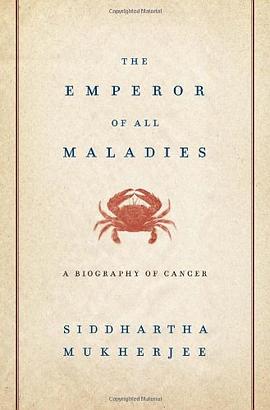

具体描述
Starred Review. Mukherjee's debut book is a sweeping epic of obsession, brilliant researchers, dramatic new treatments, euphoric success and tragic failure, and the relentless battle by scientists and patients alike against an equally relentless, wily, and elusive enemy. From the first chemotherapy developed from textile dyes to the possibilities emerging from our understanding of cancer cells, Mukherjee shapes a massive amount of history into a coherent story with a roller-coaster trajectory: the discovery of a new treatment--surgery, radiation, chemotherapy--followed by the notion that if a little is good, more must be better, ending in disfiguring radical mastectomy and multidrug chemo so toxic the treatment ended up being almost worse than the disease. The first part of the book is driven by the obsession of Sidney Farber and philanthropist Mary Lasker to find a unitary cure for all cancers. (Farber developed the first successful chemotherapy for childhood leukemia.) The last and most exciting part is driven by the race of brilliant, maverick scientists to understand how cells become cancerous. Each new discovery was small, but as Mukherjee, a Columbia professor of medicine, writes, "Incremental advances can add up to transformative changes." Mukherjee's formidable intelligence and compassion produce a stunning account of the effort to disrobe the "emperor of maladies." (Nov.) (c)
Copyright © Reed Business Information, a division of Reed Elsevier Inc. All rights reserved.
作者简介
Siddhartha Mukherjee is a cancer physician and researcher. He is an assistant professor of medicine at Columbia University and a staff cancer physician at the CU/NYU Presbytarian Hospital. A former Rhodes scholar, he graduated from Stanford University, University of Oxford (where he received a PhD studying cancer-causing viruses) and from Harvard Medical School. His laboratory focuses on discovering new cancer drugs using innovative biological methods. Mukherjee trained in cancer medicine at the Dana Farber Cancer Institute of Harvard Medical School and was on the staff at the Massachusetts General Hospital. He has published articles and commentary in such journals as Nature, New England Journal of Medicine, Neuron and the Journal of Clinical Investigation and in publications such as the New York Times and the New Republic. His work was nominated for Best American Science Writing, 2000 (edited by James Gleick). He lives in Boston and New York with his wife, Sarah Sze, an artist, and with his daughter, Leela.
目录信息
Prologue 1
Part 1 "Of blacke cholor, without boyling" 9
Part 2 An Impatient War 105
Part 3 "Will you turn me out if I can't get better?" 191
Part 4 Prevention is the Cure 235
Part 5 "A Distorted Version of Our Normal Selves" 335
Part 6 The Fruits of Long Endeavors 393
Atossa's War 461
Acknowledgments 471
Notes 473
Glossary 533
Selected Bibliography 537
Photograph Credits 543
Index 545
· · · · · · (收起)
读后感
这是我迄今为止读过最好的科普书。 毫 无疑问,这是一本工程浩大的经典,一本详实严谨的科学著作,同时,它也是一本史诗般的传记。如果说写作的对象在一定程度上决定写作的结果,那这本书的主题 ——被作者称为万疾之王的癌症,在我看来,应该是长长的人类疾病名单中(其实不...
评分2013年快过去3个月了,看了一堆书,这是第一本好书。 首先,作者很会讲故事,运用了很多小说上的技术,使人如看侦探小说。 其次,翻译流畅,李虎老师的翻译很流畅,没有磕磕盼盼的地方。 最后,这本书的装帧很喜欢。
评分 评分开学前拿到的书,因为这学期特别忙,所以看了很长时间才看完。书的内容很不错,可以打五颗星,不过翻译一般,只能给三颗半星;比如相邻两段同一个人的名字可以翻译成两个不同的样子,再比如有个地方,反式视黄酸和顺式视黄酸有些地方似乎写反了,看起来逻辑关系不对。 虽是科普...
评分1、“我们相信上帝,但其他人必须用数据说话。。”ipad版p250 2、叶酸抗结剂治疗白血病的故事。。 3、p253,医生目的不是挽救特定人,而是挽救所有人的生命。 4、苏珊桑塔格,疾病的隐喻 5、p263,狮子,狗,人类是仅知的会发生前列腺癌的动物。p265,化学阉割。 6、p285,再次...
用户评价
当这本书最终摆在我面前,我承认,我带着一丝犹豫。毕竟,“疾病”这个词本身就带着沉重的意味。然而,作者用一种近乎艺术的方式,将这个主题打磨得如此光彩夺目,彻底颠覆了我原有的预期。这不是一本冰冷的医学教科书,而是一部充满人文关怀的史诗。从历史的长河中,作者巧妙地编织了无数鲜活的生命故事,那些曾经绝望、抗争、希望,最终又归于沉寂的灵魂,在文字中重新鲜活起来。我被那些伟大的科学家们,他们的智慧、毅力,以及他们面对未知时的渺小与伟大所震撼。同时,书中对那些普通人,在疾病面前展现出的坚韧和爱,也让我感动不已。它让我们看到,即使在最黑暗的时刻,人性的光辉也从未熄灭。这本书不仅仅是关于医学的进步,更是关于人类精神的胜利,它提醒着我们,在与疾病的漫长斗争中,我们始终没有放弃对生命的追求和对未来的希望。
评分在翻开这本书之前,我对“疾病”这个话题一直保持着一种敬畏和疏离。然而,作者以一种令人惊叹的视角,将这个话题剥离了表面的恐惧,展现出其深层的人性、历史和科学交织的复杂性。这不仅仅是一本关于医学进展的书,更是一部关于人类智慧、勇气和韧性的史诗。书中那些关于早期探索的曲折,关于重大突破的喜悦,以及关于无数次失败的无奈,都构成了一幅令人难忘的画卷。我被书中人物的命运深深吸引,那些为寻找治愈之路而倾尽一生的人们,他们的执着与奉献,让我看到了科学精神的伟大。同时,书中对病患及其家属的描绘,也充满了温情与力量,它们让我看到了在绝望中诞生的希望,在痛苦中闪耀的人性光辉。读完这本书,我感觉自己不仅仅是获得了一些知识,更像是经历了一场洗礼,对生命有了更深的敬畏和理解。
评分这绝对是一本让人沉浸其中的杰作,尽管主题是关于疾病,但作者的叙述方式却充满了引人入胜的文学色彩,让人仿佛置身于一场史诗般的旅程。从最初了解到这本书的名字,我就被深深吸引。它不仅仅是关于一种疾病的科学解释,更像是对人类与疾病抗争历史的一次深刻的回顾和反思。我尤其欣赏作者能够将复杂艰深的医学知识,用如此清晰易懂、引人入胜的方式呈现出来。阅读过程中,我时不时会停下来,思考我们对生命的认知,对医学的进步,以及人类顽强的生命力。书中对科学家们不懈探索的精神,对患者们面对疾病时的勇气和绝望的描绘,都深深地触动了我。我感觉自己不仅仅是在阅读一本书,更像是在与历史对话,与那些为了摆脱痛苦而奋斗过的人们进行心灵的交流。这本书带来的不仅仅是知识的增长,更是对人生和存在的深刻启示,让我更加珍惜当下,也更加敬畏生命的神奇。
评分我被这本书深深地吸引住了,它所描绘的,与其说是一部医学史,不如说是一部关于人类与自身弱点进行的永恒斗争的史诗。作者的叙述方式极具感染力,他用一种近乎诗意的语言,将那些晦涩难懂的科学概念,转化为引人入胜的故事。我被书中那些科学家们的不懈追求所折服,他们的每一次实验,每一次突破,都凝聚着人类对生命最深切的渴望。同时,书中对个体生命在疾病面前的脆弱与坚韧的描绘,也让我倍感触动。那些曾经在绝望边缘挣扎的灵魂,那些在痛苦中闪耀的人性光辉,都让我看到了生命本身的意义。这本书让我明白,医学的进步,不仅仅是科学的积累,更是人类集体意志的体现,是无数个体为了生存和尊严而进行的英勇抗争。它让我更加珍视生命,也更加敬畏那些为之奋斗的灵魂。
评分我必须承认,这本书比我预期的要深刻得多。我本以为会是一篇关于医学研究的枯燥记述,但实际上,它更像是一部波澜壮阔的史诗,描绘了人类与一种强大敌人漫长而艰辛的斗争。作者的叙事手法极其高超,他将冰冷的科学事实,与生动的人物故事巧妙地融合在一起,使得整本书充满了人性的温度和戏剧性的张力。我被书中那些坚持不懈的科学家们所打动,他们的探索精神,他们面对无数失败却从未放弃的决心,无疑是对人类智慧和毅力最生动的诠释。同时,书中对那些被疾病折磨的个体及其家庭的描绘,也让我深感共鸣。他们的痛苦、挣扎、希望与绝望,都让我看到了生命最脆弱的一面,也看到了人类最强大的韧性。这本书让我对医学的进步有了更深的理解,也对人类在追求健康和生命的过程中所付出的巨大努力有了全新的认识。
评分都说文学就是人学,读完此书意识到医学也是人学。Mukherjee似乎特别擅长抓住科学研究发展与时代背景之间的关系,而刻画一个个人物时又入骨般有力。读到War on Cancer折射出的坚定的信念与空虚的狂热,读到禁烟运动与烟草公司斡旋的艰难曲折,读到在理解癌症的基因基础之路上的抽丝剥茧,总忍不住眼红鼻酸。然而同样让我印象深刻的是书中一个个的人,从Larger than life的化疗之父Farber到无数被癌症改变了人生的病人。疾病可以成为隐喻,正是在于疾病作为一个独特的透镜反射出的人性。
评分Cancer. 作者高山仰止。
评分Worth reading a second time
评分这个作者竟然不是native speaker!!! 不过他的句子确实是异常工整啊!!膜拜 但书的最后还是比较啰嗦。。
评分: R73/M953