
具体描述
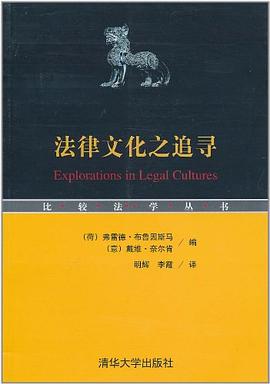
《法律文化之追寻》是一部以“法律文化”为中心议题的翻译文集,原作者们分别从不同的视角,对法律文化的内涵、功用及其地域性特征作了深入探讨。法律与文化在不同的国家背景下呈现出各种各样的情形,“法律文化”正是从不同方面描述与阐释这些复杂的关系。《法律文化之追寻》的每一篇文章均有各自的议题与对应的内容,阐述法律与文化关系的某一方面,大致涉及南非、荷兰、俄罗斯、法国、德国、希腊、乌干达等国家和地区独特的法律文化。《法律文化之追寻》是一部颇具前沿性和创造性的比较法律文化著作。
《法律文化之追寻》适用于大专院校师生、科研机构研究人员以及法律实务部门人士,同样也适用于对法学理论与实践——特别是对法律文化——感兴趣的读者。
作者简介
目录信息
读后感
用户评价
The title, "The Pursuit of Legal Culture," immediately sparks my curiosity, suggesting a deep dive into the invisible forces that shape our understanding and application of law. I imagine the author embarking on a grand tour of human history and geography, exploring how different societies have developed their unique legal traditions, not in isolation, but as a direct reflection of their values, beliefs, and social structures. It's like peeling back the layers of history to find the cultural DNA of law. I am particularly eager to see how the book might illuminate the diverse interpretations of "rights" and "responsibilities" across different cultural contexts. In some cultures, the emphasis might be on individual liberties, while in others, the collective good and social harmony might take precedence. I anticipate the author will provide rich, detailed case studies, perhaps comparing the legal frameworks surrounding family law or property ownership in vastly different societies, to illustrate these profound cultural divergences. Furthermore, the word "pursuit" in the title hints at an ongoing, dynamic process, and I expect the book to delve into how legal cultures are constantly in flux. I envision discussions about how societal transformations – from technological revolutions to political upheavals – have historically prompted shifts in legal norms, and how citizens, through their collective actions and cultural expressions, have actively shaped these changes. It’s about law as a living, breathing entity. The title’s emphasis on "culture" also suggests a holistic approach, looking beyond statutes and court decisions to understand how law is embedded within the broader fabric of society. How might art, literature, or even religious practices reflect, critique, or reinforce prevailing legal ideologies? I hope the author will explore these fascinating interconnections, revealing how law is not an isolated system but is deeply intertwined with other cultural manifestations. I also have a strong feeling that the book will not shy away from the inherent complexities and potential contradictions within legal cultures. No legal system operates without its internal tensions or external challenges. The author might illuminate these areas by examining historical periods of legal reform, social unrest, or by highlighting the struggles of marginalized groups to achieve legal equality and recognition, demonstrating that the pursuit of justice is often a protracted and contested endeavor. The title's focus on "pursuit" also implies an active intellectual engagement, and I anticipate the book will encourage readers to critically examine their own assumptions about law and its role. It might prompt reflection on how our own cultural backgrounds influence our perceptions of legal authority, fairness, and the very purpose of the legal system. This introspective dimension would add significant value to the exploration. Moreover, I believe the book may explore the symbolic and rhetorical dimensions of law within different cultures. How is legal authority communicated and legitimized? What narratives and metaphors are employed in legal discourse to shape public perception and acceptance of the law? Understanding these aspects is crucial to appreciating the persuasive power and cultural resonance of legal systems. I'm also curious to see if the book will touch upon the impact of legal education and professional training in shaping and perpetuating legal cultures. How are future legal practitioners socialized into the norms, values, and unspoken assumptions of their profession? What role does this professional acculturation play in the broader legal culture of a society? This would provide a critical link between the formal structures of law and the individuals who operate within them. In conclusion, "The Pursuit of Legal Culture" promises to be an illuminating and thought-provoking exploration of the profound and often intricate relationship between law and the societies that create and are governed by it. It suggests a book that will not only inform but also inspire a deeper appreciation for the dynamic and culturally embedded nature of legal systems.
评分The title, "The Pursuit of Legal Culture," immediately conjures images of a scholar delving into ancient texts, but also of a detective meticulously piecing together clues. I imagine this book will take us on an intellectual adventure, not just through the history of law, but through the very soul of societies that have shaped it. I suspect the author will begin by exploring how fundamental concepts, perhaps even something as basic as the idea of "fairness," are not universal but are profoundly influenced by the cultural tapestry in which they are woven. One area I am particularly eager to see explored is how different cultural traditions have approached the very notion of authority and its relationship to law. Does law derive its legitimacy primarily from divine mandate, from the will of the people, or from a more pragmatic understanding of societal needs? I envision the author drawing comparisons between, for instance, theocratic legal systems and secular ones, or between legal traditions that emphasize hierarchical structures and those that champion more egalitarian principles, all through the lens of their underlying cultural contexts. Furthermore, the "pursuit" in the title suggests an ongoing process, and I believe the book will likely delve into the dynamic evolution of legal cultures. It’s not just about what laws exist, but how they change, adapt, and are challenged over time. I anticipate discussions on how societal transformations – revolutions, industrialization, or the rise of new ideologies – have historically led to shifts in legal norms, and how individuals and groups have actively participated in shaping these changes, often by drawing upon or reinterpreting their cultural heritage. The title’s emphasis on "culture" also leads me to believe the book will go beyond the dry pronouncements of statutes and court rulings. I hope it will explore how law is reflected in and interacts with other aspects of a culture, such as its art, literature, and philosophical traditions. For example, how has literature often served as a critique of or a commentary on existing legal systems? Or how have philosophical movements provided the intellectual underpinnings for significant legal reforms? Understanding these interconnections will surely enrich our understanding of legal culture. I also have a strong inclination that the book will not shy away from the complexities and contradictions that are inherent in any legal culture. No legal system exists in a vacuum, and often there are competing legal traditions within a single society, or instances where the formal law clashes with deeply held social customs or moral beliefs. The author might illuminate these tensions, perhaps by examining periods of social unrest or by highlighting the struggles of marginalized groups to achieve legal recognition and justice. The title's focus on "pursuit" hints at a journey of discovery, and I expect the book to offer a nuanced perspective on how legal systems are not merely imposed but are also internalized and lived by the people subject to them. How do individuals perceive the law? Does it feel like a natural expression of their society's values, or something alien and imposed? Exploring this subjective experience of law within different cultural contexts would be incredibly insightful. Moreover, the book might delve into the ways in which legal language and discourse itself are culturally constructed. The very terms used in legal arguments, the rhetorical strategies employed by lawyers and judges, and the symbolic representations of justice can all be deeply embedded in a specific cultural worldview. Understanding these linguistic and symbolic dimensions is crucial to appreciating the full scope of legal culture. I’m also curious to see if the book will touch upon the role of legal education and professional training in perpetuating or transforming legal cultures. How are aspiring legal professionals initiated into the norms, values, and unspoken assumptions of their field? What impact does this socialization have on the broader legal culture of a society? Examining this aspect would provide a crucial link between the formal structures of law and the individuals who operate within them. The title, "The Pursuit of Legal Culture," promises a rich and insightful exploration, one that invites readers to look beyond the superficial and to understand the profound interconnectedness of law with the human societies that create and are shaped by it. It suggests a book that is not afraid to ask difficult questions and to explore the multifaceted nature of justice and order in the world.
评分This book, "The Pursuit of Legal Culture," immediately sparks my imagination with its evocative title. It suggests a deep dive, a journey into the very soul of how societies organize themselves through law, and the cultural underpinnings that shape this process. I envision the author taking us on a historical expedition, tracing the lineage of legal thought and practice across different civilizations. Perhaps there will be detailed examinations of how ancient legal codes, born from specific societal needs and beliefs, have evolved over centuries, adapting to new challenges while retaining echoes of their origins. I'm particularly keen to explore the book's potential to illuminate the subtle, yet profound, ways in which cultural values influence legal frameworks. Consider, for instance, how notions of family honor or communal obligation in some cultures might manifest differently in legal structures compared to societies that prioritize individual autonomy. I hope the author uses vivid examples, perhaps drawing from comparative law or anthropological studies, to showcase how concepts we take for granted, like fairness, responsibility, or even the very definition of a crime, can be interpreted and implemented in remarkably diverse ways depending on the cultural context. Moreover, the title's emphasis on "pursuit" suggests an active, perhaps even ongoing, process of understanding and engagement. I anticipate that the book might delve into the ways in which legal systems are not static entities, but rather dynamic expressions of a society's evolving cultural landscape. This could involve discussions about how social movements, philosophical shifts, or even artistic expressions have historically challenged and reshaped existing legal norms. The author might explore instances where laws have been resisted, adapted, or reinterpreted by the populace, revealing the complex dialogue between formal legal structures and the lived experiences of people within a culture. I also have a strong feeling that the book will touch upon the impact of globalization and cultural exchange on legal systems. As legal ideas and practices travel across borders, they inevitably encounter and interact with pre-existing cultural traditions. I am eager to read about how different societies have navigated this process – whether through wholesale adoption, selective adaptation, or even outright rejection of foreign legal influences. The author might present case studies illustrating the fascinating syncretism that can occur, or the tensions that arise when legal transplants clash with deeply ingrained cultural norms. Furthermore, the book's exploration of "legal culture" might extend beyond formal legal institutions to encompass the informal mechanisms of social control and dispute resolution that are deeply embedded in cultural practices. I imagine discussions about how traditional customs, community elders, or religious authorities have historically played significant roles in maintaining social order, and how these informal systems interact with, or sometimes even supersede, formal legal processes. The author might offer a nuanced perspective on how these different layers of governance contribute to the overall "legal culture" of a society. Another avenue I'm excited to see explored is the language and symbolism of law within different cultures. How do legal texts communicate meaning? What metaphors or narratives are employed to convey legal principles and to legitimize the authority of the law? I hope the book delves into the rhetorical strategies and symbolic representations that shape our understanding and perception of law, and how these are inextricably linked to the broader cultural milieu. The way justice is depicted in art, literature, or public discourse could offer significant insights into the underlying legal culture. I'm also intrigued by the potential for the book to address the ways in which power dynamics are reflected and perpetuated within legal cultures. How do dominant cultural narratives influence the creation and application of laws, and how might marginalized groups experience and challenge these norms? The author might shed light on the historical struggles for legal reform and the ongoing efforts to create more inclusive and equitable legal systems, demonstrating how the pursuit of justice is often intertwined with the pursuit of cultural recognition and transformation. The title's focus on "culture" also leads me to wonder if the book will explore the role of legal education and professional training in shaping legal culture. How are future legal practitioners socialized into the norms and values of their profession? What are the unspoken assumptions and biases that are transmitted through legal education, and how do these contribute to the broader legal culture of a society? I imagine discussions on the ethical considerations and professional responsibilities that are shaped by a particular cultural understanding of justice and the rule of law. In essence, I believe this book promises to be a rich and multifaceted exploration of the deep connections between law and culture. It's not just about understanding the rules, but about understanding the worldview that gives rise to those rules, and the ongoing processes that shape and reshape them. The title itself suggests a dynamic and engaging intellectual journey, one that invites readers to question, to ponder, and to gain a more profound appreciation for the complex tapestry of human legal experience.
评分From the moment I saw the title, "The Pursuit of Legal Culture," I felt an immediate pull towards its intellectual promise. It hints at a journey, a quest to understand not just the mechanics of law, but the living, breathing essence that gives it meaning within a society. I can imagine the author guiding us through the annals of history, unearthing how foundational legal concepts, such as individual rights or the concept of property, have been shaped by distinct cultural narratives and philosophical traditions. I am particularly eager to see how the book might illuminate the subtle ways in which cultural values manifest in the very structure and application of law. For instance, I suspect the author might explore how societies with strong collectivist traditions might approach contract law or criminal justice differently than those with a more individualistic ethos. The use of case studies, perhaps comparing legal practices across continents or historical periods, would be invaluable in illustrating these nuanced differences and demonstrating how law is not a universal, abstract entity, but a deeply contextualized phenomenon. The word "pursuit" in the title also suggests an active, perhaps even an ongoing, process of inquiry. I envision the book delving into how legal cultures are not static monuments, but rather dynamic and evolving systems. This could involve examining how social changes, technological advancements, or shifts in public consciousness have historically influenced legal reform, and how citizens themselves have played a role in shaping the law through advocacy, protest, or participation in the legal process. It’s about the continuous dialogue between law and society. Furthermore, I anticipate that the book will offer insights into the ways in which legal systems are influenced by and, in turn, influence other cultural institutions. How might artistic expressions, literature, or philosophical discourse contribute to the evolution of legal thought? Conversely, how might legal frameworks shape the norms and values that are promoted through education or religious practices? I’m hoping for a holistic view that recognizes the interconnectedness of law with the broader cultural ecosystem. I also have a strong sense that the book will grapple with the inherent complexities and even contradictions that often exist within legal cultures. No society's legal system is a perfectly cohesive entity. There are often competing traditions, unresolved debates, and instances where the law may not fully reflect the aspirations or lived realities of all its citizens. The author might explore these internal tensions, perhaps by examining historical moments of legal or social upheaval, or by shedding light on how marginalized communities have challenged and sought to reform dominant legal norms. The title’s emphasis on "culture" leads me to wonder if the book will explore the symbolic and rhetorical dimensions of law. How is legal authority conveyed? What narratives and metaphors are used to shape public understanding and acceptance of the law? I hope to read about how the language of law, its visual representations, and its public rituals contribute to the formation and maintenance of a particular legal culture, and how these elements are deeply rooted in broader cultural understandings. I'm also particularly interested in the potential for the book to discuss the impact of legal transplants and intercultural legal dialogues. As legal ideas and practices spread globally, they are inevitably filtered through local cultural lenses. I anticipate the book might offer compelling examples of how different societies have integrated or resisted foreign legal influences, leading to unique hybrid legal cultures or persistent cultural clashes. The challenges and opportunities presented by cross-cultural legal exchange would be a fascinating area to explore. Moreover, the concept of "legal culture" likely extends beyond formal legal institutions to encompass the informal mechanisms of dispute resolution and social ordering that are deeply embedded within communities. I imagine discussions about how traditional customs, community elders, or religious practices contribute to the overall sense of order and justice within a society, and how these informal systems interact with formal legal structures. Understanding this interplay is crucial to grasping the full picture of legal culture. The very act of "pursuing" suggests a journey of discovery, and I hope this book serves as a catalyst for readers to embark on their own intellectual explorations. It's likely to challenge simplistic notions of law and encourage a deeper appreciation for the intricate relationship between legal systems and the diverse cultural landscapes in which they are embedded. The title promises an engaging and insightful exploration of this fundamental aspect of human society.
评分The very title, "The Pursuit of Legal Culture," suggests a fascinating exploration, a journey into the deep roots of how societies construct their rules and understand justice. I imagine the author will begin by taking us back in time, perhaps to ancient civilizations, to illustrate how foundational legal principles emerged not from abstract reason alone, but from the unique cultural soil of their respective eras. It's about understanding law as a product of its cultural environment. I am particularly eager to see how the book might explore the diverse conceptions of "order" and "control" across different cultural traditions. What one society deems essential for stability, another might view as oppressive. I anticipate the author will provide vivid illustrations, perhaps by comparing the legal responses to social deviance in societies that prioritize individual autonomy versus those that emphasize communal responsibility, showcasing how cultural values directly shape the very definition and enforcement of law. Furthermore, the word "pursuit" in the title hints at an active, ongoing process, and I expect the book to examine how legal cultures are not static entities but are continually evolving. I envision discussions about how major societal shifts – such as industrialization, the rise of global communication networks, or significant political changes – have historically prompted transformations in legal norms, and how citizens, through their collective actions and cultural expressions, have actively participated in shaping these changes. The title’s emphasis on "culture" also implies a broader scope, moving beyond the formal legal texts to encompass how law is perceived and experienced by the populace. How might art, literature, or even folklore reflect, critique, or reinforce prevailing legal ideologies? I hope the author will explore these intricate connections, revealing how law is deeply embedded within the broader cultural tapestry of a society. I also have a strong inclination that the book will not shy away from the inherent complexities and potential contradictions within legal cultures. No legal system is a perfectly unified entity, and there are often instances where formal laws clash with deeply ingrained traditions or where different groups within a society hold divergent views on justice. The author might illuminate these internal tensions, perhaps by examining historical periods of legal reform or social unrest, or by highlighting the challenges faced by marginalized communities in achieving legal equality and recognition. The title's focus on "pursuit" also implies an active intellectual engagement, and I anticipate the book will encourage readers to critically examine their own assumptions about law and its role. It might prompt reflection on how our own cultural backgrounds influence our perceptions of legal authority, fairness, and the very purpose of the legal system. This introspective dimension would add significant value to the exploration. Moreover, I believe the book may explore the symbolic and rhetorical dimensions of law within different cultures. How is legal authority communicated and legitimized? What narratives and metaphors are employed in legal discourse to shape public perception and acceptance of the law? Understanding these aspects is crucial to appreciating the persuasive power and cultural resonance of legal systems. I'm also curious to see if the book will touch upon the impact of legal education and professional training in shaping and perpetuating legal cultures. How are future legal practitioners socialized into the norms, values, and unspoken assumptions of their profession? What role does this professional acculturation play in the broader legal culture of a society? This would provide a critical link between the formal structures of law and the individuals who operate within them. In conclusion, "The Pursuit of Legal Culture" promises to be an illuminating and thought-provoking exploration of the profound and often intricate relationship between law and the societies that create and are governed by it. It suggests a book that will not only inform but also inspire a deeper appreciation for the dynamic and culturally embedded nature of legal systems.
评分The title, "The Pursuit of Legal Culture," immediately resonates with me as someone who has always been fascinated by the invisible threads that connect societal norms to the formal structures of law. I imagine this book will lead us on a captivating journey, perhaps starting with ancient civilizations, to trace how the very foundations of legal thought were laid down, influenced by their unique worldviews and societal arrangements. The author might explore how early legal codes were not just about regulating behavior but were deeply embedded in religious beliefs, philosophical ideas, and the prevailing social order of their time. I am particularly keen to see how the book might illuminate the diverse interpretations of justice across different cultural landscapes. What constitutes "fairness" or "equity" in one society might be vastly different in another, shaped by centuries of cultural evolution. I anticipate the author will provide compelling examples, perhaps by contrasting the emphasis on individual rights in Western legal traditions with the focus on communal harmony and social order in many Eastern cultures, showcasing how these fundamental differences manifest in legal practices and outcomes. Furthermore, the word "pursuit" in the title suggests an ongoing and dynamic process, and I expect the book to address how legal cultures are not static but are constantly evolving. I imagine discussions about how major societal shifts, such as technological advancements, political revolutions, or the rise of new social movements, have historically prompted transformations in legal norms and institutions. The author might explore how citizens have actively participated in these transformations, drawing upon their cultural identity and aspirations to advocate for change. The title's emphasis on "culture" also implies a broader scope than just legal statutes and jurisprudence. I hope the book will delve into how law interacts with and is reflected in other cultural domains, such as art, literature, and public discourse. For example, how have literary works or philosophical treatises challenged existing legal paradigms or inspired new legal thinking? Understanding these interrelationships is crucial to grasping the full vibrancy of legal culture. I also have a strong feeling that the book will not shy away from the inherent complexities and potential contradictions within legal cultures. No legal system is a perfectly unified entity, and often there are competing legal traditions or instances where the formal law may not fully align with the lived realities or deeply held beliefs of a population. The author might illuminate these internal tensions, perhaps by examining historical periods of legal or social upheaval, or by highlighting the struggles of marginalized communities to achieve legal recognition and reform. The title's focus on "pursuit" also suggests a journey of intellectual discovery, and I anticipate the book will encourage readers to question their own assumptions about law and its role in society. It might prompt reflection on how our own cultural backgrounds shape our understanding of legal principles and our expectations of the legal system. This introspective element would add significant depth to the exploration. Moreover, I believe the book may explore the symbolic and rhetorical dimensions of law within different cultures. How is legal authority communicated and legitimized? What narratives and metaphors are employed in legal discourse to shape public perception and acceptance of the law? Understanding these aspects is vital to appreciating the persuasive power and cultural resonance of legal systems. I'm also curious to see if the book will touch upon the impact of legal education and professional training in shaping and perpetuating legal cultures. How are future legal practitioners socialized into the norms, values, and unspoken assumptions of their profession? What role does this professional acculturation play in the broader legal culture of a society? This would provide a critical link between the formal structures of law and the individuals who operate within them. In essence, "The Pursuit of Legal Culture" promises to be an illuminating and thought-provoking exploration of the profound and often intricate relationship between law and the societies that create and are governed by it. It suggests a book that will not only inform but also inspire a deeper appreciation for the dynamic and culturally embedded nature of legal systems.
评分The title, "The Pursuit of Legal Culture," immediately evokes a sense of intellectual quest, a journey into the very heart of how societies create meaning through law. I imagine the author will begin by examining the historical origins of legal systems, perhaps delving into ancient civilizations to reveal how their unique worldviews, philosophical underpinnings, and social structures laid the groundwork for their legal frameworks. It’s about understanding law not as a static set of rules, but as a dynamic manifestation of cultural evolution. I am particularly eager to see how the book might illuminate the diverse conceptions of "responsibility" and "accountability" across different cultural traditions. What one society considers a fundamental obligation, another might view as a matter of personal choice. I anticipate the author will provide rich, comparative analyses, perhaps contrasting legal approaches to contract or tort law in cultures that emphasize individual autonomy versus those that prioritize collective well-being, demonstrating how cultural values directly shape legal doctrines. Furthermore, the word "pursuit" in the title suggests an ongoing and dynamic process, and I expect the book to explore how legal cultures are not static but are continually evolving. I envision discussions about how major societal transformations – such as the impact of globalization, the rise of new social movements, or the rapid advancement of technology – have historically prompted significant shifts in legal norms and institutions. The author might also highlight how citizens, through their collective actions and cultural expressions, have actively participated in shaping these legal changes. The title’s emphasis on "culture" also implies a holistic approach, looking beyond the formal legal texts to understand how law is embedded within the broader fabric of society. How might art, literature, or even public discourse reflect, critique, or reinforce prevailing legal ideologies? I hope the author will explore these fascinating interconnections, revealing how law is not an isolated system but is deeply intertwined with other cultural manifestations. I also have a strong inclination that the book will not shy away from the inherent complexities and potential contradictions within legal cultures. No legal system operates without its internal tensions or external challenges. The author might illuminate these areas by examining historical periods of legal reform, social unrest, or by highlighting the struggles of marginalized groups to achieve legal equality and recognition, demonstrating that the pursuit of justice is often a protracted and contested endeavor. The title's focus on "pursuit" also implies an active intellectual engagement, and I anticipate the book will encourage readers to critically examine their own assumptions about law and its role. It might prompt reflection on how our own cultural backgrounds influence our perceptions of legal authority, fairness, and the very purpose of the legal system. This introspective dimension would add significant value to the exploration. Moreover, I believe the book may explore the symbolic and rhetorical dimensions of law within different cultures. How is legal authority communicated and legitimized? What narratives and metaphors are employed in legal discourse to shape public perception and acceptance of the law? Understanding these aspects is crucial to appreciating the persuasive power and cultural resonance of legal systems. I'm also curious to see if the book will touch upon the impact of legal education and professional training in shaping and perpetuating legal cultures. How are future legal practitioners socialized into the norms, values, and unspoken assumptions of their profession? What role does this professional acculturation play in the broader legal culture of a society? This would provide a critical link between the formal structures of law and the individuals who operate within them. In conclusion, "The Pursuit of Legal Culture" promises to be an illuminating and thought-provoking exploration of the profound and often intricate relationship between law and the societies that create and are governed by it. It suggests a book that will not only inform but also inspire a deeper appreciation for the dynamic and culturally embedded nature of legal systems.
评分The title, "The Pursuit of Legal Culture," immediately conjures a sense of intellectual exploration, a journey into the hidden depths of how societies weave their rules and understand their place within the world. I imagine the author will begin by tracing the lineage of legal thought, perhaps starting with ancient civilizations, to demonstrate how their cosmological beliefs, ethical frameworks, and social structures profoundly shaped their nascent legal systems. It’s about understanding law as an organic outgrowth of its cultural environment. I am particularly eager to see how the book might illuminate the diverse interpretations of "authority" and "obedience" across different cultural traditions. What one society views as legitimate governance, another might perceive as arbitrary power. I anticipate the author will provide compelling comparative analyses, perhaps by contrasting legal systems that derive authority from divine mandate with those that ground it in popular sovereignty, showcasing how cultural underpinnings dictate the very source and nature of legal power. Furthermore, the word "pursuit" in the title suggests an active, ongoing process, and I expect the book to examine how legal cultures are not static but are constantly in flux. I envision discussions about how major societal transformations – such as the impact of colonialism, the spread of democratic ideals, or the emergence of new technologies – have historically prompted significant shifts in legal norms, and how citizens, through their collective actions and cultural expressions, have actively participated in shaping these changes. The title’s emphasis on "culture" also implies a holistic approach, looking beyond the formal legal texts to understand how law is embedded within the broader fabric of society. How might art, literature, or even religious practices reflect, critique, or reinforce prevailing legal ideologies? I hope the author will explore these fascinating interconnections, revealing how law is not an isolated system but is deeply intertwined with other cultural manifestations. I also have a strong inclination that the book will not shy away from the inherent complexities and potential contradictions within legal cultures. No legal system operates without its internal tensions or external challenges. The author might illuminate these areas by examining historical periods of legal reform, social unrest, or by highlighting the struggles of marginalized groups to achieve legal equality and recognition, demonstrating that the pursuit of justice is often a protracted and contested endeavor. The title's focus on "pursuit" also implies an active intellectual engagement, and I anticipate the book will encourage readers to critically examine their own assumptions about law and its role. It might prompt reflection on how our own cultural backgrounds influence our perceptions of legal authority, fairness, and the very purpose of the legal system. This introspective dimension would add significant value to the exploration. Moreover, I believe the book may explore the symbolic and rhetorical dimensions of law within different cultures. How is legal authority communicated and legitimized? What narratives and metaphors are employed in legal discourse to shape public perception and acceptance of the law? Understanding these aspects is crucial to appreciating the persuasive power and cultural resonance of legal systems. I'm also curious to see if the book will touch upon the impact of legal education and professional training in shaping and perpetuating legal cultures. How are future legal practitioners socialized into the norms, values, and unspoken assumptions of their profession? What role does this professional acculturation play in the broader legal culture of a society? This would provide a critical link between the formal structures of law and the individuals who operate within them. In conclusion, "The Pursuit of Legal Culture" promises to be an illuminating and thought-provoking exploration of the profound and often intricate relationship between law and the societies that create and are governed by it. It suggests a book that will not only inform but also inspire a deeper appreciation for the dynamic and culturally embedded nature of legal systems.
评分这本书的名字叫《法律文化之追寻》,光听这个名字就让人充满了探索的欲望。我一直觉得,法律不仅仅是冰冷的条文和判例,它背后一定蕴含着某种深厚的文化土壤,滋养着它,塑造着它。这本书,似乎就是想带领我们去挖掘和理解这片土壤。我猜想,作者应该会从历史的长河中,拣选出那些对于法律发展至关重要的节点,比如某个国家的法律体系是如何形成的,是受到了哪些外来文化的影响,又如何反过来影响了当地的社会结构和价值观念。 或许,书中会深入探讨不同文明对“正义”的理解差异。我们都知道,在西方文化中,法律和理性常常是紧密相连的,追求一种逻辑严谨、普遍适用的正义。而东方文化,特别是中国传统文化,可能更侧重于“礼”和“和”,强调社会和谐与人伦秩序,法律在其中扮演的角色或许与西方有所不同。作者会不会通过具体的案例,比如古代的法律条文、民间纠纷的解决方式,来展现这种文化的烙印?我非常期待看到书中能够呈现出不同文化背景下,法律精神和实践的具体形态,以及它们是如何在漫长的历史中不断演变和相互碰撞的。 Furthermore, I'm really curious about how the author intends to weave together the seemingly disparate threads of "law" and "culture." Law, on the surface, appears to be a system of rules, meticulously crafted and enforced. Culture, on the other hand, is so much more fluid, encompassing beliefs, customs, arts, and social behaviors. How do these two interact? Does culture shape the very language and concepts we use in law? Does law, in turn, impose certain cultural norms or reinforce existing ones? I imagine the book will delve into instances where traditional societal values have either resisted legal reforms or, conversely, have been profoundly altered by the introduction of new legal frameworks. It would be fascinating to read about the subjective experience of law within different cultural contexts. What does it *feel* like to be subject to a legal system shaped by a particular cultural heritage? Does it engender a sense of natural order, or does it feel alien and imposed? I suspect the author might explore how notions of individual rights, collective responsibility, and the role of authority are perceived and enacted differently across cultures, and how these perceptions directly influence the way laws are created, interpreted, and applied. Perhaps there will be sections dedicated to analyzing legal traditions that are deeply rooted in religious or philosophical doctrines, showcasing how faith and ideology have fundamentally structured legal thought. In a similar vein, I'm keen to discover if the book touches upon the global diffusion of legal ideas and practices. We see instances where legal systems from one part of the world are adopted or adapted by others, often during periods of colonization or intense globalization. How does this transplantation process interact with the existing cultural fabric of the recipient society? Does it lead to a syncretic legal culture, or does it create friction and resistance? I anticipate that the author might present case studies of legal transplants, analyzing their successes and failures, and shedding light on the complex interplay between imposed legal structures and indigenous cultural resistance or adaptation. The very act of "seeking" legal culture implies a journey, a process of discovery. One aspect I'm particularly eager to explore is the author's potential exploration of the evolution of legal consciousness within a society. How does the collective understanding and acceptance of legal principles change over time, and what role does broader cultural shifts play in this evolution? For instance, the gradual rise of human rights discourse across the globe is undoubtedly a cultural phenomenon that has profoundly impacted legal systems worldwide. I imagine the book might delve into such societal transformations, demonstrating how changing values, intellectual movements, and social activism can reshape the very foundations of a legal order. It's not just about the laws themselves, but about how people *perceive* and *engage* with those laws. I also have a strong hunch that the book will not shy away from the complexities and contradictions inherent in legal cultures. No legal system is a monolithic entity, and within any given culture, there are likely to be competing legal traditions, dissenting voices, and instances where the law fails to align with deeply held societal values. The author might illuminate these internal tensions, perhaps by examining historical periods of legal upheaval or social unrest, or by highlighting how marginalized groups experience and challenge the dominant legal culture. The act of "pursuit" suggests a constant striving, perhaps even a struggle, to achieve a more just or equitable legal order. Furthermore, I'm incredibly curious to see how the book might tackle the relationship between law and other cultural institutions. How does law interact with art, literature, education, and religious practices? For example, can literature serve as a mirror, reflecting societal attitudes towards law and justice, or even as a catalyst for legal reform? Similarly, how do educational systems shape the understanding and acceptance of legal principles? I hope the book offers insights into these broader societal dialogues that inevitably influence and are influenced by the prevailing legal culture. It's about the ecosystem of law within a culture, not just the legal framework in isolation. I'm particularly interested in the author's perspective on how specific legal concepts – like property rights, contract law, or criminal justice – are filtered through different cultural lenses. What might be considered a fundamental right in one culture might be viewed as a relative concept or even a societal burden in another. The way disputes are resolved, the emphasis placed on mediation versus adversarial proceedings, the role of precedent versus codified statutes – all of these could be deeply influenced by cultural norms. I anticipate rich discussions on how these seemingly universal legal domains take on distinct characters when viewed through the prism of diverse cultural understandings. Finally, the very title, "The Pursuit of Legal Culture," implies an ongoing journey, a never-ending quest for deeper understanding. I suspect the book is not meant to offer definitive answers, but rather to provoke thought and encourage readers to embark on their own intellectual explorations. It might challenge preconceived notions about law and culture, prompting us to reconsider our own assumptions and to appreciate the multifaceted and dynamic nature of legal systems as they are interwoven with the very fabric of human societies. It’s a call to look beyond the surface, to delve into the nuanced and often beautiful complexities of how humans govern themselves.
评分The title, "The Pursuit of Legal Culture," immediately conjures a sense of intellectual adventure, a journey into the hidden underpinnings of how societies organize themselves. I imagine the author will start by unraveling the origins of legal thought, perhaps delving into ancient civilizations to explore how their cosmologies, ethical frameworks, and social structures gave birth to their first legal principles. It's not just about the laws themselves, but about the worldview that spawned them. I am particularly eager to see how the book might illuminate the diverse ways in which different cultures define and pursue justice. What might be considered a fundamental right in one context could be seen as a secondary concern in another, where communal well-being or social harmony takes precedence. I anticipate the author will use rich historical examples to demonstrate how these cultural values translate into distinct legal systems, perhaps contrasting the adversarial nature of some Western legal proceedings with more conciliatory approaches found elsewhere. Furthermore, the word "pursuit" in the title suggests an ongoing and dynamic process, and I expect the book to explore how legal cultures are not static but are constantly evolving. I envision discussions about how major societal transformations – perhaps the impact of colonialism, the spread of democratic ideals, or the emergence of new technologies – have historically reshaped legal norms and institutions. The author might also highlight how citizens, through their collective actions and cultural expressions, have played a significant role in driving these legal changes. The title’s emphasis on "culture" also leads me to believe the book will look beyond the strict confines of legal doctrine and engage with how law is interwoven with other aspects of societal life. How might art, literature, or even popular media reflect and shape attitudes towards law and authority? I hope to see an exploration of these broader cultural dialogues that inevitably influence and are influenced by the prevailing legal framework. I also have a strong inclination that the book will not shy away from the inherent complexities and contradictions that often exist within legal cultures. No legal system is a perfect monolith, and there are often instances where formal laws clash with deeply ingrained traditions or where different groups within a society hold divergent views on justice. The author might illuminate these internal tensions, perhaps by examining historical periods of legal reform or social unrest, or by highlighting the challenges faced by marginalized communities in achieving legal recognition and equality. The title's focus on "pursuit" also implies an active intellectual engagement, and I anticipate the book will encourage readers to critically examine their own assumptions about law and its role. It might prompt reflection on how our own cultural backgrounds influence our perceptions of legal authority, fairness, and the very purpose of the legal system. This introspective dimension would add significant value to the exploration. Moreover, I believe the book may explore the symbolic and rhetorical dimensions of law within different cultures. How is legal authority communicated and legitimized? What narratives and metaphors are employed in legal discourse to shape public perception and acceptance of the law? Understanding these aspects is crucial to appreciating the persuasive power and cultural resonance of legal systems. I'm also curious to see if the book will touch upon the impact of legal education and professional training in shaping and perpetuating legal cultures. How are future legal practitioners socialized into the norms, values, and unspoken assumptions of their profession? What role does this professional acculturation play in the broader legal culture of a society? This would provide a critical link between the formal structures of law and the individuals who operate within them. In essence, "The Pursuit of Legal Culture" promises an illuminating and thought-provoking exploration of the profound and often intricate relationship between law and the societies that create and are governed by it. It suggests a book that will not only inform but also inspire a deeper appreciation for the dynamic and culturally embedded nature of legal systems.
评分“法律文化”论文集,作者来自各个国家,研究领域各有不同。似乎以“法律文化”为主张的作者,都倾向于做“半”社会学的调查。
评分“法律文化”论文集,作者来自各个国家,研究领域各有不同。似乎以“法律文化”为主张的作者,都倾向于做“半”社会学的调查。
评分甚妙!尤其讲南非宪政和俄国转型部分。
评分甚妙!尤其讲南非宪政和俄国转型部分。
评分甚妙!尤其讲南非宪政和俄国转型部分。