
具体描述
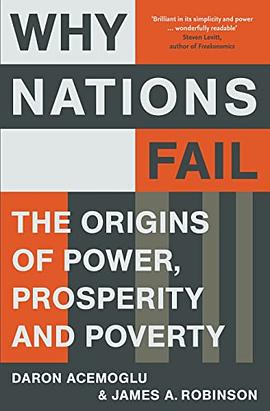
Aprovocative new theory of political economy explaining why the world is divided into nations with wildly differing levels of prosperity
Why are some nations more prosperous than others?Why Nations Fail sets out to answer this question, with a compelling and elegantly argued new theory: that it is not down to climate, geography or culture, but because of institutions. Drawing on an extraordinary range of contemporary and historical examples, from ancient Rome through the Tudors to modern-day China, leading academics Daron Acemoglu and James A. Robinson show that to invest and prosper, people need to know that if they work hard, they can make money and actually keep it - and this means sound institutions that allow virtuous circles of innovation, expansion and peace.Based on fifteen years of research, and answering the competing arguments of authors ranging from Max Weber to Jeffrey Sachs and Jared Diamond, Acemoglu and Robinson step boldly into the territory of Francis Fukuyama and Ian Morris. They blend economics, politics, history and current affairs to provide a new, powerful and persuasive way of understanding wealth and poverty. They offer a pragmatic basis for the hope that at'critical junctures'in history, those mired in poverty can be placed on the path to prosperity - with important consequences for our views on everything from the role of aid to the future of China.
REVIEWS
'You will have three reasons to love this book. It's about national income differences within the modern world, perhaps the biggest problem facing the world today. It's peppered with fascinating stories that will make you a spellbinder at cocktail parties - such as why Botswana is prospering and Sierra Leone isn't . And it's a great read. Like me, you may succumb to reading it in one go, and then you may come back to it again and again.', Jared Diamond, Pulitzer-prize-winning author of bestselling books including'Guns, Germs, and Steel'and'Collapse'
'For those who think that a nation's economic fate is determined by geography or culture, Daron Acemoglu and Jim Robinson have bad news. It's man-made institutions, not the lay of the land or the faith of our forefathers, that determine whether a country is rich or poor. Synthesizing brilliantly the work of theorists from Adam Smith to Douglass North with more recent empirical research by economic historians, Acemoglu and Robinson have produced a compelling and highly readable book. And their conclusion is a cheering one: the authoritarian"extractive"institutions like the one's that drive growth in China today are bound to run out of steam. Without the inclusive institutions that first evolved in the West, sustainable growth is impossible, because only a truly free society can foster genuine innovation and the creative destruction that is its corollary.', Niall Ferguson, author of'The Ascent of Money'
'This fascinating and readable book centers on the complex joint evolution of political and economic institutions, in good directions and bad. It strikes a delicate balance between the logic of political and economic behavior and the shifts in direction created by contingent historical events, large and small at'critical junctures'. Acemoglu and Robinson provide an enormous range of historical examples to show how such shifts can tilt toward favorable institutions, progressive innovation and economic success or toward repressive institutions and eventual decay or stagnation. Somehow they can generate both excitement and reflection.', Robert Solow, Nobel Laureate in Economics
'It's the politics, stupid! That is Acemoglu and Robinson's simple yet compelling explanation for why so many countries fail to develop. From the absolutism of the Stuarts to the antebellum South, from Sierra Leone to Colombia, this magisterial work shows how powerful elites rig the rules to benefit themselves at the expense of the many. Charting a careful course between the pessimists and optimists, the authors demonstrate history and geography need not be destiny. But they also document how sensible economic ideas and policies often achieve little in the absence of fundamental political change.', Dani Rodrik, Kennedy School of Government, Harvard Universitry
'Two of the world's best and most erudite economists turn to the hardest issue of all: why are some nations poor and others rich? Written with a deep knowledge of economics and political history, this is perhaps the most powerful statement made to date that'institutions matter.'A provocative, instructive, yet thoroughly enthralling book.', Joel Mokyr, Robert H. Strotz Professor of Arts and Sciences and Professor of Economics and History, Northwestern University
'Imagine sitting around a table listening to Jared Diamond, Joseph Schumpeter, and James Madison reflect on over two thousand years of political and economic history. Imagine that they weave their ideas into a coherent theoretical framework based on limiting extraction, promoting creative destruction, and creating strong political institutions that share power and you begin to see the contribution of this brilliant and engagingly written book.', Scott E. Page, University of Michigan and Santa Fre Institute
'In this stunningly wide ranging book Acemoglu and Robinson ask a simple but vital question, why do some nations become rich and others remain poor? Their answer is also simple -- because some polities develop more inclusive political institutions. What is remarkable about the book is the crispness and clarity of the writing, the elegance of the argument, and the remarkable richness of historical detail. This book is a must read at a moment where governments right across the western world must come up with the political will to deal with a debt crisis of unusual proportions.', Steve Pincus, Bradford Durfee Professor of History and International and Area Studies, Yale University
'Acemoglu and Robinson -- two of the world's leading experts on development -- explain why it is not geography, disease, or culture which explains why some nations are rich and some poor, but rather a matter of institutions and politics. This highly accessible book provides welcome insight to specialists and general readers alike.', Francis Fukuyama
'Some time ago a little known Scottish philosopher wrote a book on what makes nations succeed and what makes them fail. The Wealth of Nations is still being read today. With the same perspicacity and with the same broad historical perspective, Daron Acemoglu and James Robinson have re-tackled this same question for our own times. Two centuries from now our great-great-...-great grandchildren will be, similarly, readingWhy Nations Fail.', George Akerlof, Nobel Laureate in Economics, 2001
'Acemoglu and Robinson have made an important contribution to the debate as to why similar-looking nations differ so greatly in their economic and political development. Through a broad multiplicity of historical examples, they show how institutional developments, sometimes based on very accidental circumstances, have had enormous consequences. The openness of a society, its willingness to permit creative destruction, and the rule of appear to be decisive for economic development.', Kenneth J. Arrow
'This not only a fascinating and interesting book: it is a really important one. The highly original research that Professors Acemoglu and Robinson have done, and continue to do, on how economic forces, politics and policy choices evolve together and constrain each other, and how institutions affect that evolution, is essential to understanding the successes and failures of societies and nations. And here, in this book, these insights come in a highly accessible, indeed riveting form. Those who pick this book up and start reading will have trouble putting it down.', Michael Spence
'Why Nations Fail is a truly awesome book. Acemoglu and Robinson tackle one of the most importantproblems in the social sciences -- a question that has bedeviled leading thinkers for centuries -- and offer an answer that is brilliant in its simplicity and power. A wonderfully readable mix of history, political science, and economics, this book will change the way we think about economic development.Why Nations Fail is a must read book.', Steven Levitt, author of Freakonomics
'Why Nations Fail is so good in so many ways that I despair of listing them all. It is an excellent book and should be purchased forthwith, so to encourage the authors to keep working.', Charles C. Mann, author of 1491 and 1493
'In this delightfully readable romp through 400 years of history, two of the giants of contemporary social science bring us an inspiring and important message: it is freedom that makes the world rich. Let tyrants everywhere tremble!', Ian Morris, Stanford University, author of Why the West Rules - For Now
'The authors convincingly show that countries escape poverty only when they have appropriate economic institutions, especially private property and competition. More originally, they argue countries are more likely to develop the right institiutions when they have an open pluralistic political system with competition for political office, a widespread electorate, and openness to new politcial
作者简介
Daron Acemoglu is the Killian Professor of Economics at MIT. He received the John Bates Clark Medal.
James Robinson is a political scientist and economist and the David Florence Professor of Government at Harvard University, and a world-renowned expert on Latin America and Africa. They are the authors ofEconomic Origins of Dictatorship and Democracy,which won numerous prizes.
目录信息
Why Egyptians filled Tahrir Square to bring down Hosni Mubarak and what it means for our understanding of the causes of prosperity and poverty
1. So Close and Yet So Different
Nogales, Arizona, and Nogales, Sonora, have the same people, culture, and geography. Why is one rich and one poor?
2. Theories That Don't Work
Poor countries are poor not because of their geographies or cultures, or because their leaders do not know which policies will enrich their citizens
3. The Making of Prosperity and Poverty
How prosperity and poverty are determined by the incentives created by institutions, and how politics determines what institutions a nation has
4. Small Differences and Critical Junctures: The Weight of History
How institutions change through political conflict and how the past shapes the present
5. "I've Seen the Future, and It Works": Growth Under Extractive Institutions
What Stalin, King Shyaam, the Neolithic Revolution, and the Maya city-states all had in common and how this explains why China?s current economic growth cannot last
6. Drifting Apart
How institutions evolve over time, often slowly drifting apart
7. The Turning Point
How a political revolution in 1688 changed institutions in England and led to the Industrial Revolution
8. Not on Our Turf: Barriers to Development
Why the politically powerful in many nations opposed the Industrial Revolution
9. Reversing Development
How European colonialism impoverished large parts of the world
10. The Diffusion of Prosperity
How some parts of the world took different paths to prosperity from that of Britain
11. The Virtuous Circle
How institutions that encourage prosperity create positive feedback loops that prevent the efforts by elites to undermine them
12. The Vicious Circle
How institutions that create poverty generate negative feedback loops and endure
13. Why Nations Fail Today
Institutions, institutions, institutions
14. Breaking the Mold
How a few countries changed their economic trajectory by changing their institutions
15. Understanding Prosperity and Poverty
How the world could have been different and how understanding this can explain why most attempts to combat poverty have failed
Acknowledgments
Bibliographical Essay and Sources
References
Index
· · · · · · (收起)
读后感
围绕本书主旨的争论其实至少早在英文原版成书前十年就开始了。正如很多评论都提到的,本书两位作者与长期合作伙伴 Simon Johnson (合称 AJR)2001年发表论文[1]以计量手段论证:制度是经济绩效的根本性决定因素,而纬度、气候、资源等则影响甚微。这就直接否定了认为地理等因...
评分据说经济学家张五常提出的产权论在中国影响深远,其可贵之處是简单而清晰。张氏认为穷国富国,取決于产权介定。你是否有权转让自己的财产(a right to transfer)?是否有权用它(a right to use)?是否能用資产賺取收入(a right to earn income)。三大权的定立需要市场经济配...
评分知道这本书是在一次经济法研讨课上,出于好奇泛泛试读了一遍。全书论据庞杂繁复,如果仔细推敲不一定都站得住脚。但也正是由于作者的旁征博引,书中闪光之点频现。假如我是一位生活在作者国度亦或接受英美文化教育的读者,我想这本书带来的冲击力的的确确让人无力反驳又感受到...
评分 评分用户评价
我必须承认,《为什么国家会失败》这本书,彻底改变了我对国家发展和历史进程的理解方式。长期以来,我总觉得国家的命运似乎是一种既定的、难以改变的宿命,或者受到地理、资源等外在因素的极大影响。然而,这本书却以一种令人信服的逻辑,将国家兴衰的关键归结于其内部的“制度”。作者达隆·阿西莫格鲁和詹姆斯·罗宾逊,通过对全球范围内大量历史案例的深入分析,提出了“包容性制度”与“榨取性制度”的二元划分。包容性制度鼓励创新、保护产权、普及教育,并允许公民广泛参与政治和社会生活,从而激发经济活力,促进社会的持续繁荣。相反,榨取性制度则为了少数精英的利益,扼杀创新,压制竞争,剥削大众,最终导致国家的衰败和停滞。书中引用的案例之广泛和深入,令人叹为观止。从古罗马的兴衰,到英国工业革命的开端,再到非洲大陆的殖民遗留问题,作者们无不细致地剖析了不同制度是如何在历史的洪流中形成,又如何深刻地塑造了不同国家的命运。他们并非仅仅陈述事实,而是深入挖掘了制度背后的政治博弈、社会冲突以及历史的偶然性。这本书带来的最大价值在于,它提供了一个强大的分析框架,让我能够跳出狭隘的视角,更全面、更深刻地理解世界各地发展差距的根源。读完此书,我开始用一种全新的、批判性的眼光去审视我所处的社会,以及全球范围内的各种发展现象。
评分我自认对历史和政治有着浓厚的兴趣,但《为什么国家会失败》这本书,无疑是我阅读经历中的一次颠覆。它提供了一种极为精辟的视角,去理解为什么有些国家能够持续繁荣,而另一些国家却长期陷入贫困和冲突的泥沼。作者们,阿西莫格鲁和罗宾逊,的核心论点在于“制度”的力量。他们将制度定义为社会运行的规则,并区分了两种截然不同的类型:“包容性制度”和“榨取性制度”。包容性制度鼓励创新,保护产权,赋予公民参与决策的权利,从而促进经济的增长和社会进步。而榨取性制度则恰恰相反,它们旨在让少数统治者能够最大化地从社会中攫取财富和权力,扼杀创新,压制反抗,最终导致国家的衰败。书中引用了大量引人入胜的案例,从古老文明的兴衰,到近代工业革命的进程,再到殖民地国家独立后的发展困境,无不生动地证明了作者的观点。他们深入剖析了制度是如何在历史的进程中形成的,并且一旦形成,就具有强大的惯性。这种分析方式,让我能够跳出简单的“好人坏人”或者“地理决定论”的思维定势,去理解国家命运的深层逻辑。这本书的叙述方式也非常有吸引力,它并非枯燥的学术论文,而是充满了生动的故事和深刻的洞察,让你在阅读中不断思考,不断被启发。读完这本书,我发现自己对世界的理解,变得更加深刻和 nuanced。
评分我对《为什么国家会失败》这本书的评价,只能用“醍醐灌顶”来形容。我一直以来对国家之间的贫富差距以及发展模式的差异感到好奇,却始终找不到一个能够令人信服的解释。这本书,则以一种极其深刻和宏观的视角,为我揭示了问题的根源——制度。作者达隆·阿西莫格鲁和詹姆斯·罗宾逊,通过对全球范围内数个世纪的历史案例进行详尽的研究,提出了一个极具说服力的核心论点:国家的兴衰,其根本驱动力在于其所建立的“制度”。他们将制度清晰地划分为“包容性制度”和“榨取性制度”。包容性制度能够鼓励创新、保护产权、促进公平竞争,并赋予公民广泛的权利,从而激发社会活力,实现可持续的经济增长。而榨取性制度则恰恰相反,它们的设计是为了让少数精英能够最大限度地攫取社会财富和权力,扼杀创新,压制反抗,最终导致国家的衰败。书中对不同国家和地区历史的分析,从工业革命前的英格兰,到拉丁美洲的殖民历史,再到非洲大陆的复杂现实,都生动地印证了作者的观点。他们不仅仅是罗列事实,更是深入分析了政治斗争、经济利益以及社会冲突是如何相互作用,最终塑造了国家的制度。读完这本书,我深刻地认识到,一个国家能否成功,关键在于其能否建立起一套能够激励和赋权于全体公民的制度,而不是一套服务于少数特权阶层的制度。这本书提供了一个强大的分析工具,让我能够更清晰地理解当今世界的政治和经济格局。
评分坦白说,我购买《为什么国家会失败》时,并没有预料到它会如此深刻地影响我的思维方式。我一直以来都对历史上的国家兴衰充满好奇,也尝试过阅读一些相关的书籍,但很多都停留在描述性的层面,或者提供一些零散的解释。而这本书,则以一种系统性的、极具说服力的方式,为我揭示了国家命运的根本驱动力——制度。作者达隆·阿西莫格鲁和詹姆斯·罗宾逊,通过对数个世纪以来全球范围内大量历史案例的深入研究,提出了一个核心论点:国家的繁荣与否,并非取决于其天然资源、地理位置,或者文化传统,而是取决于其所建立的“制度”。他们将制度划分为“包容性制度”和“榨取性制度”。包容性制度旨在鼓励创新、保护产权、促进公平竞争,并赋予公民广泛的权利,从而激发社会活力,实现可持续的经济增长。而榨取性制度则恰恰相反,它们的设计是为了让少数精英能够最大限度地攫取社会财富和权力,扼杀创新,压制反抗,最终导致国家的衰败。书中详尽地阐述了这两种制度是如何在历史长河中形成,以及它们如何相互作用,最终决定了一个国家的发展轨迹。从古罗马的衰落到现代的南北朝鲜对比,从欧洲工业革命的开端到非洲殖民地的悲惨遗留,作者们用详实的证据和引人入胜的故事,为我们构建了一个宏大而精密的分析框架。读完这本书,我不再简单地将国家的贫困归咎于外部因素,而是开始深入思考,其内部制度是否能够为全体公民提供发展的机会和公平的竞争环境。
评分这本书就像一盏明灯,照亮了我对全球发展差距的困惑。长久以来,我一直不理解为什么有些国家能够持续繁荣,而另一些国家却深陷贫困的泥沼。之前我可能倾向于将原因归结于历史殖民、文化差异甚至种族劣势,但《为什么国家会失败》提供了一个截然不同的、更具解释力的理论框架。作者们,阿西莫格鲁和罗宾逊,以一种极其深刻且宏观的视角,将国家的命运归结于其所采用的“制度”。他们清晰地定义了两种根本性的制度类型:一种是“榨取性制度”,其核心在于少数统治者对资源的垄断和对大众的剥削,这种制度必然会阻碍创新和发展,长此以往只会导致国家的衰败。另一种是“包容性制度”,它则旨在鼓励社会成员的广泛参与,保护产权,鼓励创新和竞争,从而为经济的持续增长和社会进步奠定基础。书中大量的历史案例,从工业革命前的英格兰,到非洲殖民地的悲惨遭遇,再到拉丁美洲的资源诅咒,都生动地印证了他们的观点。他们不仅仅是罗列事实,而是深入分析了制度如何受到政治斗争、社会冲突等因素的影响而形成,并且一旦形成,就具有强大的惯性。这让我深刻理解了为什么一些看似相似的国家,却会走向完全不同的发展道路。这本书的价值在于,它提供了一个强大的分析工具,让我们能够更深刻地理解当今世界的不平等是如何形成的,以及如何才能打破贫困的循环。读完这本书,我对“发展”这个概念有了全新的认识,它不再仅仅是经济数字的增长,更是制度的健全和公民权利的保障。
评分我必须承认,在读《为什么国家会失败》之前,我对国家发展和社会进步的理解,还停留在比较表面的层面。我总觉得,国家的繁荣可能更多地取决于其地理优势、资源禀赋,或者是某个伟大领导人的远见卓识。然而,这本书彻底颠覆了我的认知。作者们以一种极其严谨和深刻的学术态度,提出了一个极具说服力的论点:国家的兴衰,其根源在于其制度。他们将制度分为两种基本类型:一种是“包容性制度”,这种制度能够鼓励社会各阶层的广泛参与,保护产权,鼓励创新,并提供公平的竞争环境,从而促进经济的持续增长和社会的繁荣。而另一种则是“榨取性制度”,这种制度的设计是为了让少数精英能够攫取绝大多数的财富和权力,它扼杀创新,压制竞争,最终导致国家的衰败和停滞。书中援引了大量的历史证据,从古罗马帝国到现代的许多国家,通过细致入微的分析,揭示了制度在国家发展轨迹中所扮演的核心角色。他们解释了为什么有些国家能够成功实现工业化和现代化,而另一些国家却长期处于贫困和动荡之中。这本书不仅仅是理论上的论述,更是通过一个个鲜活的历史故事,让你深刻地体会到制度变迁的巨大力量。它让我明白,与其关注虚无缥缈的“命运”,不如关注实实在在的“制度”。读完这本书,我开始用一种全新的视角去审视我所处的社会,以及全球范围内的各种发展现象。
评分这绝对是一本改变你看待世界的方式的书。我一直以来都对历史和政治发展着迷,但《为什么国家会失败》以一种我从未想象过的方式,将碎片化的知识点串联起来,构成了一幅宏大而令人信服的图景。作者达隆·阿西莫格鲁(Daron Acemoglu)和詹姆斯·罗宾逊(James Robinson)并没有止步于描述性的历史事件,而是深入挖掘了导致国家贫富差距、发展滞后或繁荣昌盛的根本原因。他们提出的“制度”概念,简单来说就是一套社会运行的规则,但其内涵却无比丰富。书中详尽地阐述了“包容性制度”和“榨取性制度”的巨大差异。包容性制度鼓励创新、投资,赋予公民广泛的权利,并允许他们参与政治决策,从而催生了持续的经济增长和长久的繁荣。而榨取性制度则恰恰相反,它们的设计初衷就是为了让少数精英能够最大化地从广大民众那里攫取财富和权力,扼杀创新,压制反抗,最终导致国家的衰败和动荡。作者通过跨越数个世纪,遍布全球的案例研究,比如英格兰的光荣革命、西班牙的殖民扩张、拉丁美洲的发展困境、非洲的殖民遗留问题等等,为他们的理论提供了坚实的证据。这些案例并不是孤立的,而是相互关联,共同揭示了制度设计在国家命运中的决定性作用。这本书的魅力在于,它不仅仅是理论上的探讨,更是通过引人入胜的故事和生动形象的例子,让你仿佛亲历历史现场,感悟制度变迁的深刻影响。读完这本书,你会开始重新审视我们所处的社会,思考制度的优劣,以及它对个人命运和社会未来的塑造力量。它不是一本轻松的读物,需要你投入思考,但其带来的思想启发和知识增量,绝对是物超所值的。
评分读完《为什么国家会失败》,我感觉自己像是经历了一场思想上的“大扫除”。我一直以来对国际关系和国家发展模式的多样性感到好奇,但也常常因为缺乏一个清晰的理论框架而感到困惑。这本书,就如同给我注入了一剂强心针,提供了一个强大而普适的解释工具。作者们,阿西莫格鲁和罗宾逊,将国家的兴衰归结于其制度的性质,并将其分为“包容性制度”和“榨取性制度”。这两种制度,如同硬币的两面,深刻地影响着社会的活力、创新能力以及经济的增长模式。包容性制度鼓励广泛的社会参与,保护个人权利,促进公平竞争,从而催生了持续的繁荣。而榨取性制度则恰恰相反,它们被设计用来维持少数统治者的权力,剥削大众,最终导致国家停滞甚至衰败。书中大量的历史案例,从拉丁美洲的殖民历史到非洲大陆的长期贫困,再到东亚经济的腾飞,都为作者的论点提供了坚实的支撑。他们不仅仅是描述历史事件,更是深入分析了政治权力、经济利益以及社会冲突是如何相互作用,塑造了不同的制度。这种分析的深度和广度,让我对世界各地的发展差距有了全新的理解。这本书并非一本轻松的读物,它需要读者投入大量的思考,但其带来的思想启迪和知识深度,绝对是无与伦比的。它让我开始重新审视那些看似理所当然的社会现象,并思考制度的优化对于国家未来的重要性。
评分我简直无法相信,一本关于国家兴衰的书竟然能让我如此着迷。它提供的视角非常独特,颠覆了我过去许多关于发展的刻板印象。我曾经以为,地理位置、自然资源、文化传统这些因素是决定一个国家命运的关键,但《为什么国家会失败》却将焦点放在了更深层次的——制度。作者巧妙地将历史、经济学、政治学等多学科的知识融为一体,形成了一个强有力的解释框架。他们反复强调,不是天然的禀赋,而是人们在社会交往中所建立的各种规则和机制,即制度,才是国家繁荣或衰败的真正驱动力。书中详细区分了两种截然不同的制度类型:一种是“榨取性制度”,这种制度的设计是为了让社会中的少数人能够不劳而获,剥削大多数人,从而维持其统治地位。在这种制度下,创新被扼杀,投资被阻碍,社会活力被严重削弱。另一种则是“包容性制度”,它鼓励广泛的社会参与,保护产权,促进公平竞争,并为每个人提供发展的机会。这样的制度能够激发创造力,鼓励投资,从而实现可持续的经济增长。作者的论证过程严谨且富有说服力,他们选取了大量丰富的历史案例,从古代迦太基的衰落,到现代南北朝鲜的对比,再到非洲的殖民历史,无不展现了制度的力量。更重要的是,他们并没有停留在描述,而是深入剖析了制度是如何形成、演变以及为何会产生如此巨大的差异。这本书让我深刻地认识到,一个国家的未来,很大程度上取决于其制度是否能够为所有公民提供公平的机会和参与感,而不是仅仅服务于少数特权阶层。它是一次思维的洗礼,让我对世界的运作有了全新的理解。
评分在我阅读《为什么国家会失败》之前,我对国家之间的贫富差距以及发展模式的多样性感到十分困惑。我曾经以为,自然资源、地理位置,甚至是某种神秘的“民族基因”可能是造成这些差异的主要原因。然而,这本书彻底改变了我看待这些问题的角度。作者达隆·阿西莫格鲁和詹姆斯·罗宾逊,通过对数个世纪以来全球范围内的案例研究,提出了一个极其有说服力的理论:国家的命运,其根本驱动力在于其制度。他们将制度区分为“包容性制度”和“榨取性制度”。前者能够鼓励创新、促进公平竞争、保护产权,并赋予公民广泛的权利,从而带来持续的繁荣。后者则恰恰相反,它们被设计来允许少数精英剥削和压制大众,从而扼杀经济活力和社会进步。书中详尽地阐述了这两种制度是如何形成的,以及它们对社会发展产生的深远影响。从工业革命时期的英国,到拉丁美洲殖民地的历史,再到非洲大陆的复杂现实,作者们用详实的证据和引人入胜的叙述,描绘了一幅幅波澜壮阔的历史画卷。他们并非仅仅罗列事实,而是深入分析了政治斗争、社会冲突以及历史偶然性如何在制度的形成和演变中发挥作用。读完这本书,我深刻地认识到,一个国家能否成功,关键在于其能否建立起一套能够激励和赋权于全体公民的制度,而不是一套服务于少数特权阶层的制度。这本书提供了一个强大的分析框架,让我能够更清晰地理解当今世界的政治和经济格局。
评分读读停停,终于读完了,笔记欠一篇,希望结合最近淘宝与工商总局的撕逼大战说一说
评分核心观点就一个,制度。
评分for the flight to Wien...hmm Alrighty arguments lack evidence...too much assumptions
评分for the flight to Wien...hmm Alrighty arguments lack evidence...too much assumptions
评分歐洲中心論的典型代表。作者對歷史(從非洲史到中國史)一無所知。期待討論課上看同學和教授一起狂批。(2016年10月21日)