
具体描述
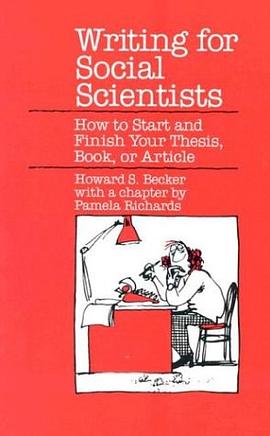
Social scientists, whether earnest graduate students or tenured faculty members, clearly know the rules that govern good writing. But for some reason they choose to ignore those guidelines and churn out turgid, pompous, and obscure prose. Distinguished sociologist Howard S. Becker, true to his calling, looks for an explanation for this bizarre behavior not in the psyches of his colleagues but in the structure of his profession. In this highly personal and inspirational volume he considers academic writing as a social activity.
Both the means and the reasons for writing a thesis or article or book are socially structured by the organization of graduate study, the requirements for publication, and the conditions for promotion, and the pressures arising from these situations create the writing style so often lampooned and lamented. Drawing on his thirty-five years' experience as a researcher, writer, and teacher, Becker exposes the foibles of the academic profession to the light of sociological analysis and gentle humor. He also offers eminently useful suggestions for ways to make social scientists better and more productive writers. Among the topics discussed are how to overcome the paralyzing fears of chaos and ridicule that lead to writer's block; how to rewrite and revise, again and again; how to adopt a persona compatible with lucid prose; how to deal with that academic bugaboo, "the literature." There is also a chapter by Pamela Richards on the personal and professional risks involved in scholarly writing.
In recounting his own trials and errors Becker offers his readers not a model to be slavishly imitated but an example to inspire. Throughout, his focus is on the elusive work habits that contribute to good writing, not the more easily learned rules of grammar and punctuation. Although his examples are drawn from sociological literature, his conclusions apply to all fields of social science, and indeed to all areas of scholarly endeavor. The message is clear: you don't have to write like a social scientist to be one.
作者简介
目录信息
读后感
不同于其他真的是说写作技巧的英文写作书,这本书很大篇幅在写写作心理,研究生写论文的各种心理恐慌和误区。他提到的有一点很有意思。是关于写作者的姿态。Becker称之为personae, 一种角色扮演 (Goffman飘过) 有些社会科学写作者避免第一人称,避免个人化的的叙述风格。更...
评分cclee recommend us to read it. Howard. This is the most important things for you. Wirte . cheer leadors, don't wait to . you are never. you have to get your hands started. jump into the water to learn swim. keep acting, keep writing . the more you write, th...
评分不同于其他真的是说写作技巧的英文写作书,这本书很大篇幅在写写作心理,研究生写论文的各种心理恐慌和误区。他提到的有一点很有意思。是关于写作者的姿态。Becker称之为personae, 一种角色扮演 (Goffman飘过) 有些社会科学写作者避免第一人称,避免个人化的的叙述风格。更...
评分不同于其他真的是说写作技巧的英文写作书,这本书很大篇幅在写写作心理,研究生写论文的各种心理恐慌和误区。他提到的有一点很有意思。是关于写作者的姿态。Becker称之为personae, 一种角色扮演 (Goffman飘过) 有些社会科学写作者避免第一人称,避免个人化的的叙述风格。更...
评分WANG Chengjun Howard S. Becker is a sociologist of America, who writes the book Writing for Social Scientists, and generously shares his experience and insightful understanding of writing. He analyzes the writing issues in the perspective of sociology, whi...
用户评价
这本书的装帧设计着实令人眼前一亮,那种带着微微磨砂质感的封面,握在手里分量适中,透着一股沉稳的书卷气。我尤其欣赏它在字体选择上的考量,内文的排版疏朗有致,行距恰到好处,长时间阅读下来眼睛也不会感到明显的疲劳。作为一名刚步入学术圈的新手,我最大的困扰就是如何将那些晦涩难懂的理论框架,用一种既严谨又清晰的方式呈现出来。这本书在结构上似乎对此有着深刻的理解,章节之间的逻辑过渡非常顺畅,仿佛一位经验丰富的导师在引导你一步步拆解复杂的写作难题。我期待它能在方法论的阐述上提供一些非常具体的、可操作性的建议,比如如何构建一个有说服力的论点,或者在引用文献时如何巧妙地避开“堆砌式”的枯燥感,真正做到让文字为研究服务,而不是让研究屈从于文字的僵硬。希望它不仅仅是一本教条式的指南,更能成为一本启发思维的工具书,帮助我找到属于自己的学术表达的“语感”。我已经迫不及待地想翻开它,看看它是如何处理那些看似微不足道却决定成败的细节的。
评分这本书的厚度适中,这让我感到欣慰,它没有试图包罗万象地塞入所有写作的细枝末节,而是似乎聚焦于核心的、能产生最大效能的写作环节。我特别看重它对于“论证的密度”的探讨。在当前的研究语境下,篇幅的限制越来越严格,如何在有限的篇幅内最大化地承载信息量和论证强度,是每一位研究者必须掌握的生存技能。我希望这本书能深入解析那些被认为是“高效论证”的范式,比如如何通过精妙的句子结构来压缩信息,或者如何利用排比和对比来强化关键结论,而不是仅仅依赖冗长的解释。对我而言,写作与其说是一种表达,不如说是一种“思想的提纯”过程。我渴望从中找到提升这种提纯效率的秘诀,能让我的每一次陈述都掷地有声,充满力量感。那种经过千锤百炼的文字,才能真正经受住时间的考验。
评分我对市面上大多数所谓的“写作指南”总是抱持着一种审慎的态度,因为很多要么过于学院派,晦涩难懂,要么又过于口语化,缺乏必要的学术支撑。这本书的封面给我带来了一种不同寻常的预感,它没有采用那种廉价的、泛滥的“成功学”式的标语,而是选择了一种更内敛、更注重内在质感的表达方式。我最关注的是它对于“叙事弧光”的构建有何见解。在社会科学的研究中,数据和理论固然重要,但如果不能将它们编织成一个引人入胜的故事,读者很容易在中途就丧失兴趣。我希望这本书能深入探讨如何将复杂的实证过程转化为流畅、有逻辑的故事线索,尤其是在讨论定性研究的发现时,那种从现象到理论的升华过程,往往是写作者最容易失手的地方。如果它能提供一些案例分析,展示那些顶级期刊文章是如何巧妙地平衡严密性与可读性的,那这本书的价值就无可估量了。我希望它能帮我打破“写得对”和“写得好”之间的那道无形之墙。
评分坦白说,拿起这本书,我内心是带着一丝“挑战”的意味的。我是一名有着数年研究经验的从业者,自认为在基础的语法和结构上已经没有太大问题,我更需要的是突破瓶颈,尤其是在跨学科交流日益频繁的今天,如何用一套通用的、但又不失本专业深度的语言来表达观点,是一个巨大的挑战。我非常好奇这本书是如何处理“声音的统一性”这个问题的。在合作研究或者需要整合不同理论视角的论文中,如何确保整篇文章的语气、立场和专业术语的使用保持高度一致,避免给人一种“拼凑感”,这往往是资深作者也会感到头疼的地方。我希望这本书能提供一些高级别的策略,比如关于如何进行“自我编辑”的高阶技巧,如何从一个“初稿写作者”的心态迅速切换到“冷酷的审稿人”视角,从而有效地自我批判和提升。如果它能提供一些关于如何应对同行评审意见的心理调适和结构化回复的指南,那对我来说绝对是物超所值。
评分我选择这本书的另一个动机是它所蕴含的“学术伦理”和“透明度”的考量。在数据公开和方法可重复性要求越来越高的今天,写作不仅仅是报告结果,更是建立研究信任的过程。我期望这本书能超越传统的格式要求,更多地探讨如何在写作中体现出研究过程的透明性和正直性。比如,在处理那些可能存在争议性的数据或理论解释时,如何做到既不回避矛盾,又不失批判性,而是以一种负责任的态度将不确定性纳入论述框架。我希望它能引导我思考,如何将“元认知”——即对自身研究过程的反思——巧妙地融入到写作的脚注或方法论部分,使之成为增强说服力的工具,而非干扰叙事的枝节。这本书如果能提供一个关于如何撰写出“负责任的学术文本”的框架,那它将远远超越一本单纯的写作技巧手册,成为我职业生涯中不可或缺的良师益友。
评分一本给社科研究者的写作小书。技巧部分其实不多而且基本,主要解决了一些心理问题,比如对呈现给第三者的恐惧,长篇写作对工作记忆的挑战,对重写的强调。写作真是一项一生都要学习的科目...
评分不是写得不好,但,没有鸟用
评分其实当你一直拖延,一直觉得写不出,写不下去,写不完了,不知道怎么办的时候。你就该认真想想,论文该如何结束的问题了。
评分随笔书一本
评分一本给社科研究者的写作小书。技巧部分其实不多而且基本,主要解决了一些心理问题,比如对呈现给第三者的恐惧,长篇写作对工作记忆的挑战,对重写的强调。写作真是一项一生都要学习的科目...