
具体描述
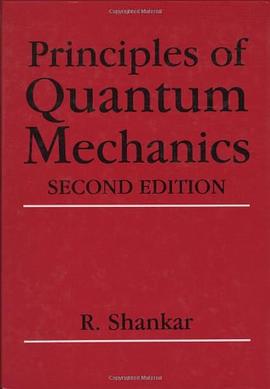
Reviews from the First Edition: 'An excellent text? The postulates of quantum mechanics and the mathematical underpinnings are discussed in a clear, succinct manner' - ("American Scientist"). 'No matter how gently one introduces students to the concept of Dirac's bras and kets, many are turned off. Shankar attacks the problem head-on in the first chapter, and in a very informal style suggests that there is nothing to be frightened of' - ("Physics Bulletin").Reviews of the Second Edition: 'This massive text of 700 and odd pages has indeed an excellent get-up, is very verbal and expressive, and has extensively worked out calculational details - all just right for a first course. The style is conversational, more like a corridor talk or lecture notes, though arranged as a text. It would be particularly useful to beginning students and those in allied areas like quantum chemistry' - ("Mathematical Reviews").R. Shankar has introduced major additions and updated key presentations in this second edition of "Principles of Quantum Mechanics". New features of this innovative text include an entirely rewritten mathematical introduction, a discussion of Time-reversal invariance, and extensive coverage of a variety of path integrals and their applications. Additional highlights include: clear, accessible treatment of underlying mathematics; a review of Newtonian, Lagrangian, and Hamiltonian mechanics; student understanding of quantum theory is enhanced by separate treatment of mathematical theorems and physical postulates; and, unsurpassed coverage of path integrals and their relevance in contemporary physics.The requisite text for advanced undergraduate- and graduate-level students, "Principles of Quantum Mechanics, Second Edition" is fully referenced and is supported by many exercises and solutions. The book's self-contained chapters also make it suitable for independent study as well as for courses in applied disciplines.
作者简介
目录信息
读后感
This book is highly recommended as a starting point. It starts from ground zero, developing the mathematical tools needed to understand quantum mechanics. It is well written, and friendlier than Griffiths for students who are learning the subject on their ...
评分Russell J. Barry 5.0 out of 5 stars Quantum mechanics May 21, 2010 Format: HardcoverVerified Purchase I will make it real simple. It has been over a half of a year since I bought this book. When I first got it, it seemed really hard, you have to really read...
评分Russell J. Barry 5.0 out of 5 stars Quantum mechanics May 21, 2010 Format: HardcoverVerified Purchase I will make it real simple. It has been over a half of a year since I bought this book. When I first got it, it seemed really hard, you have to really read...
评分This book is highly recommended as a starting point. It starts from ground zero, developing the mathematical tools needed to understand quantum mechanics. It is well written, and friendlier than Griffiths for students who are learning the subject on their ...
评分This book is highly recommended as a starting point. It starts from ground zero, developing the mathematical tools needed to understand quantum mechanics. It is well written, and friendlier than Griffiths for students who are learning the subject on their ...
用户评价
这本《量子力学原理》的教材,说实话,刚拿到手的时候,我心里是有些忐忑的。毕竟量子力学这块硬骨头,不是谁都能轻易啃下来的。我本身是学偏应用物理的,对那些纯理论的推导向来有些头疼。但翻开这本书的目录,我立刻被它的编排方式吸引住了。它没有一上来就抛出薛定谔方程,而是花了大篇幅去铺陈量子力学的基本概念和历史背景,这对于我这种需要建立扎实直观理解的人来说,简直是雪中送炭。尤其是它对“测量问题”的阐述,不同学派的观点对比得非常清晰,不偏不倚,让读者能够自己去权衡每种解释的合理性,而不是被单一的理论强行灌输。书中的图示和类比也做得非常巧妙,不像有些教科书那样冷冰冰的数学符号堆砌,它试图用更“人性化”的方式去触摸那些反直觉的物理实在。我印象最深的是关于波函数演化的那一章,作者用了一个非常经典的实验(我记得好像是某种双缝干涉的变体),一步步地引导我们思考,直到我们自己得出那个令人不安但又必然的结论。这本书的深度是足够的,但它的入口却非常友好,使得初学者和希望巩固基础的进阶者都能找到适合自己的节奏。
评分拿到这本书,我立刻感受到了它在叙事逻辑上的强大掌控力。它不是那种一页一页简单堆砌公式和定理的参考书,更像是一部精心策划的学术探险日志。它的写作风格非常严谨,但又不失一种探索未知领域的激情。我特别欣赏作者在引入核心数学工具(比如希尔伯特空间和算符理论)时的那种“渐进式”教学法。他不会在你还没理解“为什么需要这个工具”的时候,就直接把复杂的代数结构扔到你面前。相反,他总是先提出一个物理上的难题,然后引出解决这个难题所需的数学框架,让读者自然而然地产生学习新工具的内在驱动力。书中对于量子态的代数描述和波动力学描述之间的等价性论证,处理得极其流畅和优雅,让人有一种茅塞顿开的感觉。读到那些证明过程时,我甚至能想象到作者在黑板前细致勾画的场景,那种对物理美学的追求,是很多当代教材所缺乏的。总的来说,这本书的结构严密到近乎完美,每一个章节都是前一部分的逻辑必然延伸,读起来让人有一种“是的,这就是理解量子力学必须走的路径”的信服感。
评分坦白说,这本书的难度是毋庸置疑的,它绝对不是一本可以让你在咖啡馆里轻松翻阅的读物,它要求你有足够的专注力和良好的数学基础作为支撑。但正是这份挑战性,让它显得如此有价值。它像一位严厉但公正的导师,不断地在关键节点上设置“陷阱”——那些容易被新手忽略的关键假设或者近似的适用范围。比如,它对半经典近似(WKB方法)的讨论,不仅给出了公式,还详细分析了当势能变化率不满足特定条件时,公式失效的原因和替代方法。这种对理论边界的清晰界定,培养了读者严谨的科学态度,让你清楚地知道你手中工具的适用范围。读完这本书,我感觉自己不仅仅是学会了如何“解”量子力学问题,更重要的是,我开始更深入地理解“为什么我们用这些方法来解”以及“这些方法本身基于哪些深刻的物理假设”。它成功地将物理直觉、数学严谨性与哲学思辨熔于一炉,是一部真正意义上的“原理”之作。
评分对于一个已经接触过一些量子力学入门知识的读者来说,这本书的价值在于它对“物理图像”的深度挖掘和对“历史遗留问题”的坦诚面对。很多教材在讲到自旋或全同粒子时,往往直接给出结论,然后迅速转向应用。但《量子力学原理》在这部分的处理上显得尤为深刻。它不仅详细解释了泡利不相容原理的数学起源,还花时间去探讨了为什么这种“对称性”在微观世界如此重要,以及它如何决定了宏观物质的稳定性。书中对于角动量理论的阐述,也远超出了教科书的平均水平,它不仅讲解了如何对易关系,更深入地探讨了这种代数结构在不同物理系统(比如原子光谱)中如何显化出来。我尤其喜欢其中关于微扰理论应用的章节,它没有止步于一阶和二阶近似,而是给出了更高级的、更具实用价值的讨论,这对我正在进行的研究课题非常有启发性。它迫使你跳出纯粹的数学框架,去思考这些理论工具在处理真实世界复杂系统时的局限性和潜力。
评分这本书的排版和配图,简直是学术出版物的典范,这点必须单独提出来表扬。在阅读物理教材时,清晰的图示对理解抽象概念至关重要,而这本书在这方面做得极其出色。不仅仅是那些标准的能级图或者散射截面图,它对一些复杂的数学概念,比如狄拉克符号(Bra-ket notation)的使用和解释,都是分层次递进的。作者不会在第一页就用复杂的狄拉克符号把人吓跑,而是先用波函数的形式建立直观认识,然后再引入更加紧凑和强大的符号系统,并清晰地说明符号转换背后的物理意义。这种对读者阅读体验的关怀,体现了作者深厚的教学功力。此外,书中的注释和附录部分也设计得非常用心,它们提供了深入阅读的指引,但又不会干扰主线的流畅性。对于那些想要深入研究特定主题的读者,附录部分简直就是一座宝库,提供了大量的参考资料和更精妙的数学推导,保证了主文的简洁和易读。
评分不错的书
评分最佳!
评分整个暑假每天看六个小时这本书 量子力学最好的入门教材了 比griffiths内容丰富 比Sakurai起点低 第一章数学基础我读了三遍 之后再看所有书都特别自在 Shankar是Yale的老教授了 谢谢你
评分Suitable for a first course in quantum mechanics. It goes right into the heart of QM within a first few chapters.
评分这本书的确坑爹,Goldstein二代名副其实