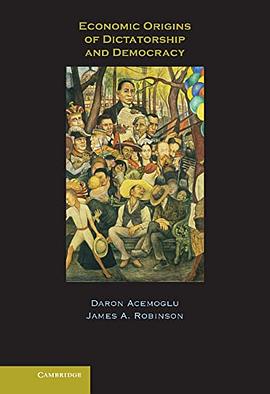

具体描述
What forces lead to democracy's creation? Why does it sometimes consolidate only to collapse at other times? Written by two of the foremost authorities on this subject in the world, this volume develops a framework for analyzing the creation and consolidation of democracy. It revolutionizes scholarship on the factors underlying government and popular movements toward democracy or dictatorship. Daron Acemoglu and James Robinson argue that different social groups prefer different political institutions because of the way they allocate political power and resources. Their book, the subject of a four-day seminar at Harvard's Center for Basic Research in the Social Sciences, was also the basis for the Walras-Bowley lecture at the joint meetings of the European Economic Association and Econometric Society in 2003 and is the winner of the John Bates Clark Medal.
作者简介
Daron Acemoglu is Charles P. Kindleberger Professor of Applied Economics at The Massachusetts Institute of Technology and a member of the Canadian Institute for Advanced Research's Program on Institutions, Organizations, and Growth. He received the 2005 John Bates Clark Medal awarded by the American Economic Association to the best economist working in the United States under age 40. He is the author of the textbook Introduction to Modern Economic Growth and coeditor of Econometrica and NBER Macroannual.
James A. Robinson is Professor of Government at Harvard University. He is a Faculty Associate at the Institute for Quantitative Social Science and the Weatherhead Center for International Affairs and is a member of the Canadian Institute for Advanced Research's Program on Institutions, Organizations, and Growth. He is coeditor with Jared Diamond of Natural Experiments in History (2009).
目录信息
Section 1. Paths of Political Development: 1. Britain; 2. Argentina; 3. Singapore; 4. South Africa, 5. The agenda;
Section 2. Our Argument: 1. Democracy vs. nondemocracy; 2. Building blocks of our approach; 3. Towards our basic story; 4. Our theory of democratization; 5. Democratic consolidation; 6. Determinants of democracy; 7. Political identities and the nature of conflict; 8. Democracy in a picture; 9. Overview of the book;
Section 3. What Do We Know About Democracy?: 1. Measuring democracy; 2. Patterns of democracy; 3. Democracy, inequality and redistribution; 4. Crises and democracy; 5. Social unrest and democratization; 6. The literature; 7. Our contribution;
Part II. Modelling Politics;
Section 4. Democratic Politics: 1. Introduction; 2. Aggregating individual preferences; 3. Single-peaked preferences and the median voter theorem; 4. Our workhorse models; 5. Democracy and political equality; 6. Conclusion;
Section 5. Nondemocratic Politics: 1. Introduction; 2. Power and constraints in nondemocratic politics; 3. Modeling preferences and constraints in nondemocracies; 4. Commitment problems; 5. A simple game of promises; 6. A dynamic model; 7. Incentive compatible promises; 8. Conclusion;
Part III. The Creation and Consolidation of Democracy;
Section 6. Democratization: 1. Introduction; 2. The role of political institutions; 3. Preferences over political institutions; 4. Political power and institutions; 5. A 'static' model of democratization; 6. Democratization or repression?; 7. A dynamic model of democratization; 8. Subgame perfect equilibria; 9. Alternative political identities; 10. Targeted transfers; 11. Power of the elite in democracy; 12. Ideological preferences over regimes; 13. Democratization in pictures; 14. Equilibrium revolutions; 15. Conclusion;
Section 7. Coups and Consolidation: 1. Introduction; 2. Incentives for coups; 3. A static model of coups; 4. A dynamic model of the creation and consolidation of democracy; 5. Alternative political identities; 6. Targeted transfers; 7. Power in democracy and coups; 8. Consolidation in a picture; 9. Defensive coups; 10. Conclusion;
Part IV. Putting the Models to Work;
Section 8. The Role of the Middle Class: 1. Introduction; 2. The three-class model; 3. Emergence of partial democracy; 4. From partial to full democracy; 5. Repression: the middle class as a buffer; 6. Repression: soft-liners vs. hard-liners; 7. The role of the middle class in consolidating democracy; 8. Conclusion;
Section 9. Economic Structure and Democracy: 1. Introduction; 2. Economic structure and income distribution; 3. Political conflict; 4. Capital, land and the transition to democracy; 5. Financial integration; 6. Increased political integration; 7. Alternative assumptions about the nature of international trade. 8. Conclusion; Part V. Conclusion and The Future of Democracy;
Section 10. Conclusion and the Future of Democracy: 1. Paths of political development revisited; 2. Extension and areas for future research; 3. The future of democracy;
Part VI. Appendix;
Section 11. Appendix to Section 4: The Distribution of Power in Democracy: 1. Introduction; 2. Probabilistic voting models; 3. Lobbying; 4. Partisan politics and political capture.
· · · · · · (收起)
读后感
《政治发展的经济分析》——达龙阿西莫格鲁 作者用高度抽象的博弈模型来分析民主与经济的关系,优点是逻辑关系清晰,缺点是对于具体事件,还要具体研究。 一、民主是对未来权力分配的可信承若。 民众人数较多,当组织起来争取权力时能暂时掌握事实政治权力(实力),并要求得到...
评分扫了一下豆瓣上这本书的评论,看到有人提到越不平等的社会越容易出现革命的这个说法。其实书里面并不是这么表述的。作者们的意思,如果我理解准确的话,应该是,出现革命的威胁和政治经济上不平等的关系是一个U型曲线。在社会平等的状态下,革命的威胁就会相对比较低,而在一定...
评分政治经济学最近成为一个很热的话题。Acemoglu美国MIT的教授,成为这个领域最火热的代表人物。其一年在top5杂志上发表文章的速度,也让同行们望其项背。而在这本《economic origin of dictatorship and democracy》书籍中,作者又展示了自己的大抱负,大志向。而作为研究经济学...
评分作者用高度抽象的博弈模型来分析民主与经济的关系,优点是逻辑关系清晰,缺点是对于具体事件,还要具体研究。 一、民主是对未来权力分配的可信承若。 民众人数较多,当组织起来争取权力时,能暂时掌握事实政治权力(实力),并要求得到法定政治权力参与政治。权贵就会在镇压成...
评分扫了一下豆瓣上这本书的评论,看到有人提到越不平等的社会越容易出现革命的这个说法。其实书里面并不是这么表述的。作者们的意思,如果我理解准确的话,应该是,出现革命的威胁和政治经济上不平等的关系是一个U型曲线。在社会平等的状态下,革命的威胁就会相对比较低,而在一定...
用户评价
这本书的阅读体验是令人着迷的,它就像一位经验丰富的导游,带着你穿越历史的长河,探寻政治制度演变的秘密。作者的叙事风格非常引人入胜,他能够将枯燥的经济理论和复杂的政治概念,以一种通俗易懂且充满故事性的方式呈现出来。你会在阅读的过程中,不断地发现自己与历史的连接,并对那些曾经让你感到困惑的政治现象产生新的理解。他提出的“包容性制度”和“榨取性制度”的区分,为理解不同国家的发展路径提供了清晰的分析框架。这本书并没有提供一个放之四海而皆准的“民主万能药”,而是强调了经济结构的复杂性以及其与政治制度之间的动态互动。它让我们明白,经济的进步并非总是通往民主的坦途,有时反而可能成为阻碍民主进程的绊脚石。作者对土地所有权、资本积累以及国家在经济活动中的角色进行了深刻的探讨,这些经济因素如何影响了不同社会群体之间的权力平衡,并最终决定了是走向集权还是民主。书中引用的案例非常丰富,从早期英国的工业革命到后来的拉丁美洲的经济转型,都为作者的论点提供了有力的支撑。这本书不仅适合政治学和经济学的学者,也对所有对国家发展、政治制度以及历史演变感兴趣的读者来说,都是一本不容错过的佳作。
评分《经济起源》以一种出人意料的视角,探讨了政治制度的深层根源。作者并非从意识形态或文化差异入手,而是将目光聚焦于经济结构本身。他认为,财产的分配方式,经济利益的集中程度,以及国家在经济活动中的角色,是塑造独裁与民主的关键因素。书中对于“分配”与“包容性”的讨论,尤其发人深省。他指出,当经济的收益能够被更广泛的社会群体所分享,并且他们在经济活动中拥有更大的话语权时,民主制度的形成和巩固就更有可能。反之,如果经济利益被少数精英所垄断,并且他们能够利用经济优势来压制其他群体,那么独裁就更容易滋生。作者的论证过程严谨而充满说服力,他引用了大量的历史案例,并运用了经济学和政治学的前沿理论,为读者提供了一个深入理解政治变迁的框架。这本书的魅力在于其分析的深度和广度,它能够帮助我们认识到,理解政治制度的演变,必须从经济根源出发。
评分我花了相当长的时间才消化完这本书。它不是那种可以轻松翻阅的书,而是需要沉下心来,仔细体会作者每一个论点的精髓。作者在书中构建了一个极其宏大的分析框架,试图解释为何有些国家会走向民主,而另一些国家却沉沦于独裁。他认为,经济因素,特别是财产的分配和经济利益的集中程度,扮演着至关重要的角色。他用大量的历史数据和案例来支撑他的观点,从欧洲的启蒙运动到20世纪的拉美,都为他的理论提供了有力的印证。我特别喜欢他对于“精英”在经济和政治领域如何博弈的分析。他指出,经济精英会利用其财富来影响政治决策,而政治精英会利用其权力来操纵经济资源,这种相互作用是理解制度变迁的关键。这本书让我重新审视了许多历史事件,并对“民主”和“独裁”这两个概念有了更深刻的理解。它是一本值得反复阅读、反复思考的著作,每一次阅读都会有新的感悟。
评分这本书如同一面锐利的镜子,照出了隐藏在政治制度表面之下的经济暗流。作者以其卓越的洞察力,揭示了经济结构如何深刻地影响了独裁与民主的兴起。他并没有回避经济理论的复杂性,而是将其巧妙地融入到生动的历史叙事之中,使得即便是对经济学不太了解的读者,也能领略其精妙之处。书中对“精英”在经济和政治领域如何博弈的描绘,令人印象深刻。作者指出,经济精英往往会利用其财富来影响政治决策,而政治精英则会利用其权力来操纵经济资源,这种相互作用构成了理解制度变迁的关键。他对于不同国家在经济发展过程中,如何形成不同的利益集团,以及这些利益集团如何影响政治进程的分析,极具启发性。例如,他对比了那些经济利益相对分散的社会,以及那些经济利益高度集中的社会,在政治制度选择上的差异。这本书的价值在于,它不仅解释了历史,更提供了一种分析现实政治和经济现象的有力工具,帮助我们理解为何有些国家能够实现民主转型,而有些国家却陷入长期停滞。
评分《经济起源》是一部雄心勃勃的学术巨著,它试图解决政治学中最核心的问题之一:为什么有些社会能够建立起稳定的民主制度,而另一些则长期处于独裁统治之下。作者的切入点非常独特,他认为经济结构,特别是财产的分配方式和经济利益的集中程度,是决定政治制度走向的关键因素。他并非笼统地谈论经济发展,而是细致地考察了不同经济模式下,社会群体之间的权力关系是如何形成的,以及这些权力关系如何转化为政治上的影响。书中对“包容性”与“榨取性”制度的区分,为我们理解不同发展道路提供了清晰的分析维度。他强调,当经济体系能够容纳更广泛的参与者,并使得利益能够相对公平地分配时,民主的可能性就会增加。反之,当经济权力高度集中,少数精英能够通过经济手段来压制社会进步时,独裁就容易固化。作者的分析方法极其严谨,他运用了统计模型和历史案例相结合的方式,为他的论点提供了强有力的证据。这本书不仅仅是一部学术著作,更是一部引人深思的社会科学经典,它能够帮助我们更深刻地理解人类社会政治制度演变的复杂性。
评分这是一本探讨经济因素如何塑造政治体制,特别是独裁与民主兴起背后深层原因的杰作。作者深入剖析了历史,从启蒙时代的欧洲一直延伸到20世纪的拉丁美洲,试图在纷繁复杂的政治变革背后找到经济逻辑的脉络。他并非简单地将经济发展等同于民主,而是 nuanced地指出,在特定的经济条件下,经济的崛起反而可能为独裁的巩固提供养分,反之亦然。书中对财产制度、资源分配、阶级结构以及国家干预程度等关键经济变量进行了细致的考察。作者并非回避复杂的经济理论,而是将它们巧妙地融入到历史叙事之中,使得即使是对经济学不太熟悉的读者也能理解其核心论点。他尤其强调了“精英”在其中的作用,以及经济权力如何转化为政治权力,或者反过来,政治权力如何影响经济资源的分配,进而影响制度的选择。他对不同国家和地区案例的比较分析,为我们理解全球政治多样性提供了极具洞察力的框架。读罢此书,你会开始重新审视那些看似偶然的政治事件,并认识到经济根源的深远影响。这本书的价值不仅仅在于它对历史事件的解释,更在于它提供了一种分析政治变迁的有力工具,能够帮助我们理解当下和预测未来。它是一本需要反复阅读、深入思考的书,每一次重读都会有新的启发。
评分这本书带给我的震撼,在于它颠覆了我过去对政治制度的一些刻板印象。我曾以为经济发展自然而然就会导向民主,但《经济起源》彻底打破了我的这一想法。作者以一种非常冷静、客观的视角,揭示了经济因素在政治转型中的双重性。他并非简单地将经济进步视为民主的“催化剂”,而是深入分析了经济结构本身所蕴含的权力动态,以及这些动态如何影响了制度的选择。书中关于“分配”和“包容性”的讨论,尤其令我印象深刻。他指出,当经济的收益能够被更广泛的社会群体所分享,并且他们在经济活动中拥有更大的话语权时,民主制度的形成和巩固就更有可能。反之,如果经济利益被少数精英所垄断,并且他们能够利用经济优势来压制其他群体,那么独裁就更容易滋生。作者的论证过程逻辑严密,数据翔实,引用了大量历史案例,从欧洲的封建社会到近代的殖民地经济,都为他的理论提供了有力的支撑。这本书让我意识到,理解政治制度的兴衰,离不开对经济根源的深刻把握。它是一本具有高度学术价值,同时又充满思想启迪的书籍。
评分这是一本令人耳目一新的著作,它将经济学的严谨分析与政治学的深刻洞察相结合,为我们理解独裁与民主的起源提供了一个全新的视角。作者的独特之处在于,他并没有将经济因素视为一种单一的、线性的力量,而是将其置于复杂的社会和政治互动之中进行考察。他关注的是经济结构如何影响了社会力量的平衡,以及这些力量如何与政治精英进行博弈,最终塑造了不同的政治体制。书中对于“政治资本”和“经济资本”之间相互转化的分析,尤为精彩。他展示了经济精英如何利用其财富来影响政治决策,以及政治精英如何利用其权力来操纵经济资源。这种双向的互动机制,是理解为什么有些国家能够顺利走向民主,而另一些国家却深陷独裁泥潭的关键。作者的论证过程严谨而充满说服力,他引用了大量的历史案例,并运用了经济学和政治学的前沿理论,为读者提供了一个深入理解政治变迁的框架。这本书的价值在于,它不仅解释了历史,更提供了一种分析现实政治和经济现象的有力工具。
评分《经济起源》一书,如同一幅宏大的历史画卷,将经济的细枝末节与政治制度的宏伟变迁巧妙地编织在一起。作者以其严谨的学术态度和卓越的叙事能力,为我们呈现了一场关于独裁与民主起源的深度探索。他并非将经济因素视为孤立的变量,而是将其置于错综复杂的社会、文化和历史语境中进行考察。书中对不同时期、不同地区的经济结构和权力分配的分析,极具启发性。例如,他对那些资源丰富、但经济权力高度集中的国家,以及那些拥有更广泛所有权和更多元化经济利益的社会,在政治制度选择上的差异进行了细致的对比。作者强调,经济利益的多元化和参与度的提升,往往是民主制度兴起的关键驱动力。反之,经济权力高度垄断,并与政治权力紧密结合,则容易导致独裁统治的固化。他对于“精英”在经济和政治领域如何博弈,以及如何利用经济手段来维护或挑战现有政治秩序的描绘,尤为精彩。这本书的魅力在于其深邃的洞察力,它能够穿透表象,直抵政治制度形成的根本原因。读完此书,你会对“民主”和“独裁”这两个概念有了更深刻的理解,并开始审视自己所处的社会环境,思考其中的经济逻辑。
评分这是一本关于社会科学的杰作,它以一种全新的方式揭示了独裁与民主的起源。作者将经济学与政治学巧妙地结合起来,用严谨的逻辑和翔实的证据,论证了经济结构在政治制度形成中的核心作用。他并非简单地将经济发展等同于民主,而是深入分析了经济发展过程中,不同社会群体之间的权力关系如何演变,以及这些权力关系如何影响了政治制度的选择。书中关于“包容性”与“榨取性”制度的区分,为我们理解不同国家的发展路径提供了清晰的分析框架。他强调,当经济的收益能够被更广泛的社会群体所分享,并且他们在经济活动中拥有更大的话语权时,民主制度的形成和巩固就更有可能。反之,如果经济利益被少数精英所垄断,并且他们能够利用经济优势来压制其他群体,那么独裁就更容易滋生。作者的论证过程严谨而充满说服力,他引用了大量的历史案例,并运用了经济学和政治学的前沿理论,为读者提供了一个深入理解政治变迁的框架。这本书的价值在于,它不仅解释了历史,更提供了一种分析现实政治和经济现象的有力工具。
评分Acemoglu 实在是太厉害了!!我非常佩服他
评分民主研究的必读,细细咀嚼
评分这是本好书!- -
评分没有细读。
评分role of political power (de jure vs de facto) and role of political institutions in allocating future political power; nature of poli- and eco- structure, structure of economy, collective-action, cost and benefit; social conflict as main driving force that leads to different in political institutions.