
具体描述
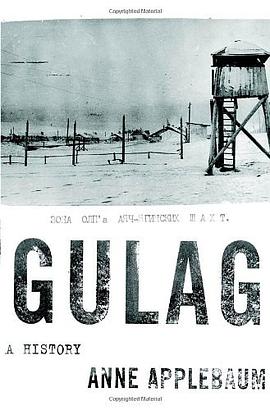
The Gulag—the vast array of Soviet concentration camps—was a system of repression and punishment whose rationalized evil and institutionalized inhumanity were rivaled only by the Holocaust.
The Gulag entered the world’s historical consciousness in 1972, with the publication of Alexander Solzhenitsyn’s epic oral history of the Soviet camps, The Gulag Archipelago . Since the collapse of the Soviet Union, dozens of memoirs and new studies covering aspects of that system have been published in Russia and the West. Using these new resources as well as her own original historical research, Anne Applebaum has now undertaken, for the first time, a fully documented history of the Soviet camp system, from its origins in the Russian Revolution to its collapse in the era of glasnost. It is an epic feat of investigation and moral reckoning that places the Gulag where it belongs: at the center of our understanding of the troubled history of the twentieth century.
Anne Applebaum first lays out the chronological history of the camps and the logic behind their creation, enlargement, and maintenance. The Gulag was first put in place in 1918 after the Russian Revolution. In 1929, Stalin personally decided to expand the camp system, both to use forced labor to accelerate Soviet industrialization and to exploit the natural resources of the country’s barely habitable far northern regions. By the end of the 1930s, labor camps could be found in all twelve of the Soviet Union’s time zones. The system continued to expand throughout the war years, reaching its height only in the early 1950s. From 1929 until the death of Stalin in 1953, some 18 million people passed through this massive system. Of these 18 million, it is estimated that 4.5 million never returned.
But the Gulag was not just an economic institution. It also became, over time, a country within a country, almost a separate civilization, with its own laws, customs, literature, folklore, slang, and morality. Topic by topic, Anne Applebaum also examines how life was lived within this shadow country: how prisoners worked, how they ate, where they lived, how they died, how they survived. She examines their guards and their jailers, the horrors of transportation in empty cattle cars, the strange nature of Soviet arrests and trials, the impact of World War II, the relations between different national and religious groups, and the escapes, as well as the extraordinary rebellions that took place in the 1950s. She concludes by examining the disturbing question why the Gulag has remained relatively obscure, in the historical memory of both the former Soviet Union and the West.
Gulag: A History will immediately be recognized as a landmark work of historical scholarship and an indelible contribution to the complex, ongoing, necessary quest for truth.
作者简介
作者:(美国)安妮•阿普尔鲍姆 译者:戴大洪
安妮•阿普尔鲍姆,《华盛顿邮报》专栏作家和编辑部成员(2002-2006)。毕业于耶鲁大学(1986),马歇尔奖学金获得者(1987)。曾担任(伦敦)《旁观者》杂志国外编辑,《经济学家》杂志驻华沙记者和网络杂志《石板》以及一些英国报纸的专栏作家。作品还发表在《纽约书评》、《外交季刊》、《华尔街日报》以及许多其他报纸刊物上。她的著作还有《东方与西方之间:跨越欧洲的中间地带》。
目录信息
读后感
社科文献出版社·甲骨文致力于为读者提供有价值的高品质读品。译介国外的经典社会科学类理论著作和学术畅销书是我们图书系列的主要方向。作为一个新的品牌,敬请广大读者关注、批评!您的任何意见可通过以下三种方式提供给我们:在我们的新浪微博[http://weibo.com/oracode(社...
评分作者很客观的节选和编排了当事人回忆录。 不得不说,章节编排的很好,循序渐进。从开始一直讲到古拉格体系崩溃和后记。 每个章节中尽量出现不同观点双方的回忆录,这样做虽然做到了客观,但也使读者不知道哪一种是更为普遍。 在这样的科学编排下 大致印象是前期政治犯的特殊待...
评分古拉格,文蛤,红色高棉,以及其他大屠杀,或许每一次悲剧事件都有各自的历史哲学文化根源,然而内容却是相差无几的。 劳改营也有自己的生态,等级制度,甚至亚文化群体。 对生命和物质资源骇人听闻的浪费。 僵化的条例那张无聊的面孔,此时露出獠牙。 饥饿是永远的主题,那些...
评分版权归作者所有,任何形式转载请联系作者。 作者:宸轻箫(来自豆瓣) 来源:https://www.douban.com/note/599815969/ 从某种程度上来说,禁书反而是一个风向标,告诉我们,他们在害怕什么,掩饰什么。比如年末猝不及防的一波古拉格下架潮。关于古拉格题材的图书,国内其实早...
评分这本书,你知道它的分量,清楚它的意义,却迟迟不敢翻开。因为它是一座山,翻越它不仅需要时间、需要忍耐、更需要极大的勇气。拿起这本大部头,我屡次开始,又屡次中止,往往一个片段或是一个场景的还原描述,就足以让我落荒而逃。我只能这样鼓励着自己:翻越它,你看到的世界...
用户评价
本作最大的问题在于Applebaum并未揭示古拉格是社会“常态”(Normality),血淋淋的数据以及当事人的相关回忆等高能素材反而冲淡了历史的张力——“古拉格是劳作而非杀人之所”并非无稽之谈,应该引起重视的则是这种言论产生的背景、原因以及效果
评分本作最大的问题在于Applebaum并未揭示古拉格是社会“常态”(Normality),血淋淋的数据以及当事人的相关回忆等高能素材反而冲淡了历史的张力——“古拉格是劳作而非杀人之所”并非无稽之谈,应该引起重视的则是这种言论产生的背景、原因以及效果
评分第一次认识安妮姨,以为她是Core Conservative那种,结果看了下推特……
评分本作最大的问题在于Applebaum并未揭示古拉格是社会“常态”(Normality),血淋淋的数据以及当事人的相关回忆等高能素材反而冲淡了历史的张力——“古拉格是劳作而非杀人之所”并非无稽之谈,应该引起重视的则是这种言论产生的背景、原因以及效果
评分本作最大的问题在于Applebaum并未揭示古拉格是社会“常态”(Normality),血淋淋的数据以及当事人的相关回忆等高能素材反而冲淡了历史的张力——“古拉格是劳作而非杀人之所”并非无稽之谈,应该引起重视的则是这种言论产生的背景、原因以及效果