
具体描述
Newly uncovered illuminations from the Renaissance depicting miraculous phenomena
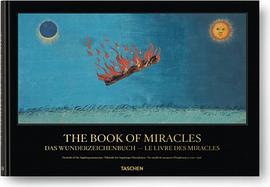
The Book of Miracles that first surfaced a few years ago and recently made its way into an American private collection is one of the most spectacular new discoveries in the field of Renaissance art. The nearly complete surviving illustrated manuscript, which was created in the Swabian Imperial Free City of Augsburg around 1550, is composed of 169 pages with large-format illustrations in gouache and watercolor depicting wondrous and often eerie celestial phenomena, constellations, conflagrations, and floods as well as other catastrophes and occurrences. It deals with events ranging from the creation of the world and incidents drawn from the Old Testament, ancient tradition, and medieval chronicles to those that took place in the immediate present of the book’s author and, with the illustrations of the visionary Book of Revelation, even includes the future end of the world.
The surprisingly modern-looking, sometimes hallucinatory illustrations and the cursory descriptions of the Book of Miracles strikingly convey a unique view of the concerns and anxieties of the 16th century, of apocalyptic thinking and eschatological expectation. The present facsimile volume reproduces the Book of Miracles in its entirety for the first time and thus makes one of the most important works of the German Renaissance finally available to art lovers and scholars. The introduction puts the codex in its cultural and historical context, and an extensive description of the manuscript and its miniatures, as well as a complete transcript of the text, accompany the facsimile in an appendix.
作者简介
Till-Holger Borchert studied art history, musicology and German Literature at the universities of Bonn and Bloomington (IN). An acknowledged expert in Early Netherlandish paintings, he has been chief curator at the Groeningemuseum in Bruges since 2002. He has also curated numerous exhibitions in the sphere of art and cultural history, including in Brussels, Maastricht, Rotterdam, Madrid and New York. Borchert teaches art history at the universities of Aachen and Memphis (TN) and heads the Flemish Research Centre for the Arts in the Burgundian Netherlands.
Joshua P. Waterman studied art history at Oregon State University and received a Ph.D. from Princeton University for his dissertation on interrelations of literature and visual art of the Silesian Baroque. The proven expert on German art of the late medieval and early modern periods worked at the Metropolitan Museum of Art in New York and was Andrew W. Mellon Postdoctoral Curatorial Fellow at the Philadelphia Museum of Art. Currently he is a research associate at the Germanisches Nationalmuseum in Nuremberg. He has collaborated on exhibitions in New York, Philadelphia, Cologne and Bruges.
目录信息
读后感
用户评价
这本书的叙事风格简直像是一场精心编排的、充满意象的梦境,读起来完全没有那种传统“奇迹”书籍的直白和说教感。它更像是一系列相互关联的、带着古典主义美感的散文诗集合。作者的笔触极其细腻,尤其擅长描绘环境对人物内心状态的影响。例如,有一章描写了在黎明时分,城市中第一缕阳光穿过老旧玻璃窗,投射在积满灰尘的书页上,这个场景的描写长达数页,充满了近乎虔诚的细节,让人仿佛能闻到空气中尘埃的味道。我发现,作者似乎刻意避开了任何关于“如何实现”的指导,而是专注于“体验”本身——体验那种悬而未决的、介于已知与未知之间的状态。这种克制让整个阅读过程充满了张力,你需要自己去填补那些留白的巨大空间。对我而言,这更像是一部关于“存在”的艺术品,而不是一本工具书。它考验读者的耐心和对隐喻的敏感度,那些真正能被触动的人,会发现其中蕴含着深层的共鸣,但对于追求快速答案的读者来说,可能会感到极其晦涩和分散注意力。
评分这本书最令人印象深刻的是其对“失落”与“被遗忘”的反复吟唱。它没有鼓吹任何新的、光明的未来,反而沉浸在一种近乎挽歌式的氛围中。作者花费了大量的篇幅去描述那些被现代文明抛弃的技艺、消失的方言、以及那些再也无人提及的历史人物的微小事迹。这种对“消逝之美”的迷恋,构建了一种沉重而又迷人的阅读体验。我感觉这本书像一本泛黄的、私人化的历史档案,里面充满了被小心翼翼保存下来的残片。它引导读者去寻找那些潜藏在日常结构之下的“空隙”——那些被我们习惯性忽略的、无声无息的衰败之处。这是一种非常内向的“奇迹”的定义:即认识到一切终将逝去,而在这个认识的过程中所产生的深刻的平静感。它没有给我注入任何“我可以改变世界”的能量,反而教会我如何优雅地接受世界的不可改变性,这本身就是一种令人肃然起敬的哲学观点。
评分我必须承认,这本书的结构让人摸不着头脑,它像一个迷宫,而不是一条直线。我翻阅了目录——如果能称之为目录的话——它是由一些完全不相关的、看似随机的标题组成的,比如“论钟摆的失衡”、“第404号房间的寂静”之类的。阅读体验是跳跃的,你可能前一秒还在思考某个古老的炼金术符号,下一秒就跳跃到了对现代社会信息过载的尖锐批判。这种非线性叙事,虽然在艺术上或许有其目的,但作为寻求清晰指引的读者,我感到有些挫败。它没有提供任何可供遵循的路径图,仿佛作者故意将所有逻辑的桥梁都拆除了。它更像是一系列哲学片段的集合,每个片段都抛出了一个巨大的问题,但从不提供答案,更不用说“奇迹”的保证了。它挑战了我们对“一本书应该做什么”的固有期望,强迫你接受混乱中的美感。它更像是一个开放式的艺术装置,每个读者都会在其中看到完全不同的东西,也正因此,我很难用传统标准来评价它的“有效性”。
评分这本书简直是精神的探险,它没有给我提供任何具体的“奇迹”清单或操作手册,反而是引人深思地探索了“奇迹”这个概念在人类经验中的位置。作者似乎更热衷于解构我们对“超自然”的期望,然后将焦点引向那些我们日常生活中常常忽略的、细微的、却具有深远意义的事件。比如,其中有一段落深入探讨了量子力学中观察者效应与人类集体意识之间的模糊地带,虽然没有直接描述任何神迹,但它构建了一种理论上的框架,让人开始怀疑我们所认知的现实的坚固性。这种哲学思辨的深度,远超出一本普通的励志或灵修书籍所能达到的层次。我尤其欣赏它对语言的运用,那些句子如同精密的仪器,剖析着“相信”与“看见”之间的张力。它没有承诺任何即时的、立竿见影的改变,而是提供了一套全新的透镜,让你重新审视那些被日常琐事磨平光泽的瞬间。合上书时,我感觉自己像刚完成了一次漫长而安静的冥想,不是因为书中有什么震撼的启示,而是因为它迫使我停下来,去倾听世界无声的低语。这本书的价值,在于它对思考过程的重塑,而非对结果的直接灌输。
评分从纯粹的文本构建角度来看,这本书的语言密度高得惊人,读起来像是在啃食一块密度极高的黑巧克力,需要极大的专注力和时间来消化。句子结构复杂,充满了嵌套式的从句和罕见的词汇,这使得阅读速度慢得令人发指,但同时也带来了无可替代的智力上的满足感。它没有一处提及任何可以被称之为“奇迹”的事件,但它通过精确地描述人类心智在面对巨大不确定性时的挣扎与适应,来间接探讨“超越”的意义。它像是一本深奥的心理学论著,但却披着某种神秘主义的外衣。我花了大量时间回溯和查阅那些被作者轻描淡写带过的专业术语或历史典故,仿佛每一次查阅都是在为理解作者的思维地图添砖加瓦。这本书的价值在于其对知识的纯粹追求,以及它所要求的读者投入的等量智力劳动。它对“奇迹”这个词语的使用,更像是一种讽刺性的文学手法,用以反衬人类在追求宏大叙事时,对细微真理的忽视。
评分1. 此本所选内容皆出于一人一书,绘画风统一——新古典主义,真实性难以考证。 2. 但是可以部分了解过去人类对饥荒、瘟疫、自然灾害恐惧的具体反应——There is something. 也印证了这个著名的社会学实验——斯基纳的鸽子哈哈哈。 3. 宗教部分不懂。 4. Index of miracles: Animal and plants miracles, blood and food miracles, celestial signs, and natural catastrophes.
评分不是很中意它
评分好像并没有塞拉菲尼抄本脑洞大,但是比塞拉菲尼贵。。。装帧的确很不错,适合收藏,但是看几页就腻了,好多张都有大量重复和类似的感觉。
评分好像并没有塞拉菲尼抄本脑洞大,但是比塞拉菲尼贵。。。装帧的确很不错,适合收藏,但是看几页就腻了,好多张都有大量重复和类似的感觉。
评分好像并没有塞拉菲尼抄本脑洞大,但是比塞拉菲尼贵。。。装帧的确很不错,适合收藏,但是看几页就腻了,好多张都有大量重复和类似的感觉。