
具体描述
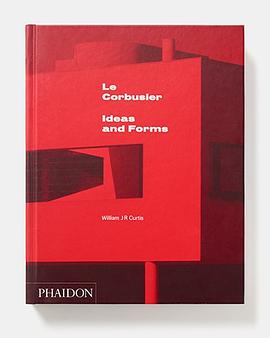
It is impossible to understand the architecture of the twentieth century and of our own time without first coming to terms with Le Corbusier (1887–1965). His buildings can be found from Paris to La Plata to the Punjab and his influence has extended over several generations worldwide. Individual masterpieces such as the Villa Savoye at Poissy, the Chapel of Notre Dame-du-Haut at Ronchamp and the Parliament Building in Chandigarh, bear comparison with the works of any age. As well as an architect, Le Corbusier was also a painter, sculptor, urbanist and author; even a philosopher who ruminated upon the human condition in the modern era. He reordered the ground rules of the architectural discipline and invested his insights with a universal tone.
This probing study of Le Corbusier’s work explores the interactions of ideas and forms in his individual buildings and in his oeuvre as a whole. By penetrating the design processes of his major buildings it reveals the architect’s struggle to reconcile the ideal and the practical and to give clients’ aspirations and society’s institutions a suitable symbolic form. It analyses Le Corbusier’s phenomenal powers of imaginative synthesis, the recurrent elements of his architectural language, and the multiple levels of meaning in his projects. In turn it shows how this most ‘modern’ of architects drew inspiration from both nature and the past.
Published in the year of the fiftieth anniversary of Le Corbusier’s death, the book has been rigourously rethought, reworked and redesigned to include new scholarship, to integrate the author’s research and to extend his insights. The text, notes and bibliography have been expanded, the number of illustrations more than doubled, and an entire section of four chapters, ‘Principles and Transformations’, has been added at the end. These focus on the architect’s spatial imagination, the genesis of his forms, the generic features of his style and his impact upon world architecture. This new and updated edition of Le Corbusier: Ideas and Forms presents a full and illuminating account of the architect’s buildings and unrealized urban projects while also revealing broader features of his creative universe.
Continuing the standard of the highly praised original edition, this book by eminent and award-winning architectural historian William J R Curtis documents individual projects in detail while also linking them to the architect’s philosophy, utopian vision and activities as a painter, sculptor and author. It explores Le Corbusier’s processes of invention in diverse media while placing his work in the context of the cultural and political predicaments of his time. It demonstrates how the artist transformed his experience of the world into a new architectural vocabulary based upon a limited set of types and elements, and how he gave shape to images and ideas in forms of compelling force.
作者简介
William J R Curtis is an award-winning historian, critic, writer, curator, painter and photographer. Educated at the Courtauld Institute and Harvard University, he has taught the history of architecture and theories of design at many universities around the world including Harvard, the Architectural Association and the University of Cambridge where he was Slade Professor of Fine Art (2003–04). His best known books include Modern Architecture Since 1900 (third edition, Phaidon, 1996) and Le Corbusier: Ideas and Forms (first edition, Phaidon, 1986), both of which have been widely translated and both of which have been referred to as ‘classics’. His Denys Lasdun: Architecture, City, Landscape (Phaidon, 1994) was also published to critical acclaim. Curtis has written over a dozen monographs on diverse aspects of modern and contemporary architecture as well as numerous studies on Le Corbusier. He has published historical, critical and theoretical texts on subjects as varied as Indian architecture, both ancient and modern, Australian aboriginal spear throwers, the history of everyday objects and the role of abstraction in photographs. He also contributes regularly to international critical journals such as the Architectural Review and El Croquis. Curtis exhibits and publishes his own paintings and drawings (Mental Landscapes, Museum of Finnish Architecture, 2000) and photographs (Structures of Light, Alvar Aalto Academy, 2007). Among his numerous awards: the Alice Davis Hitchcock Medallion of the Society of Architectural Historians of Great Britain (1984), a National Honors Society Gold Medal in Architecture and Allied Arts, USA (1999), a Medal of the Museum of Finnish Architecture (2006) and a Golden Award for Global Contribution in Architecture (CERA, A+D, India, 2014).
目录信息
Preface to the First Edition
Preface to the Second Edition
Introduction: Notes on Invention
Part I: The Formative Years of Charles Edouard Jeanneret 1887-1922
The Home Base
In Search of Personal Principles
A Classicism for the Jura
Paris, Purism and L'Esprit Nouveau
Part II: Architectural Ideals and Social Realities 1922-1944
Defning Types for the New Industrial City
Houses, Studios and Villas
Machine-Age Palaces and Public Institutions
The Structure of Intentions: Villa Savoye
Collective Demonstrations: Cité de Refuge and Pavillon Suisse
Mechanization, Nature and 'Regionalism'
Politics, Urbanism and Travels
Part III: The Ancient Sense: Late Works 1945-1965
The Modulor, Marseilles and the Mediterranean Myth
Sacral Forms, Ancient Associations
Le Corbusier in India: The Symbolism of Chandigarh
The Merchants of Ahmedabad
Retrospection and Invention: Final Projects
Part IV: Principles and Transformations
The Realm of Architectural Ideas
The Genesis of Forms
The Unique and the Typical
On Transforming Le Corbusier
Conclusion: Modernism, Nature, Tradition
Bibliography and notes
Index
· · · · · · (收起)
读后感
用户评价
翻开这本书,我立刻感受到一种扑面而来的、近乎于哲学思辨的深度。这本书的叙事方式非常独特,它不像一般的传记那样线性叙事,而是采取了一种主题式的切入,将柯布西耶的建筑实践与他的社会理论、城市规划思想交织在一起,形成一张复杂而有机的知识网络。作者似乎并不满足于仅仅介绍“他盖了什么”,更着重于探讨“他为什么这么盖”。其中关于“模度”(Modulor)体系的讨论,简直是全书的精髓。作者没有简单地罗列公式,而是将其置于文艺复兴以来人类对人体尺度研究的宏大背景下进行考察,并联系到柯布西耶晚年对自然形态的回归与融合。这种跨学科的视野,极大地拓宽了我对这位大师的认知边界。我原以为他对功能主义的推崇是绝对的,但书中展示了他后期对于有机形态的兴趣,以及他对“沉思”空间的需求,让人看到一个更加立体、充满内在矛盾与成长的艺术家形象。特别值得一提的是,书中对柯布西耶在印度昌迪加尔项目的分析,不仅仅聚焦于那些标志性的混凝土结构,更深入剖析了他在后殖民时代背景下,试图将欧洲现代主义蓝图强加于印度本土文化时的张力与妥协,这种批判性的视角使得评价更加客观和深刻。
评分这本书的行文风格有一种独特的、近乎于诗意的叙事节奏,与柯布西耶本人那种强烈的、不容置疑的宣言式语气形成了奇妙的呼应。它并不试图讨好读者,而是以一种高傲的姿态,将你拉入一个由直线、几何和秩序构筑的世界。我最喜欢的是它对柯布西耶“城市机器”理论的解构,作者并没有简单地批判其带来的城市病,而是将其置于两次世界大战间社会对效率和秩序的集体焦虑中去理解。那种对宏大叙事的迷恋,对“垂直城市”的执着,在书中被描绘得淋漓尽致,让人在感到压抑的同时,又不得不为那种超越时代的想象力而折服。此外,书中穿插的一些他与同代艺术家的交往细节,比如与费尔南·莱热的友谊,以及他对现代艺术运动的参与,使得这位建筑巨匠的形象更加丰满,不再只是一个孤立的工程师。阅读这本书就像是与一位学识渊博但略显偏执的导师进行了一场漫长的对话,他强迫你审视你对“美”和“居住”的固有观念。
评分坦率地说,这本书的阅读体验是相当“硬核”的,它要求读者具备一定的建筑术语基础,或者至少有极大的求知欲去查阅那些陌生的概念。我花了很长时间才完全消化其中关于建筑元素“可分解性”和“标准化”的章节。作者在论述时,大量引用了柯布西耶本人的著作片段,并辅以极其详尽的图解说明,使得即便是那些晦涩的理论,也变得可以被视觉化理解。但最让我印象深刻的,是它对柯布西耶在不同材料上的偏爱转变的细致描摹。从早期的白色灰泥到中期标志性的“粗野主义”清水混凝土(béton brut),再到后期对原木和石材的重新引入,作者构建了一个清晰的材料哲学演变路径。书中对朗香教堂的分析尤其精彩,它不再仅仅是一个结构奇迹,而是在作者的引导下,成为柯布西耶晚年对宗教、光影和精神追求的最终凝结。这本书的优势在于其文献的扎实度,引用的原始资料非常丰富,这使得它不仅仅是评述,更像是一部严谨的学术档案,适合那些想进行深度研究的专业人士和学生。
评分这本关于勒·柯布西耶的书,简直是为建筑史爱好者量身定做的一部百科全书。我拿到手时,首先被它厚重的开本和精美的插图所震撼。书中的排版设计本身就是一种对现代主义美学的致敬,字体选择的清晰度和图片分辨率都达到了专业级别的水准。书中详尽地梳理了他早期的“纯粹主义”理念,那些早期的素描和设计草图被极其细致地还原,让我仿佛能触摸到他青年时代对工业革命新材料和新形式的狂热探索。尤其是关于他如何从对古典比例的初步学习,迅速转向对“机器时代住宅”的构想,这一过渡期的思想波动和设计尝试,作者都给予了非常深入的剖析,丝毫没有流于表面。比如,书中花了大量篇幅对比分析了他在瑞士和巴黎早期项目的异同,从材料选择到空间布局,那种步步为营的学术严谨性,让人不得不佩服作者的功力。阅读过程中,我多次停下来,反复对照那些平面图和剖面图,试图理解“光、空间、体量”这三个核心要素在他心中是如何互相作用、最终服务于他那套严密的美学体系的。对于任何想要深入理解现代建筑的起源和核心思想的人来说,这本书的图像资料和理论阐述的结合,是目前市面上少有的精品,它不仅仅是在陈述事实,更是在引导你进入柯布西耶那个充满几何逻辑和理性光辉的思维世界。
评分这本书给我最大的惊喜,在于它对柯布西耶的“绘画”和“城市规划”这两条看似平行的线索进行了成功的汇合。我以前总觉得他的城市规划是冷酷的、脱离人性的,而他的绘画是更感性的表达。但这本书巧妙地揭示了这两者之间深刻的结构性联系——他试图将他对二维画面的构图逻辑,直接应用到三维的城市肌理之中。书中关于萨伏伊别墅的经典分析,这次是通过对比其平面布局和一幅早期抽象画的元素布局来展开的,这种跨媒介的解读方式,极大地提升了我对该建筑“形式语言”的理解深度。作者展示了柯布西耶如何将他对运动、速度、光影的捕捉,融入到建筑的流线上,这让那些冰冷的混凝土构件似乎拥有了内在的生命力。总而言之,这是一部极具启发性的著作,它迫使读者跳出传统的建筑史框架,从艺术史、社会学甚至心理学的角度去重新评估这位现代主义教父的影响力,它远不止是一本关于建筑的书,更像是一部关于20世纪人类理性与激情抗争的编年史。
评分 评分 评分 评分 评分