
具体描述
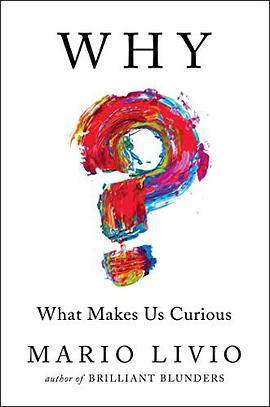
Astrophysicist and author Mario Livio investigates perhaps the most human of all our characteristics--curiosity--as he explores our innate desire to know why.
Experiments demonstrate that people are more distracted when they overhear a phone conversation--where they can know only one side of the dialogue--than when they overhear two people talking and know both sides. Why does half a conversation make us more curious than a whole conversation?
In the ever-fascinating Why? Mario Livio interviewed scientists in several fields to explore the nature of curiosity. He examined the lives of two of history's most curious geniuses, Leonardo da Vinci and Richard Feynman. He also talked to people with boundless curiosity: a superstar rock guitarist who is also an astrophysicist; an astronaut with degrees in computer science, biology, literature, and medicine. What drives these people to be curious about so many subjects?
Curiosity is at the heart of mystery and suspense novels. It is essential to other forms of art, from painting to sculpture to music. It is the principal driver of basic scientific research. Even so, there is still no definitive scientific consensus about why we humans are so curious, or about the mechanisms in our brain that are responsible for curiosity.
作者简介
Mario Livio, an astrophysicist who has written about mathematics, biology, and now psychology and neuroscience--explores this irresistible subject in a lucid, entertaining way that will captivate anyone who is curious about curiosity.
目录信息
1 Curious
2 Curiouser
3 And Curiouser
4 Curious about Curiosity: Information Gap
5 Curious about Curiosity: Intrinsic Love of Knowledge
6 Curious about Curiosity: Neuroscience
7 A Brief Account of the Rise of Human Curiosity
8 Curious Minds
9 Why Curiosity?
Epilogue
Notes
Bibliography
Credits
Index
· · · · · · (收起)
读后感
Curiosity has many different mechanisms if we try to look into its definitions. There are perceptual curiosity, driven by surprises; and epstemic curiosity, driven by the urge for knowledge. Curiosity rides two wheels. One is the information gap betwen what...
评分Curiosity has many different mechanisms if we try to look into its definitions. There are perceptual curiosity, driven by surprises; and epstemic curiosity, driven by the urge for knowledge. Curiosity rides two wheels. One is the information gap betwen what...
评分Curiosity has many different mechanisms if we try to look into its definitions. There are perceptual curiosity, driven by surprises; and epstemic curiosity, driven by the urge for knowledge. Curiosity rides two wheels. One is the information gap betwen what...
评分Curiosity has many different mechanisms if we try to look into its definitions. There are perceptual curiosity, driven by surprises; and epstemic curiosity, driven by the urge for knowledge. Curiosity rides two wheels. One is the information gap betwen what...
评分Curiosity has many different mechanisms if we try to look into its definitions. There are perceptual curiosity, driven by surprises; and epstemic curiosity, driven by the urge for knowledge. Curiosity rides two wheels. One is the information gap betwen what...
用户评价
我必须承认,这本书的叙事节奏掌握得非常高明,它没有采取传统线性叙事,而是像一个技艺高超的音乐家,在不同的主题之间进行变奏和回旋。某一章可能完全是基于严谨的实证数据分析,充满了图表和统计模型的推导,读起来像是一篇顶尖的学术论文,逻辑严密,不容置喙。但下一章,风格会骤然转变,变成一段近乎诗歌散文的、充满了个人情感和哲思的独白,探讨的似乎是人类在面对无常命运时的集体无意识。这种强烈的风格切换,反而避免了全书陷入单一的沉闷,它让读者在紧绷的分析之后得到情感上的释放,又在情感的波动中被重新拉回理性的轨道。最让我佩服的是,无论风格如何变化,所有的论证似乎都指向一个共同的核心,那个在书名中被提出的‘Why’。这种统一性和多样性的完美结合,显示出作者不仅有深厚的学识,更有极强的艺术驾驭能力,这种平衡感,是很多试图探讨宏大命题的著作所欠缺的。
评分这本书的封面设计实在是太引人注目了,那种深邃的靛蓝色背景上,只有一行简洁的白色字体,‘Why?’,它就像一个无声的拷问,直击人心最深处的好奇。我是在一家独立书店的角落里发现它的,当时店里播放着轻柔的古典乐,周围弥漫着旧纸张和咖啡的混合香气。我拿起它的时候,感觉沉甸甸的,不是那种厚度带来的重量,而是一种内容积淀的质感。这本书没有给我任何关于它具体内容的提示,书脊上除了书名,连作者的名字都印得很小,仿佛作者在刻意隐藏自己,将所有的焦点都引向那个永恒的疑问。我当时心里就在想,这本书难道是要探讨宇宙起源的终极奥秘?还是仅仅关于我们日常生活中那些微不足道的“为什么”?这种悬念的营造,在我看来,比任何夸张的宣传语都有效。翻开扉页,里面的排版非常干净,留白很多,这让我有一种喘息的空间,准备好迎接即将到来的思想冲击。我期待着它能像一把手术刀,精准地剖开那些我们习以为常却从未深思的现象,而不是堆砌那些陈词滥调的哲学说教。希望它能提供一种全新的视角,一种能让我在读完后,重新审视我过去二十多年生活经历的契机。
评分这本书的阅读体验,老实说,是一场精神上的马拉松,它要求你全神贯注,不允许有丝毫的走神。我记得刚开始的几章,语言的密度高得惊人,大量的比喻和跨学科的引用,像是一条湍急的河流,推着你向前走,稍不留神就会被卷入那些复杂的逻辑链条中。我不得不经常停下来,拿起笔在旁边空白处画草图、写注释,试图梳理作者构建的知识网络。它绝不是那种可以放在床头,睡前随便翻阅的消遣读物;它更像是一本需要被“攻克”的堡垒。有时候,我会因为理解了某一个关键的论点而感到一阵强烈的智力满足感,那种感觉就像是终于在迷雾中找到了灯塔。但紧接着,作者又会抛出一个更深层次、更难以捉摸的问题,将你从高处拉回原点,重新开始探索。这种反复的拉扯和构建,让我的思维变得异常敏锐。我发现自己走路时会不自觉地思考书中的某些概念,甚至在做饭的时候,那些抽象的理论也会以一种奇特的方式与现实中的操作联系起来。这种浸入感,是我在近几年的阅读中极为罕见的。
评分这本书最独特的地方,或许在于它处理“不确定性”的方式。它没有提供任何一锤定音的答案,这对于那些习惯于在书本中寻求确定性指导的读者来说,可能会感到挫败。但我恰恰认为,这正是它的价值所在。作者似乎在反复强调,真正的智慧并非在于掌握了所有答案,而在于能够优雅地、持续地提出更高质量的问题。在阅读过程中,我几次因为找不到明确的结论而感到焦躁,仿佛自己被留在了真空地带。但冷静下来后,我意识到,作者不是在给我们地图,而是在教我们如何制造指南针。他通过展示各种看似矛盾的论证和互相冲突的理论框架,强迫读者去进行最终的整合与选择。这种“读者参与式”的写作手法,使得这本书的意义不再仅仅是作者的输出,而是读者在阅读过程中共同完成的构建。它挑战了我固有的认知结构,迫使我接受许多事情可能永远无法被完全‘解决’,而我们能做的,是更好地‘共存’于这些未解的谜团之中。
评分从装帧工艺的角度来看,这本书体现了一种对阅读行为本身的尊重。纸张的选用非常讲究,那种略带粗粝感的米白色纸张,触感温和,即便是长时间的阅读也不会让眼睛感到过度疲劳。油墨的印刷质量极高,即便是最小的脚注也清晰可辨,没有出现任何模糊或洇墨的现象。装订处平整坚固,我毫不怀疑这本书可以经受住多次翻阅和携带。更值得一提的是,书签的设计,它采用了一种很薄的金属片,上面镌刻着一小段似乎是拉丁文的格言,这块书签本身就成了一个小小的仪式感。它不仅仅是一个标记页码的工具,更像是一个提醒:每一次合上书本,都是为了更好地准备下一次的进入。这种对实体书细节的考究,在如今这个数字化泛滥的时代显得尤为珍贵,它强化了一种慢读、精读的氛围,让阅读本身变成了一种庄重的、值得被珍视的体验,与书中所探讨的那些深刻议题相得益彰。
评分非常轻松好读!心理学和神经科学科普的部分,比专业内人士写得更reader-friendly。
评分Appetite for knowledge
评分Appetite for knowledge
评分新奇陌生或纯粹愉悦刺激方面的好奇心,有时会敌不过最大化学习,理解因果关系,探索世界及减少预测失误等因素组成的好奇心。换言之,基于实用性的好奇心会比较强烈而持久,但just for fun的好奇心亦不可或缺,因为久而久之你可能会完全丧失好奇心。好奇心的培养如锻炼肌肉,必须日复日进行。时刻保持孩童般的惊奇,保持觉察力,敏感度,不要让自己变得麻木,变得习以为常。不要轻易放过寻常事物,提出疑问,搜寻探索,记录结果。
评分an interesting book about curiosity