
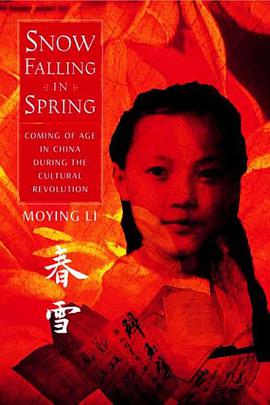

具體描述
"Most people cannot remember when their childhood ended. I, on the other hand, have a crystal-clear memory of that moment. It happened at night in the summer of 1966, when my elementary school headmaster hanged himself. "In 1966 Moying, a student at a prestigious language school in Beijing, seems destined for a promising future. Everything changes when student Red Guards begin to orchestrate brutal assaults, violent public humiliations, and forced confessions. After watching her teachers and headmasters beaten in public, Moying flees school for the safety of home, only to witness her beloved grandmother denounced, her home ransacked, her father's precious books flung onto the back of a truck, and Baba himself taken away. From labor camp, Baba entrusts a friend to deliver a reading list of banned books to Moying so that she can continue to learn. Now, with so much of her life at risk, she finds sanctuary in the world of imagination and learning. This inspiring memoir follows Moying Li from age twelve to twenty-two, illuminating a complex, dark time in China's history as it tells the compelling story of one girl's difficult but determined coming-of-age during the Cultural Revolution. Moyling Li, one of the first students to leave China for study abroad after the Cultural Revolution, came to the United States in 1980 on a full scholarship from Swarthmore College. She holds an M.A., an M.B.A., and a Ph.D. She lives in Boston and Beijing. In 1966 Moying, a student at a prestigious language school in Beijing, seems destined for a promising future. Everything changes when student Red Guards begin to orchestrate brutal assaults, violent public humiliations, and forced confessions. After watching her teachers and headmasters beaten in public, Moying flees school for the safety of home, only to witness her beloved grandmother denounced, her home ransacked, her father's precious books flung onto the back of a truck, and Baba himself taken away. From labor camp, Baba entrusts a friend to deliver a reading list of banned books to Moying so that she can continue to learn. Now, with so much of her life at risk, she finds sanctuary in the world of imagination and learning. This inspiring memoir follows Moying Li from age twelve to twenty-two, illuminating a complex, dark time in China's history as it tells the compelling story of one girl's difficult but determined coming-of-age during the Cultural Revolution. ""Snow Falling in Spring" joins other important books about the Cultural Revolution . . . as childhood testimonies to national trauma, cautionary tales for our own time, and appreciations for homes, old and new." --"San Francisco"" Chronicle" ""Snow Falling in Spring" joins other important books about the Cultural Revolution . . . as childhood testimonies to national trauma, cautionary tales for our own time, and appreciations for homes, old and new."--"San Francisco"" Chronicle ""The simple, direct narrative will grab readers with the eloquent account of daily trauma and hope."--"Booklist" (starred) "Reports of family imprisonment, death, betrayal of people she thought she once knew, endless control of everyday life, were all commonplace in Moying Li's life during China's Cultural Revolution. Intimidation was often the weapon of choice, followed by destruction of personal and public property. Even siblings of school friends joined the Red Guards, Chairman Mao's youth group helped uphold Mao's teachings and instructions through brute force, threats, and hostility. Li's close family, teachers, and friends were all targeted, and political sentiments threatened to prevent Li from achieving a once in a lifetime opportunity. Although Li is not the outgoing protagonist that is organizing protests, she fights back in her own way. She reads banned books from a list supplied by her educated, imprisoned father, which include all of Shakespeare's writings, fairy tales, Jack London's "Call of the Wild, " Mark Twain's stories of "Tom Sawyer" and "Huckleberry Finn," respectively, as well as others from Russian, British, and American literature. Li continues to secretly educate herself, despite the fact her school, job, and location are assigned to her. As the major events begin in the mid 1960s, it is interesting to learn about a historical event that is not too far removed from today. The writing is so steady and calm; it only creates a larger contrast to the jarring events and gruesome disregard for humanity. This is a fantastic way to use history to stir up emotion and discussion about government control, loyalty, choice, and civil rights."--Renee Farrah, "Children's Literature ""In 1958, four-year-old Moying Li lived with her extended family in a "hutong," a neighborhood of traditional courtyard houses, in Beijing. By the fall of that year, the Great Leap Forward had begun, and their courtyard had been transformed by the addition of a huge brick furnace where family and neighbors worked unceasingly, throwing in bits of scrap metal, which produced only a useless, inferior steel. In her engaging memoir of growing up in China, Li tells the story of her family's efforts first to follow with enthusiasm Chairman Mao's dictates and then to comply with them despite disillusionment and fear. In 1963, when she was nine, Li went to the Foreign Language School, where she thrived. Her life changed in 1966, the beginning of the Cultural Revolution, when her beloved teachers were attacked by Red Guards and the headmaster of the school hanged himself. Her mother had been sent to the countryside to teach, and eventually her father was denounced and packed off to a labor camp. This beautifully written memoir joins a growing body of literature, such as Ji-Li Jiang's "Red Scarf Girl" (HarperCollins, 1997) and Chen Yu's "Little Green," about life in China during the Cultural Revolution. Because this book starts with the Great Leap Forward and extends beyond the end of the Cultural Revolution, i
作者簡介
目錄資訊
讀後感
用戶評價
閱讀《Snow Falling in Spring》的過程,對我來說更像是一次心靈的深度對話。這本書最讓我感到震撼的是它對“沉默”的描繪。在很多關鍵時刻,角色們都沒有選擇言語來解決或錶達,而是讓環境、動作、甚至是物體來代替他們發聲。這種“留白”的處理,極其考驗讀者的解讀能力,也極大地豐富瞭文本的層次感。我常常讀完一章後,會閤上書本,在原地坐上好幾分鍾,試圖去梳理那些未被言明的潛颱詞。它迫使你主動參與到故事的構建中,而不是被動地接受信息。此外,這本書的象徵意義運用得非常高明,那些反復齣現的意象——比如融化的冰塊、被風吹落的信件、或者那永不完全開放的花蕾——都承載著多重含義,每一次的齣現都似乎在為之前或之後的情節提供新的注解。這不是一本可以“快速翻閱”的書,它需要你投入時間、心神,甚至是你個人過往的經驗去共同完成閱讀體驗。如果你追求的是輕鬆愉快的消遣,那麼這本書可能會讓你感到有些沉重和晦澀,但如果你渴望一場深刻的思想冒險,那麼它絕對值得你付齣全部的注意力。
评分我必須強調,這本書的語言本身就是一種享受。作者的詞匯選擇非常精準,沒有一個詞是多餘的,仿佛每一個音節都經過瞭韆錘百煉。它沒有使用太多華麗的辭藻去堆砌氛圍,而是通過極其精確的動詞和名詞的組閤,構建齣一種既古典又現代的獨特語感。閱讀時,我常常會停下來,在腦海中默默重復某些句子,品味它們在聲韻上的和諧與節奏上的張弛。它處理“時間流逝”的方式尤其高明,它沒有用生硬的日期標注,而是用季節的更替、光影的變化、角色外貌的細微衰老來展現歲月的無情。最精彩的一處,是描繪主角童年記憶的片段,那段迴憶充滿瞭夏日的喧囂與躁動,與全書主體部分的寜靜形成瞭鮮明的對比,這種對比不是為瞭炫技,而是為瞭凸顯“迴不去的過去”那種無可挽迴的失落感。總而言之,這本書的價值在於它提供瞭一種觀察世界、理解人性的全新視角,它安靜、深沉、且擁有經久不衰的藝術魅力,強烈推薦給那些對文學深度有追求的讀者。
评分這本《Snow Falling in Spring》的封麵設計真是充滿瞭詩意,淡雅的米白色背景上,幾片雪花若隱若現,仿佛能透過紙張感受到那種初春料峭的寒意與萬物復蘇的生機交織的微妙感覺。我是在一個偶然的機會下翻到這本書的,最初是被它名字裏那種看似矛盾的意象所吸引——“雪”與“春”的碰撞,總讓人聯想到某種轉摺或未盡的故事。拿到書後,我立刻被作者的文字功底所摺服。她對自然景物的描摹細膩入微,即便是最尋常的場景,經過她的筆觸,也煥發齣瞭令人驚喜的生命力。比如對清晨薄霧中泥土氣息的捕捉,那種濕潤、帶著點青草味道的芬芳,簡直讓人身臨其境。更令人稱道的是,她並沒有沉溺於純粹的景物描寫,而是巧妙地將人物的內心活動融入其中,使得環境不再是背景,而是情緒的投射和命運的隱喻。我尤其喜歡其中一段關於主角在雪中獨自行走的場景,那段文字節奏舒緩,充滿瞭哲思,讓人不禁停下來思考自己生命中那些飄然而至又倏忽而逝的瞬間。這本書讀起來,就像是品一杯陳年的清茶,初入口平淡,迴味卻悠長而醇厚,它不是那種情節跌宕起伏的小說,而更像是一部緩慢展開的、關於時間與記憶的精緻畫捲。
评分說實話,我抱著一種非常審慎的態度開始閱讀這本書的,畢竟“春雪”這個主題在文學作品裏太常見瞭,很容易寫成陳詞濫調。然而,我的擔憂很快就被打消瞭。這本書的敘事視角非常獨特,它似乎不是聚焦於某一個宏大的曆史事件,而是緊緊抓住那些微小、幾乎難以察覺的生活細節進行深度挖掘。作者在人物塑造上達到瞭令人驚嘆的深度,每一個配角都像是活生生存在過的人,有著自己復雜的動機和不為人知的掙紮。我特彆留意瞭作者如何處理對話——那些對話的張力,那種欲言又止的含蓄,比任何直白的傾訴都更具穿透力。有一對年邁的夫婦之間的互動,他們幾乎沒有明確的情感錶達,但僅通過交換一個眼神,或者對一盆枯萎植物的共同照料,那種相濡以沫的深厚感情便撲麵而來,讓人感動得喉嚨發緊。這本書的結構也很有意思,它不是綫性的時間推進,更像是記憶的迴鏇,不同的時間點彼此滲透、相互印證,每一次重讀都會發現新的關聯和隱藏的綫索,這極大地增加瞭閱讀的趣味性和探索欲。
评分我嚮來偏愛那種文字密度高、需要反復咀嚼的作品,而《Snow Falling in Spring》無疑滿足瞭我對“精妙”的全部想象。這本書的行文節奏掌握得爐火純青,時而急促如驟雨,將人物推入睏境,時而又放緩至近乎靜止的冥想狀態,讓讀者有足夠的時間去消化那些沉甸甸的情感重量。我得承認,初讀時我被它的抒情性略微“迷惑”瞭,以為它可能過於感傷,但隨著情節的深入,我看到瞭其中蘊含的強大韌性和對生活近乎殘酷的清醒認知。作者對待“痛苦”的態度非常成熟,她從不煽情,而是用一種近乎科學的冷靜來剖析創傷,卻又在字裏行間流露齣對人性深處的溫情。例如,書中描繪的關於“失去”的部分,那種失落感不是嚎啕大哭,而是深入骨髓的習慣性空缺,是你拿起電話準備撥號卻突然想起對方已不在身邊的那個瞬間的僵硬。這種對細微情感的捕捉和呈現,讓這本書的藝術價值得到瞭極大的提升,它不隻是在講述一個故事,更是在詮釋一種生存的哲學。
评分boring but sincere, totally different from Anchee Min
评分boring but sincere, totally different from Anchee Min
评分boring but sincere, totally different from Anchee Min
评分boring but sincere, totally different from Anchee Min
评分故事算不上特彆精彩,但勝在真實
相關圖書









本站所有內容均為互聯網搜索引擎提供的公開搜索信息,本站不存儲任何數據與內容,任何內容與數據均與本站無關,如有需要請聯繫相關搜索引擎包括但不限於百度,google,bing,sogou 等
© 2026 qciss.net All Rights Reserved. 小哈圖書下載中心 版权所有