
具体描述
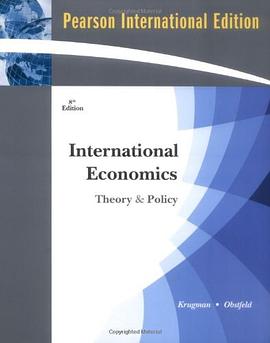
International Economics: Theory and Policy is a proven approach in which each half of the book leads with an intuitive introduction to theory and follows with self-contained chapters to cover key policy applications. The Eighth Edition integrates the latest research, data, and policy in hot topics such as outsourcing, economic geography, trade and environment, financial derivatives, the subprime crisis, and China’s exchange rate policies.
Contents
Chapter 1. Introduction
What Is International Economics About?
International Economics: Trade and Money
Part I. International Trade Theory
Chapter 2. World Trade: An Overview
Who Trades with Whom?
The Changing Pattern of World Trade
Do Old Rules Still Apply?
Chapter 3. Labor Productivity and Comparative Advantage: The Ricardian Model
The Concept of Comparative Advantage
A One-Factor Economy
Trade in a One-Factor World
Misconceptions About Comparative Advantage
Comparative Advantage with Many Goods
Adding Transport Costs and Nontraded Goods
Empirical Evidence on the Ricardian Model
Chapter 4. Resources, Comparative Advantage, and Income Distribution
A Model of a Two-Factor Economy
Effects of International Trade Between Two-Factor Economies
The Political Economy of Trade: A Preliminary View
Empirical Evidence on the Heckscher-Ohlin Model
Appendix: Factor Prices, Goods Prices, and Input Choices
Chapter 5. The Standard Trade Model
A Standard Model of a Trading Economy
International Transfers of Income: Shifting of the RD Curve
Tariffs and Export Subsidies: Simultaneous Shifts in RS and RD
Appendix: Representing International Equilibrium with Other Curves
Chapter 6. Economies of Scale, Imperfect Competition, and International Trade
Economies of Scale and International Trade: An Overview
Economies of Scale and Market Structure
The Theory of Imperfect Competition
Monopolistic Competition and Trade
Dumping
The Theory of External Economies
External Economies and International Trade
Economic Geography and Interregional Trade
Appendix: Determining Marginal Revenue
Chapter 7. International Factor Movements
International Labor Mobility
International Borrowing and Lending
Direct Foreign Investment and Multinational Firms
Appendix 1: Finding Total Output from the Marginal Product Curve
Appendix 2: More on Intertemporal Trade
Part II. International Trade Policy
Chapter 8. The Instruments of Trade Policy
Basic Tariff Analysis
Costs and Benefits of a Tariff
Other Instruments of Trade Policy
The Effects of Trade Policy: A Summary
Appendix 1: Tariff Analysis in General Equilibrium
Appendix 2: Tariffs and Import Quotas in the Presence of Monopoly
Chapter 9. The Political Economy of Trade Policy
The Case for Free Trade
National Welfare Arguments Against Free Trade
Income Distribution and Trade Policy
International Negotiations and Trade Policy
The Doha Disappointment
Appendix: Proving That the Optimum Tariff Is Positive
Chapter 10. Trade Policy in Developing Countries
Import-Substituting Industrialization
Results of Favoring Manufacturing: Problems of Import-Substituting Industrialization
Trade Liberalization Since 1985
Export-Oriented Industrialization: The East Asian Miracle
Chapter 11. Controversies in Trade Policy
Sophisticated Arguments for Activist Trade Policy
Globalization and Low-Wage Labor
Globalization and the Environment
Part III. Exchange Rates and Open-Economy Macroeconomics
Chapter 12. National Income Accounting and the Balance of Payments
The National Income Accounts
National Income Accounting for an Open Economy
The Balance of Payments Accounts
Chapter 13. Exchange Rates and the Foreign Exchange Market: An Asset Approach
Exchange Rates and International Transactions
The Foreign Exchange Market
The Demand for Foreign Currency Assets
Equilibrium in the Foreign Exchange Market
Interest Rates, Expectations, and Equilibrium
Appendix: Forward Exchange Rates and Covered Interest Parity
Chapter 14. Money, Interest Rates, and Exchange Rates
Money Defined: A Brief Review
The Demand for Money by Individuals
Aggregate Money Demand
The Equilibrium Interest Rate: The Interaction of Money Supply and Demand
The Money Supply and the Exchange Rate in the Short Run
Money, the Price Level, and the Exchange Rate in the Long Run
Inflation and Exchange Rate Dynamics
Chapter 15. Price Levels and the Exchange Rate in the Long Run
The Law of One Price
Purchasing Power Parity
A Long-Run Exchange Rate Model Based on PPP
Empirical Evidence on PPP and the Law of One Price
Explaining the Problems with PPP
Beyond Purchasing Power Parity: A General Model of Long-Run Exchange Rates
International Interest Rate Differences and the Real Exchange Rate
Real Interest Parity
Appendix: The Fisher Effect, the Interest Rate, and the Exchange Rate Under the Flexible-Price Monetary Approach
Chapter 16. Output and the Exchange Rate in the Short Run
Determinants of Aggregate Demand in an Open Economy
The Equation of Aggregate Demand
How Output Is Determined in the Short Run
Output Market Equilibrium in the Short Run: The DD Schedule
Asset Market Equilibrium in the Short Run: The AA Schedule
Short-Run Equilibrium for an Open Economy: Putting the DD and AA Schedules Together
Temporary Changes in Monetary and Fiscal Policy
Inflation Bias and Other Problems of Policy Formulation
Permanent Shifts in Monetary and Fiscal Policy
Macroeconomic Policies and the Current Account
Gradual Trade Flow Adjustments and Current Account Dynamics
Appendix 1: Intertemporal Trade and Consumption Demand
Appendix 2: The Marhsall-Lerner Condition and Empirical Estimates of Trade Elasticities
Chapter 17. Fixed Exchange Rates and Foreign Exchange Intervention
Why Study Fixed Exchange Rates?
Central Bank Intervention and the Money Supply
How the Central Bank Fixes the Exchange Rate
Stabilization Policies with a Fixed Exchange Rate
Balance of Payments Crises and Capital Flight
Managed Floating and Sterilized Intervention
Reserve Currencies in the World Monetary System
The Gold Standard
Appendix 1: Equilibrium in the Foreign Exchange Market with Imperfect Asset Substitutability
Appendix 2: The Timing of Balance of Payments Crises
Part IV. International Macroeconomic Policy
Chapter 18. The International Monetary System, 1870–1973
The Interwar Years, 1918–1939
The Bretton Woods System and the International Monetary Fund
Analyzing Policy Options Under the Bretton Woods System
The External Balance Problem of the United States
Worldwide Inflation and the Transition to Floating Rates
Chapter 19. Macroeconomic Policy and Coordination Under Floating Exchange Rates
The Case for Floating Exchange Rates
The Case Against Floating Exchange Rates
Macroeconomic Interdependence Under a Floating Rate
What Has Been Learned Since 1973?
Are Fixed Exchange Rates Even an Option for Most Countries?
Directions for Reform
Appendix: International Policy Coordination Failures
Chapter 20. Optimum Currency Areas and the European Experience
How the European Single Currency Evolved
The Euro and Economic Policy in the Euro Zone
The Theory of Optimum Currency Areas
The Future of EMU
Chapter 21. The Global Capital Market: Performance and Policy Problems
The International Capital Market and the Gains from Trade
International Banking and the International Capital Market
Regulating International Banking
Chapter 22. Developing Countries: Growth, Crisis, and Reform
Income, Wealth, and Growth in the World Economy
Structural Features of Developing Countries
Developing-Country Borrowing and Debt
East Asia: Success and Crisis
Lessons of Developing-Country Crises
Reforming’s Financial “Architecture”
Understanding Global Capital Flows and the Global Distribution of Income: Is Geography Destiny?
Mathematical Postscripts
作者简介
目录信息
读后感
本书论述详尽得接近啰嗦。 但是每段都有个言简意赅的总结,而且用斜体字标出。书中论证的逻辑符合中国人的思维,没有范里安在《微观经济学:现代观点》中无聊的冷笑话,也没有巴罗在《宏观经济学》中的晦涩语言。克鲁格曼在书中的一点点小幽默是恰到好处的,而且论证...
评分As a self-intergrated part of Krugman's International Economics, this textbook does its job perfectly. First half (International Trade Theory) covers Comparative Advantage, Heckscher-Ohlin Model and Standard Trading Model, as well as economic growth, econom...
评分克鲁格曼的《国际经济学》终于读完了,虽然我跳过了最后3章,但还是算作读完了吧。 一本专业的经济学专著,就像一本计算机程序设计专著一样,学到的东西让你陶醉不已,但是过程绝对的痛苦。 《国际经济学》在我看来,主要就是讲经济模型。经济模型是一种数学思维...
评分This review is not just a critique on each book, but give you a framwork on what's the international economics told us, if you can learn that from the words, it's my pleasure~~~ Dornbush&Fischer(6E) CH6 is a good introduction to IS-LM-BP model (also called...
评分As a self-intergrated part of Krugman's International Economics, this textbook does its job perfectly. First half (International Trade Theory) covers Comparative Advantage, Heckscher-Ohlin Model and Standard Trading Model, as well as economic growth, econom...
用户评价
这本《全球经济学》实在是太出乎我的意料了!我原本以为会是一本枯燥乏味的教科书,充满了晦涩难懂的理论模型和复杂的数学公式,毕竟“International Economics”这个名字听起来就带着一股学术的冷峻气息。然而,打开书后我发现,作者的叙事功力简直一流。他并没有急于抛出宏大的理论框架,而是从我们日常生活中最能感触到的贸易摩擦、汇率波动这些具体案例切入。比如,书中对当前中美贸易争端的分析,没有简单地贴上“好”或“坏”的标签,而是深入剖析了不同国家在产业链中的位置、技术壁垒的形成以及政治因素的微妙影响。读起来一点也不费劲,更像是在听一位经验丰富的经济学家娓娓道来他多年观察世界的深刻见解。特别是关于比较优势理论的阐述,他没有停留在亚当·斯密时代的古典解读,而是加入了全球价值链重塑的现代视角,让我对“为什么有些国家富裕,有些国家依然贫穷”这个问题有了更立体、更具操作性的理解。对于那些想真正搞明白国际贸易和金融如何运作,而不是死记硬背定义的读者来说,这本书绝对是宝藏。
评分这本书最让我感到惊喜的是它对“发展经济学”议题的关注,这在许多纯粹的“国际经济学”教材中往往是被边缘化的部分。作者非常清醒地指出了全球化并非对所有国家都一视同仁,它既是助推器,也可能是加速贫富差距扩大的工具。他没有陷入那种高高在上的精英视角,而是非常细致地探讨了制度质量、腐败问题、人力资本积累对国家经济起飞的关键性作用。让我印象深刻的是书中对于“依附理论”和“新古典增长理论”的辩证分析。他没有偏袒任何一方,而是展示了为什么某些发展中国家在融入世界体系后反而陷入了“中等收入陷阱”。这种平衡的、不带预设立场的学术态度,是极其宝贵的。你读不出作者强加于你的意识形态,只有对不同国家发展路径的尊重和对制约因素的深入剖析。它不仅是一本经济学书,更像是一份关于人类社会如何实现普遍繁荣的深度报告。
评分当我翻开关于国际金融的部分时,我简直被那种清晰的逻辑链条给震撼到了。以往读到的许多金融著作,总是在阐述一堆关于利率平价、购买力平价的定义,然后就草草收场,留给读者一堆似懂非懂的概念。但这本书不同,它简直像一部侦探小说,层层递进地揭示了资本自由流动背后的风险与机遇。作者极其巧妙地运用了“蒙代尔-弗莱明模型”作为骨架,但填充进去的血肉却是活生生的案例,比如亚洲金融危机中各国央行的决策失误,以及欧元区建立初期所面临的结构性矛盾。他将复杂的宏观政策工具——财政政策和货币政策——在开放经济体中的失效或放大效应描绘得淋漓尽致。尤其是讲解危机传导机制那里,那段关于“传染效应”的分析,简直是教科书级别的演示,让你清楚地看到一个国家的金融动荡是如何通过资本账户迅速蔓延至邻国的。读完这部分,我感觉自己对全球金融市场的脆弱性和复杂性有了更深层次的敬畏,那些新闻里一闪而过的“热钱”、“套利交易”瞬间都变得具体可感了。
评分从排版和学习体验上来说,这本书的处理也相当人性化。我特别欣赏的是作者在每一章末尾设置的“政策模拟与辩论”环节。这绝不是简单的课后习题,而是设计成了一个个真实的政策情景,要求读者扮演不同角色的决策者去权衡利弊。比如,在一个模拟场景中,要求我们决定是否要提高进口关税以保护本国新兴产业,同时还要考虑国际贸易组织的反应和国内消费者的福利损失。这种沉浸式的学习方法,极大地锻炼了我的批判性思维和决策能力。它逼迫你跳出书本上的纯理论框架,去面对现实世界中所有因素相互掣肘的窘境。对于我这种偏向应用型学习的人来说,这比单纯地背诵公式有效得多。这本书真正做到了“学以致用”,让理论不再是空中楼阁,而是可以用来解决实际问题的工具箱。
评分再谈谈这本书在探讨全球治理和未来趋势方面的远见卓识。很多经济学书籍的焦点往往停留在二战后建立的布雷顿森林体系和WTO框架内,但这本书非常与时俱进地讨论了后全球化时代的挑战。作者花了大篇幅讨论了数字经济的崛起对传统贸易规则的颠覆性影响,比如数据流动、数字税收这些尚未有明确国际规范的领域。他甚至没有回避关于全球气候变化与贸易政策挂钩的复杂性,探讨了“碳关税”在理论上的合理性及其在实践中可能带来的贸易战风险。读到这些前沿话题时,我感觉自己仿佛站在了时代的最前沿,这本书不仅解释了过去和现在,更在为我们描绘未来几十年国际经济格局可能演变的蓝图。它不是一本提供确定答案的书,而是一本引导读者提出更深刻问题的“思想催化剂”,非常适合那些对世界发展有宏大关怀的读者。
评分利息、汇率的二象限关系图、共同货币区很有用,国际贸易部分建议上维基。
评分看完想哭
评分利息、汇率的二象限关系图、共同货币区很有用,国际贸易部分建议上维基。
评分读懂容易,应用难
评分Very comprehensive