
具体描述
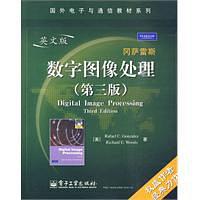
《数字图像处理(第3版)(英文版)》是数字图像处理经典著作,作者在对32个国家的134个院校和研究所的教师、学生及自学者进行广泛调查的基础上编写了第三版。除保留了第二版的大部分主要内容外,还根据收集的建议从13个方面进行了修订,新增400多幅图像、200多个图表和80多道习题,同时融入了近年来本科学领域的重要发展,使《数字图像处理(第3版)(英文版)》具有相当的特色与先进性。全书分为12章,包括绪论、数字图像基础、灰度变换与空间滤波、频域滤波、图像复原与重建、彩色图像处理、小波及多分辨率处理、图像压缩、形态学图像处理、图像分割、表现与描述、目标识别。
作者简介
RafaelC.Gonzalez,美国田纳西大学电气和计算机工程系教授,田纳西大学图像和模式分析实验室、机器人和计算机视觉实验室的创始人,IEEE会士。研究领域为模式识别、图像处理和机器人。其著作已在世界范围内500大学和研完所采用。
Richard E.Woods,美国田纳西大学电气工程系获博士学位,IEEE会员。
目录信息
Acknowledgments 19
The Book Web Site 20
About the Authors 21
Chapter 1 Introduction 23
1.1 What Is Digital Image Processing? 23
1.2 The Origins of Digital Image Processing 25
1.3 Examples of Fields that Use Digital Image Processing 29
1.3.1 Gamma-Ray Imaging 30
1.3.2 X-Ray Imaging 31
1.3.3 Imaging in the Ultraviolet Band 33
1.3.4 Imaging in the Visible and Infrared Bands 34
1.3.5 Imaging in the Microwave Band 40
1.3.6 Imaging in the Radio Band 42
1.3.7 Examples in which Other Imaging Modalities Are Used 42
1.4 Fundamental Steps in Digital Image Processing 47
1.5 Components of an Image Processing System 50
Summary 53
References and Further Reading 53
Chapter 2 Digital Image Fundamentals 57
2.1 Elements of Visual Perception 58
2.1.1 Structure of the Human Eye 58
2.1.2 Image Formation in the Eye 60
2.1.3 Brightness Adaptation and Discrimination 61
2.2 Light and the Electromagnetic Spectrum 65
2.3 Image Sensing and Acquisition 68
2.3.1 Image Acquisition Using a Single Sensor 70
2.3.2 Image Acquisition Using Sensor Strips 70
2.3.3 Image Acquisition Using Sensor Arrays 72
2.3.4 A Simple Image Formation Model 72
2.4 Image Sampling and Quantization 74
2.4.1 Basic Concepts in Sampling and Quantization 74
2.4.2 Representing Digital Images 77
2.4.3 Spatial and Intensity Resolution 81
2.4.4 Image Interpolation 87
2.5 Some Basic Relationships between Pixels 90
2.5.1 Neighbors of a Pixel 90
2.5.2 Adjacency, Connectivity, Regions, and Boundaries 90
2.5.3 Distance Measures 93
2.6 An Introduction to the Mathematical Tools Used in Digital Image Processing 94
2.6.1 Array versus Matrix Operations 94
2.6.2 Linear versus Nonlinear Operations 95
2.6.3 Arithmetic Operations 96
2.6.4 Set and Logical Operations 102
2.6.5 Spatial Operations 107
2.6.6 Vector and Matrix Operations 114
2.6.7 Image Transforms 115
2.6.8 Probabilistic Methods 118
Summary 120
References and Further Reading 120
Problems 121
Chapter 3 Intensity Transformations and Spatial Filtering 126
3.1 Background 127
3.1.1 The Basics of Intensity Transformations and Spatial Filtering 127
3.1.2 About the Examples in This Chapter 129
3.2 Some Basic Intensity Transformation Functions 129
3.2.1 Image Negatives 130
3.2.2 Log Transformations 131
3.2.3 Power-Law (Gamma) Transformations 132
3.2.4 Piecewise-Linear Transformation Functions 137
3.3 Histogram Processing 142
3.3.1 Histogram Equalization 144
3.3.2 Histogram Matching (Specification) 150
3.3.3 Local Histogram Processing 161
3.3.4 Using Histogram Statistics for Image Enhancement 161
3.4 Fundamentals of Spatial Filtering 166
3.4.1 The Mechanics of Spatial Filtering 167
3.4.2 Spatial Correlation and Convolution 168
3.4.3 Vector Representation of Linear Filtering 172
3.4.4 Generating Spatial Filter Masks 173
3.5 Smoothing Spatial Filters 174
3.5.1 Smoothing Linear Filters 174
3.5.2 Order-Statistic (Nonlinear) Filters 178
3.6 Sharpening Spatial Filters 179
3.6.1 Foundation 180
3.6.2 Using the Second Derivative for Image Sharpening-The Laplacian 182
3.6.3 Unsharp Masking and Highboost Filtering 184
3.6.4 Using First-Order Derivatives for (Nonlinear) Image Sharpening—The Gradient 187
3.7 Combining Spatial Enhancement Methods 191
3.8 Using Fuzzy Techniques for Intensity Transformations and Spatial Filtering 195
3.8.1 Introduction 195
3.8.2 Principles of Fuzzy Set Theory 196
3.8.3 Using Fuzzy Sets 200
3.8.4 Using Fuzzy Sets for Intensity Transformations 208
3.8.5 Using Fuzzy Sets for Spatial Filtering 211
Summary 214
References and Further Reading 214
Problems 215
Chapter 4 Filtering in the Frequency Domain 221
4.1 Background 222
4.1.1 A Brief History of the Fourier Series and Transform 222
4.1.2 About the Examples in this Chapter 223
4.2 Preliminary Concepts 224
4.2.1 Complex Numbers 224
4.2.2 Fourier Series 225
4.2.3 Impulses and Their Sifting Property 225
4.2.4 The Fourier Transform of Functions of One Continuous Variable 227
4.2.5 Convolution 231
4.3 Sampling and the Fourier Transform of Sampled Functions 233
4.3.1 Sampling 233
4.3.2 The Fourier Transform of Sampled Functions 234
4.3.3 The Sampling Theorem 235
4.3.4 Aliasing 239
4.3.5 Function Reconstruction (Recovery) from Sampled Data 241
4.4 The Discrete Fourier Transform (DFT) of One Variable 242
4.4.1 Obtaining the DFT from the Continuous Transform of a Sampled Function 243
4.4.2 Relationship Between the Sampling and Frequency Intervals 245
4.5 Extension to Functions of Two Variables 247
4.5.1 The 2-D Impulse and Its Sifting Property 247
4.5.2 The 2-D Continuous Fourier Transform Pair 248
4.5.3 Two-Dimensional Sampling and the 2-D Sampling Theorem 249
4.5.4 Aliasing in Images 250
4.5.5 The 2-D Discrete Fourier Transform and Its Inverse 257
4.6 Some Properties of the 2-D Discrete Fourier Transform 258
4.6.1 Relationships Between Spatial and Frequency Intervals 258
4.6.2 Translation and Rotation 258
4.6.3 Periodicity 259
4.6.4 Symmetry Properties 261
4.6.5 Fourier Spectrum and Phase Angle 267
4.6.6 The 2-D Convolution Theorem 271
4.6.7 Summary of 2-D Discrete Fourier Transform Properties 275
4.7 The Basics of Filtering in the Frequency Domain 277
4.7.1 Additional Characteristics of the Frequency Domain 277
4.7.2 Frequency Domain Filtering Fundamentals 279
4.7.3 Summary of Steps for Filtering in the Frequency Domain 285
4.7.4 Correspondence Between Filtering in the Spatial and Frequency Domains 285
4.8 Image Smoothing Using Frequency Domain Filters 291
4.8.1 Ideal Lowpass Filters 291
4.8.2 Butterworth Lowpass Filters 295
4.8.3 Gaussian Lowpass Filters 298
4.8.4 Additional Examples of Lowpass Filtering 299
4.9 Image Sharpening Using Frequency Domain Filters 302
4.9.1 Ideal Highpass Filters 303
4.9.2 Butterworth Highpass Filters 306
4.9.3 Gaussian Highpass Filters 307
4.9.4 The Laplacian in the Frequency Domain 308
4.9.5 Unsharp Masking, Highboost Filtering, and High-Frequency-Emphasis Filtering 310
4.9.6 Homomorphic Filtering 311
4.10 Selective Filtering 316
4.10.1 Bandreject and Bandpass Filters 316
4.10.2 Notch Filters 316
4.11 Implementation 320
4.11.1 Separability of the 2-D DFT 320
4.11.2 Computing the IDFT Using a DFT Algorithm 321
4.11.3 The Fast Fourier Transform (FFT) 321
4.11.4 Some Comments on Filter Design 325
Summary 325
References and Further Reading 326
Problems 326
Chapter 5 Image Restoration and Reconstruction 333
5.1 A Model of the Image Degradation/Restoration Process 334
5.2 Noise Models 335
5.2.1 Spatial and Frequency Properties of Noise 335
5.2.2 Some Important Noise Probability Density Functions 336
5.2.3 Periodic Noise 340
5.2.4 Estimation of Noise Parameters 341
5.3 Restoration in the Presence of Noise Only—Spatial Filtering 344
5.3.1 Mean Filters 344
5.3.2 Order-Statistic Filters 347
5.3.3 Adaptive Filters 352
5.4 Periodic Noise Reduction by Frequency Domain Filtering 357
5.4.1 Bandreject Filters 357
5.4.2 Bandpass Filters 358
5.4.3 Notch Filters 359
5.4.4 Optimum Notch Filtering 360
5.5 Linear, Position-Invariant Degradations 365
5.6 Estimating the Degradation Function 368
5.6.1 Estimation by Image Observation 368
5.6.2 Estimation by Experimentation 369
5.6.3 Estimation by Modeling 369
5.7 Inverse Filtering 373
5.8 Minimum Mean Square Error (Wiener) Filtering 374
5.9 Constrained Least Squares Filtering 379
5.10 Geometric Mean Filter 383
5.11 Image Reconstruction from Projections 384
5.11.1 Introduction 384
5.11.2 Principles of Computed Tomography (CT) 387
5.11.3 Projections and the Radon Transform 390
5.11.4 The Fourier-Slice Theorem 396
5.11.5 Reconstruction Using Parallel-Beam Filtered Backprojections 397
5.11.6 Reconstruction Using Fan-Beam Filtered Backprojections 403
Summary 409
References and Further Reading 410
Problems 411
Chapter 6 Color Image Processing 416
6.1 Color Fundamentals 417
6.2 Color Models 423
6.2.1 The RGB Color Model 424
6.2.2 The CMY and CMYK Color Models 428
6.2.3 The HSI Color Model 429
6.3 Pseudocolor Image Processing 436
6.3.1 Intensity Slicing 437
6.3.2 Intensity to Color Transformations 440
6.4 Basics of Full-Color Image Processing 446
6.5 Color Transformations 448
6.5.1 Formulation 448
6.5.2 Color Complements 452
6.5.3 Color Slicing 453
6.5.4 Tone and Color Corrections 455
6.5.5 Histogram Processing 460
6.6 Smoothing and Sharpening 461
6.6.1 Color Image Smoothing 461
6.6.2 Color Image Sharpening 464
6.7 Image Segmentation Based on Color 465
6.7.1 Segmentation in HSI Color Space 465
6.7.2 Segmentation in RGB Vector Space 467
6.7.3 Color Edge Detection 469
6.8 Noise in Color Images 473
6.9 Color Image Compression 476
Summary 477
References and Further Reading 478
Problems 478
Chapter 7 Wavelets and Multiresolution Processing 483
7.1 Background 484
7.1.1 Image Pyramids 485
7.1.2 Subband Coding 488
7.1.3 The Haar Transform 496
7.2 Multiresolution Expansions 499
7.2.1 Series Expansions 499
7.2.2 Scaling Functions 501
7.2.3 Wavelet Functions 505
7.3 Wavelet Transforms in One Dimension 508
7.3.1 The Wavelet Series Expansions 508
7.3.2 The Discrete Wavelet Transform 510
7.3.3 The Continuous Wavelet Transform 513
7.4 The Fast Wavelet Transform 515
7.5 Wavelet Transforms in Two Dimensions 523
7.6 Wavelet Packets 532
Summary 542
References and Further Reading 542
Problems 543
Chapter 8 Image Compression 547
8.1 Fundamentals 548
8.1.1 Coding Redundancy 550
8.1.2 Spatial and Temporal Redundancy 551
8.1.3 Irrelevant Information 552
8.1.4 Measuring Image Information 553
8.1.5 Fidelity Criteria 556
8.1.6 Image Compression Models 558
8.1.7 Image Formats, Containers, and Compression Standards 560
8.2 Some Basic Compression Methods 564
8.2.1 Huffman Coding 564
8.2.2 Golomb Coding 566
8.2.3 Arithmetic Coding 570
8.2.4 LZW Coding 573
8.2.5 Run-Length Coding 575
8.2.6 Symbol-Based Coding 581
8.2.7 Bit-Plane Coding 584
8.2.8 Block Transform Coding 588
8.2.9 Predictive Coding 606
8.2.10 Wavelet Coding 626
8.3 Digital Image Watermarking 636
Summary 643
References and Further Reading 644
Problems 645
Chapter 9 Morphological Image Processing 649
9.1 Preliminaries 650
9.2 Erosion and Dilation 652
9.2.1 Erosion 653
9.2.2 Dilation 655
9.2.3 Duality 657
9.3 Opening and Closing 657
9.4 The Hit-or-Miss Transformation 662
9.5 Some Basic Morphological Algorithms 664
9.5.1 Boundary Extraction 664
9.5.2 Hole Filling 665
9.5.3 Extraction of Connected Components 667
9.5.4 Convex Hull 669
9.5.5 Thinning 671
9.5.6 Thickening 672
9.5.7 Skeletons 673
9.5.8 Pruning 676
9.5.9 Morphological Reconstruction 678
9.5.10 Summary of Morphological Operations on Binary Images 684
9.6 Gray-Scale Morphology 687
9.6.1 Erosion and Dilation 688
9.6.2 Opening and Closing 690
9.6.3 Some Basic Gray-Scale Morphological Algorithms 692
9.6.4 Gray-Scale Morphological Reconstruction 698
Summary 701
References and Further Reading 701
Problems 702
Chapter 10 Image Segmentation 711
10.1 Fundamentals 712
10.2 Point, Line, and Edge Detection 714
10.2.1 Background 714
10.2.2 Detection of Isolated Points 718
10.2.3 Line Detection 719
10.2.4 Edge Models 722
10.2.5 Basic Edge Detection 728
10.2.6 More Advanced Techniques for Edge Detection 736
10.2.7 Edge Linking and Boundary Detection 747
10.3 Thresholding 760
10.3.1 Foundation 760
10.3.2 Basic Global Thresholding 763
10.3.3 Optimum Global Thresholding Using Otsu’s Method 764
10.3.4 Using Image Smoothing to Improve Global Thresholding 769
10.3.5 Using Edges to Improve Global Thresholding 771
10.3.6 Multiple Thresholds 774
10.3.7 Variable Thresholding 778
10.3.8 Multivariable Thresholding 783
10.4 Region-Based Segmentation 785
10.4.1 Region Growing 785
10.4.2 Region Splitting and Merging 788
10.5 Segmentation Using Morphological Watersheds 791
10.5.1 Background 791
10.5.2 Dam Construction 794
10.5.3 Watershed Segmentation Algorithm 796
10.5.4 The Use of Markers 798
10.6 The Use of Motion in Segmentation 800
10.6.1 Spatial Techniques 800
10.6.2 Frequency Domain Techniques 804
Summary 807
References and Further Reading 807
Problems 809
Chapter 11 Representation and Description 817
11.1 Representation 818
11.1.1 Boundary (Border) Following 818
11.1.2 Chain Codes 820
11.1.3 Polygonal Approximations Using Minimum-Perimeter Polygons 823
11.1.4 Other Polygonal Approximation Approaches 829
11.1.5 Signatures 830
11.1.6 Boundary Segments 832
11.1.7 Skeletons 834
11.2 Boundary Descriptors 837
11.2.1 Some Simple Descriptors 837
11.2.2 Shape Numbers 838
11.2.3 Fourier Descriptors 840
11.2.4 Statistical Moments 843
11.3 Regional Descriptors 844
11.3.1 Some Simple Descriptors 844
11.3.2 Topological Descriptors 845
11.3.3 Texture 849
11.3.4 Moment Invariants 861
11.4 Use of Principal Components for Description 864
11.5 Relational Descriptors 874
Summary 878
References and Further Reading 878
Problems 879
Chapter 12 Object Recognition 883
12.1 Patterns and Pattern Classes 883
12.2 Recognition Based on Decision-Theoretic Methods 888
12.2.1 Matching 888
12.2.2 Optimum Statistical Classifiers 894
12.2.3 Neural Networks 904
12.3 Structural Methods 925
12.3.1 Matching Shape Numbers 925
12.3.2 String Matching 926
Summary 928
References and Further Reading 928
Problems 929
Appendix A 932
Bibliography 937
Index 965
· · · · · · (收起)
读后感
因为电子版的图片实在不清楚,就买了纸质的,然后从头到尾读了一遍,感觉比第二版好了很多,但是原则性的错误还是存在,尤其是后面几章。 在此列一些出错的页,仅供参考。 P459,460,461,465,468,501,531,532,545,578,529
评分理论略显枯燥,但配合图片和代码学起来还是有收获的。英语好的可以去看英文原版,用我导师的话说,是图像处理英文论文写作的参考教材!
评分做了一段时间的图像处理 但要说起系统学习还真就只看了一两本书(还没怎么吃透), 推荐两本书 一本是张正友的 还有就是这本老冈的书了 另:最好不要看中文版 反正我是看不懂中文版(阮秋琦翻译那版)
评分翻译错误百出,无力吐槽,完全毁了看这么一本好书应有的畅快感觉 我还没看多少就发现不少错误,比如“数字图像表示”那节,最后说“注意,大小为1024 x 1024的8比特图像的存储是必要的,并且再高就没有意义了”,好奇怪啊,再高怎么就没有意义了……原文是“No...
评分本科计算机专业,研究生做图像处理模式识别方面,所以看了这本书,可能是基础原因,本科没有学过信号处理,看起来很吃力,要补一下基础了,另外,中文版千万别看,错误太多,误导人,比如中文版第三版第150页,“因为DFT和IDFT中的所有指数都是正的”,其中这个指数让我狂抓,...
用户评价
从一个长远学习者的角度来看,这本书的价值在于它提供了看待整个领域发展的“哲学视角”。它不仅介绍了“是什么”和“怎么做”,更深入探讨了“为什么是这样发展到今天的”。书中对历史上的经典方法进行了充分的梳理和评价,清晰地勾勒出了技术演进的脉络。通过对不同流派思想的比较分析,读者可以更好地理解当前主流方法论的优势与局限性,从而避免盲目追随潮流。作者在探讨前沿进展时,也保持了一种审慎和批判性的态度,没有将最新的技术神化,而是客观地分析了它们在理论和工程上尚存的挑战。这种鼓励读者独立思考、不满足于既有答案的引导方式,对于培养未来领域研究者和创新者的思维模式至关重要。这本书不仅是一本工具书,更像是一份邀请函,邀请读者加入到对未来技术方向的深度思考与探索之中。
评分这本书的装帧设计着实让人眼前一亮,那种沉稳中又不失现代感的封面处理,仿佛预示着里面内容蕴含的深厚底蕴。初拿到手时,沉甸甸的质感就让人对接下来的阅读充满了期待。内页的纸张选择也相当考究,触感细腻,即便是长时间的翻阅也不会感到疲惫。排版布局上,无论是章节的划分还是图文的对应,都显得井然有序,那些复杂的数学公式和理论推导被安排得错落有致,即便面对海量信息,读者的眼睛也能找到清晰的路径去追踪作者的思路。我特别欣赏它在细节处理上的用心,比如那些关键术语的加粗或者斜体处理,极大地提升了阅读的效率,让我在快速浏览时也能抓住核心概念。当然,对于一本专业书籍而言,清晰度是至关重要的,这本书在这方面做得非常出色,即便是那些需要放大观察的示意图,其分辨率和对比度都保持在极高的水准,这对于需要深入理解每一个细节的学习者来说,无疑是一个巨大的加分项。整体而言,从视觉到触觉,这本书都提供了一种非常愉悦的阅读体验,让人愿意花费更多时间沉浸其中。
评分这本书的理论深度和广度是毋庸置疑的,但真正让我印象深刻的是作者在表达复杂概念时所采用的类比和比喻。面对那些抽象到令人头皮发麻的数学模型,作者总能找到一个贴近生活或工程实践的具象化例子来加以解释。例如,当阐述某种滤波器的权重分布时,他会将其比作不同的观察者对同一场景的关注重点不同,从而形象地解释了为何不同的核函数会产生截然不同的结果。这种“去学术化”的解释方式,极大地降低了学习的门槛,让原本高不可攀的理论变得触手可及。阅读过程中,我很少需要频繁地停下来查阅其他资料来理解某个核心思想,因为作者似乎已经预判到了读者可能产生的理解障碍,并提前准备好了清晰易懂的“拐杖”。这种清晰、生动的叙述风格,让阅读过程保持了持续的积极性和探索欲,而不是被动地接受信息。
评分我尝试着从更宏观的角度来审视这本书的知识体系构建,它展现出了一种非常令人信服的逻辑递进关系。作者似乎非常清楚初学者在接触一个全新领域时容易产生的困惑点,因此,前期的基础概念铺陈显得尤为扎实和耐人寻味。它不是那种将所有高深理论一股脑抛出的“炫技式”写作,而是采取了一种循序渐进、层层深入的策略。每一个新的算法或模型,都会先从其背后的直觉性理解开始阐述,然后再逐步引入严谨的数学基础,最后才过渡到实际的应用案例。这种结构设计使得即便是初次接触该领域的人,也能建立起一个坚实的知识框架,不至于在面对复杂的公式时感到迷失方向。更值得称赞的是,作者在连接不同技术分支时表现出的洞察力,他巧妙地指出了看似独立的技术之间存在的内在联系,帮助读者构建起一个更为全局和系统的认知图谱。这种结构上的匠心,让这本书的阅读过程更像是一次精心规划的知识探险,而不是枯燥的理论灌输。
评分在使用这本书辅助实际项目操作的过程中,我深切体会到了它在实用性上的巨大优势。书中的案例分析并非仅仅停留在理论阐述的层面,而是融入了大量的、可操作的代码片段和参数设置建议。这些实例的覆盖面非常广,从基础的图像增强到更复杂的特征提取与识别,几乎涵盖了领域内的主要应用场景。我特别留意了它对不同编程环境下代码兼容性的说明,这一点对于我们这些需要在多种系统间切换的开发者来说,简直是雪中送炭。很多教科书在这方面往往处理得比较笼统,但这本书却细致到指出了不同库版本之间可能存在的细微差异和解决方案。此外,作者对于“陷阱”的预警也极其到位,他会提前指出在应用某个特定技术时,哪些参数设置容易导致性能急剧下降,或者哪些数据预处理步骤是决定最终效果的关键。这种基于实践经验的总结和提炼,让这本书的价值远远超出了纯粹的学术参考书范畴,更像是一位经验丰富的前辈在身边随时提供指导。
评分读的中文版。
评分从基础讲起,很适合该方向的研究生,但如果只是为了做项目的话就不那么快捷了.
评分中文版翻译质量太差,错误较多,有些地方简直不知所云。
评分中文版翻译质量太差,错误较多,有些地方简直不知所云。
评分看不完的教科书系列