具体描述
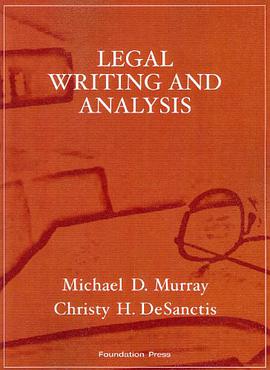
The Murray and DeSanctis titles are designed for the current generation of law students whose familiarity and comfort with on-line and computer-based learning create a demand for teaching resources that take advantage of that familiarity and comfort level. Legal Writing and Analysis provides a process-based text covering all aspects of first year legal analysis and objective legal writing topics. It employs the TREAT paradigm and the doctrine of explanatory synthesis, designed with reference to rhetorical theory to maximize the effectiveness of audience-directed legal writing.
Legal Writing and Analysis: Mastering the Art of Legal Discourse Embark on a journey to hone your legal writing and analytical skills with a comprehensive guide designed to equip you with the tools and techniques essential for excelling in the legal profession. This resource delves deeply into the foundational principles and advanced strategies of legal discourse, empowering you to communicate your legal arguments with clarity, precision, and persuasive force. Understand the Core of Legal Reasoning: At its heart, legal writing is an exercise in logical reasoning. This guide meticulously dissects the process of legal analysis, teaching you how to identify legal issues, conduct thorough legal research, and synthesize complex legal authorities into coherent and compelling arguments. You will learn to move beyond mere recitation of facts and law, developing the capacity to critically evaluate legal principles, discern their application to specific situations, and articulate well-supported conclusions. The book emphasizes the importance of identifying the precise question of law at play and understanding how to frame your analysis around that central inquiry. Crafting Persuasive Legal Documents: Whether you are drafting a legal memorandum, a judicial opinion, a trial brief, or an appellate brief, the ability to construct clear, concise, and persuasive prose is paramount. This guide provides in-depth instruction on the architecture of effective legal writing. You will explore the nuances of legal style, focusing on sentence structure, word choice, and the elimination of ambiguity. Learn how to organize your thoughts logically, employing effective topic sentences, transitional phrases, and cohesive paragraph development to guide your reader seamlessly through your analysis. The book offers practical advice on mastering different legal writing genres, highlighting the unique demands and conventions of each. Emphasis is placed on the importance of tailoring your writing to your intended audience, whether it be a supervising attorney, a judge, or opposing counsel. The Art of Legal Research and Citation: Sound legal analysis is built upon a foundation of diligent and accurate legal research. This guide illuminates the strategies for navigating the vast landscape of legal sources, from statutes and regulations to case law and secondary materials. You will acquire proficiency in using legal databases, understanding search techniques, and evaluating the authority and relevance of your sources. Furthermore, mastering legal citation is not merely a matter of adherence to rules; it is integral to the credibility of your work. The book provides comprehensive coverage of citation conventions, ensuring that your references are accurate, consistent, and adhere to established legal standards, thereby bolstering the trustworthiness of your arguments. Developing Critical Analytical Skills: Legal writing is inextricably linked to legal analysis. This resource guides you through the process of dissecting legal problems, moving from factual recitation to issue spotting, rule explanation, application, and conclusion. You will learn to identify the strengths and weaknesses of legal arguments, anticipate counterarguments, and develop strategies to effectively address them. The book encourages a proactive approach to analysis, urging you to think critically about the implications of legal rules and their potential evolution. You will be challenged to move beyond superficial understanding and engage with the underlying policy considerations that inform legal decisions. Refining Your Argumentation: Persuasion in the legal arena is a skill that can be learned and honed. This guide delves into the principles of effective legal argumentation. You will explore techniques for presenting evidence, framing issues favorably, and employing logical reasoning to convince your reader. The book emphasizes the importance of understanding your audience's perspective and tailoring your arguments to their concerns and expectations. Learn how to use rhetorical devices judiciously and ethically to enhance the impact of your writing, always grounding your arguments in sound legal principles and factual support. The Ethical Dimensions of Legal Writing: Beyond technical proficiency, ethical considerations are central to responsible legal practice. This guide addresses the ethical obligations inherent in legal writing, including the duty of candor to the tribunal and the prohibition against misleading arguments. You will learn to navigate the delicate balance between zealous advocacy and the requirement of honesty and integrity in your written submissions. Understanding these ethical boundaries is crucial for maintaining professional credibility and upholding the rule of law. From Student to Practitioner: This resource is designed to serve as a vital companion throughout your legal education and into your professional career. It provides the foundational knowledge and practical skills necessary to excel in law school courses and to confidently tackle the writing demands of legal practice. By mastering the principles outlined within these pages, you will develop the confidence and competence to articulate your legal ideas with clarity, persuasiveness, and professional integrity. This guide is an investment in your future as an effective and respected legal professional.