
具体描述
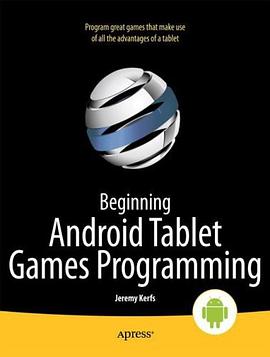
Android games programmers now have the power to write games for Android tablets. Beginning Android Tablet Games Programming explains how to enhance your Android games using the new tablet interface and the additional screen estate. You'll learn how to bring your programming skills up to date and into a world where touch screens, games physics, and artificial intelligence come together in new and surprising ways. Beginning Android Tablet Games Programming shows how to quickly and easily set up an Android development environment--in no time at all, you'll be programming away. You'll begin with some simple games using sprites and choreographed movement. Next, you'll learn how to handle user input in the modern age of touch screens and motion. Along the way, you'll discover how to use that extra screen space on a tablet to provide more relaxed and more interesting user interactions in your games. You'll learn how to use sound and music, for instance, to make your application menus more user-friendly. The Android operating system has recently acquired multicore functionality to meet the demands of multicore devices now entering the tablet market. With Beginning Android Tablet Games Programming, you'll discover how to harness that new power with your games programming through more process-demanding and fun techniques, including physics modeling, rich game world representation, artificial intelligence, and multiplayer interactions. Throughout each chapter of Beginning Android Tablet Games Programming, you'll find code that you can add or adapt to your own games to create the components you want. You can also work up to wrapping everything together into a complete Mario-type example game. Finally, when you have your first games ready, learn how developers have released their games and made a profit. You'll find tips on how to present your games in the Android and other application markets, and a solid approach to games marketing and monetization. What you'll learn * How to set up an Android tablet programming environment * How to program for touchscreens and other input devices * Techniques to take advantage of the extra screen size of a tablet * How to take advantage of multicore processing power in your games * How to program a multiplayer game * How to add artificial intelligence to in-game opponents * How to program game modes, game states, and game worlds * How to program a complete game * About in-app marketing and games monetization Who this book is for This is a book for Java programmers new to Honeycomb, tablets and games programming. An experienced games programmer can also use this book to migrate their existing expertise to the Android and the tablet environment. Table of Contents * Setting Up for Android 3.0 Java Development * Creating Simple Games with Sprites and Movement * Creating Gathering User Input * Adding Sounds Effects, Music, and Video * One-Player Game with Obstacles * A Ball and Paddle Game * Building a Two-Player Game * A One-Player Strategy Game Part I * A One-Player Strategy Game Part II * Publishing the Game * Testing Android Games on a Real Device
作者简介
目录信息
读后感
用户评价
这本编程指南的封面设计简直是视觉的盛宴,那种鲜明的橙色和深邃的蓝色交织在一起,让人立刻就能联想到充满活力的平板电脑界面。拿到手里沉甸甸的质感也让人倍感踏实,那种厚度和纸张的细腻度,完全不是市面上那些廉价速成手册能比拟的。我尤其欣赏它在排版上的用心,代码块的字体清晰易读,注释部分的留白处理得恰到好处,即便是长时间盯着屏幕上的代码,眼睛也不会感到过度疲劳。而且,随书附带的那张快速参考卡片,简直是救星,上面把最核心的那些Android开发API调用顺序和关键方法都精炼地列出来了,调试遇到瓶颈时,比起翻阅厚厚的书本,这张卡片实在方便太多了。这本书的结构布局非常直观,从基础环境搭建到最终项目的部署,每一步都像一位耐心的老师在引导,没有那种直接丢给你一大堆晦涩概念的生硬感,它更像是一段精心编排的旅程,让你在不知不觉中掌握了核心技能。
评分这本书的作者团队显然拥有丰富的实战经验,这从他们处理“常见陷阱”的方式上就体现出来了。书中穿插了大量的“警告:新手陷阱”和“高级优化提示”区块,这些小小的侧栏内容,往往比主线章节本身更具实操价值。例如,在讲解游戏资源加载机制时,作者不仅给出了标准的异步加载代码,还详细对比了不同图片格式在平板GPU上的解码性能差异,并给出了在特定内存限制下,如何动态裁剪纹理集以节省显存的实用技巧。这些都是教科书里几乎不会提及的、只有在真实项目压力下才会积累起来的“经验之谈”。阅读这些部分,感觉就像是旁边坐着一位资深的游戏开发者,随时为你指点迷津,避免你走上那些耗费数周时间才能发现的弯路。
评分我过去尝试过几本关于移动应用开发的教材,它们大多要么过于侧重理论的堆砌,对实际操作的指导蜻蜓点水;要么就是直接跳到高深莫测的底层架构,让初学者望而却步。这本书的叙事节奏把握得极为精准。它没有一开始就用Java或Kotlin的语法细节来轰炸读者,而是非常巧妙地引入了一个“游戏化学习”的框架。作者似乎深谙,对于想要制作平板游戏的人来说,最迫切的需求是“看到成果”,而不是理解内存管理的全貌。因此,前几章的内容设计,专注于如何快速搭建一个可以触摸和互动的2D场景。那种立刻就能看到自己的像素角色在屏幕上移动的成就感,是任何理论学习都无法比拟的驱动力。这种渐进式的教学,将复杂的概念拆解成了若干个“可点击的砖块”,构建起一个坚实但又充满乐趣的学习路径,极大地降低了初学者的心理门槛。
评分从技术选型的角度来看,这本书展现了极高的前瞻性和实用性平衡。它没有盲目追逐那些最新的、尚未完全稳定的框架,而是稳健地选择了当前Android生态中成熟且性能优异的库和API进行教学。例如,在2D图形渲染方面,它深入浅出地介绍了如何高效利用OpenGL ES的底层接口,但同时,也提供了封装好的、更适合快速原型开发的高级库的使用方法,使得读者可以根据自己的项目阶段灵活切换。更重要的是,它对于如何设计一个可维护的游戏状态机和数据持久化方案,给出了非常清晰的架构指导。这意味着,即便是初学者按照书中的代码搭建出来的项目,其底层结构也是具备良好扩展性的,而不是一个“跑起来就不好维护”的玩具Demo,这对于希望将兴趣发展为长期项目的读者来说,是至关重要的品质。
评分阅读这本书的过程中,我最大的惊喜在于它对于“平板特有”交互模式的深度挖掘。市面上很多教程都是“手机优先”的,对于大屏幕带来的新机遇,往往一笔带过。但这本书显然是为平板用户量身定制的。它花了相当大的篇幅去探讨如何利用更大的屏幕空间进行更复杂的布局管理,比如如何设计出既能在竖屏下优雅显示,又能在横屏时充分利用左右两侧空间进行工具栏或地图展示的UI。特别是关于手势识别的部分,它不仅仅停留在基础的双指缩放上,而是深入探讨了多点触控在策略类或模拟经营类游戏中的应用,甚至还涉及到了如何优化触摸事件的处理流程,以避免在高帧率下出现的输入延迟。这种对特定设备形态的专业关注,让这本书的价值远远超越了一般的通用Android开发书籍。
评分 评分 评分 评分 评分