
具体描述
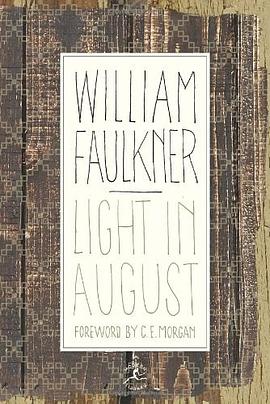
From the Modern Library’s new set of beautifully repackaged hardcover classics by William Faulkner—also available are Snopes, As I Lay Dying, The Sound and the Fury, Absalom, Absalom!, and Selected Short Stories
One of William Faulkner’s most admired and accessible novels, Light in August reveals the great American author at the height of his powers. Lena Grove’s resolute search for the father of her unborn child begets a rich, poignant, and ultimately hopeful story of perseverance in the face of mortality. It also acquaints us with several of Faulkner’s most unforgettable characters, including the Reverend Gail Hightower, plagued by visions of Confederate horsemen, and Joe Christmas, a ragged, itinerant soul obsessed with his mixed-race ancestry. Powerfully entwining these characters’ stories, Light in August brings to life Faulkner’s imaginary South, one of literature’s great invented landscapes, in all of its unerringly fascinating glory. Along with a new Foreword by C. E. Morgan, this edition reproduces the corrected text of Light in August as established in 1985 by Faulkner expert Noel Polk.
作者简介
William Faulkner was born in New Albany, Mississippi, on September 25, 1897. He published his first book, The Marble Faun (a collection of poems), in 1924, and his first novel, Soldier's Pay, in 1926. In 1949, having written such works as Absalom, Absalom!, As I Lay Dying, Light in August, and The Sound and the Fury, Faulkner was awarded the Nobel Prize for Literature. He also received the Pulitzer Prize for two other novels, A Fable (1954) and The Reivers (1962). From 1957 to 1958 he was Writer-in-Residence at the University of Virginia. He died on July 6, 1962, in Byhalia, Mississippi.
Biography
William Faulkner was born in New Albany, Mississippi, on September 25, 1897. His family was rooted in local history: his great-grandfather, a Confederate colonel and state politician, was assassinated by a former partner in 1889, and his grandfather was a wealth lawyer who owned a railroad. When Faulkner was five his parents moved to Oxford, Mississippi, where he received a desultory education in local schools, dropping out of high school in 1915. Rejected for pilot training in the U.S. Army, he passed himself off as British and joined the Canadian Royal Air Force in 1918, but the war ended before he saw any service. After the war, he took some classes at the University of Mississippi and worked for a time at the university post office. Mostly, however, he educated himself by reading promiscuously.
Faulkner had begun writing poems when he was a schoolboy, and in 1924 he published a poetry collection, The Marble Faun, at his own expense. His literary aspirations were fueled by his close friendship with Sherwood Anderson, whom he met during a stay in New Orleans. Faulkner's first novel, Soldier's Pay, was published in 1926, followed a year later by Mosquitoes, a literary satire. His next book, Flags in the Dust, was heavily cut and rearranged at the publisher's insistence and appeared finally as Sartoris in 1929. In the meantime he had completed The Sound and the Fury, and when it appeared at the end of 1929 he had finished Sanctuary and was ready to begin writing As I Lay Dying. That same year he married Estelle Oldham, whom he had courted a decade earlier.
Although Faulkner gained literary acclaim from these and subsequent novels -- Light in August (1932), Pylon (1935), Absalom, Absalom! (1936), The Unvanquished (1938), The Wild Palms (1939), The Hamlet (1940), and Go Down, Moses (1942) -- and continued to publish stories regularly in magazines, he was unable to support himself solely by writing fiction. he worked as a screenwriter for MGM, Twentieth Century-Fox, and Warner Brothers, forming a close relationship with director Howard Hawks, with whom he worked on To Have and Have Not, The Big Sleep, and Land of the Pharaohs, among other films. In 1944 all but one of Faulkner's novels were out of print, and his personal life was at low ebb due in part to his chronic heavy drinking. During the war he had been discovered by Sartre and Camus and others in the French literary world. In the postwar period his reputation rebounded, as Malcolm Cowley's anthology The Portable Faulkner brought him fresh attention in America, and the immense esteem in which he was held in Europe consolidated his worldwide stature.
Faulkner wrote seventeen books set in the mythical Yoknapatawpha County, home of the Compson family in The Sound and the Fury. "No land in all fiction lives more vividly in its physical presence than this county of Faulkner's imagination," Robert Penn Warren wrote in an essay on Cowley's anthology. "The descendants of the old families, the descendants of bushwhackers and carpetbaggers, the swamp rats, the Negro cooks and farm hands, the bootleggers and gangsters, tenant farmers, college boys, county-seat lawyers, country storekeepers, peddlers--all are here in their fullness of life and their complicated interrelations." In 1950, Faulkner traveled to Sweden to accept the 1949 Nobel Prize for Literature. In later books--Intruder in the Dust (1948), Requiem for a Nun (1951), A Fable (1954), The Town (1957), The Mansion (1959), and The Reivers (1962) -- he continued to explore what he had called "the problems of the human heart in conflict with itself," but did so in the context of Yoknapatawpha's increasing connection with the modern world. He died of a heart attack on July 6, 1962.
目录信息
读后感
这是流火的八月,是烁金的八月,是诡异的八月,在这么一个沉默而热烈的月份,很适宜于作文学的冥想与旅行。也许,我们能够有幸遭遇美国著名作家福克纳先生,他的小说《八月之光》讲的正是异域世界八月里的故事。 七十多年前,1931年的夏天,福克纳孜孜于此书的创作,他很久都未...
评分此书的故事内核是狗血的。福克纳的胜处在于,掩饰恶臭时的耐心。当他花费心血,将绷带缠得均匀,确实有资格教参观者如此取径:将包裹后的麻风病人,当作替代木乃伊的旅游纪念品,诚如他们可以将此书,当成二十世纪的《圣经》衍生物。 一位拼图设计师,却总是爱以碎弹片...
评分此书的故事内核是狗血的。福克纳的胜处在于,掩饰恶臭时的耐心。当他花费心血,将绷带缠得均匀,确实有资格教参观者如此取径:将包裹后的麻风病人,当作替代木乃伊的旅游纪念品,诚如他们可以将此书,当成二十世纪的《圣经》衍生物。 一位拼图设计师,却总是爱以碎弹片...
评分福克纳说,在密西西比州,八月中旬会有几天突然出现秋天将至的迹象,天气凉爽,天空中弥漫着柔和而透明的光线。这就是标题的含义。八月之光,这个书名真是美好,就算还没翻开,已经足以让人心生欢喜。如果说《喧哗与骚动》奠定了福克纳在我心目中牢不可破的地位,那么《八月之...
用户评价
隔开: 翻开这本精装书,首先映入眼帘的是那种沉甸甸的、仿佛带着历史尘埃的纸张触感,这立刻让我想起那些需要用双手去感受、去翻阅的经典老书。我得说,这本书的排版极其考究,字里行间留有的呼吸空间,那种恰到好处的留白,让人在阅读那些复杂的情绪和宏大的叙事时,不至于感到窒息。我尤其欣赏作者对环境细节的描摹,虽然我并不知道故事具体讲了些什么,但仅仅是通过那些关于光影、气味和季节更迭的文字,我就仿佛能感受到那种潮湿、炙热,又带着一丝腐朽气息的南方小镇的空气。每一次翻页,都像是在揭开一层厚厚的、浸润着时间的水汽。这本书的装帧设计本身就是一种艺术表达,它似乎在无声地宣告,这里面承载的不是一段轻快的消遣,而是需要投入时间去消化的、具有重量感的东西。那些烫金的标题字,在灯光下反射出一种近乎宗教般的肃穆感,让我对接下来要面对的文字内容充满了敬畏和期待,它给人的第一印象是——这是一本需要被认真对待的作品,而不是在咖啡馆里随手翻阅的读物。
评分说实话,我刚开始接触这本书的时候,是被它的书名吸引的,那种略带诗意又有些许暗示性的名字,让我好奇它究竟是想捕捉哪一刻的“光”与“夏日”。但真正读进去后,我发现这书的叙事节奏感非常奇特,它不像我们习惯的线性故事那样流畅,反而更像是一部精心剪辑的电影蒙太奇,充满了跳跃和回溯,让人需要不断地在大脑中重新拼凑线索。这种阅读体验,与其说是享受,不如说是一种智力上的挑战。我发现自己常常需要停下来,退后几步,重新审视刚刚读过的几段话,试图理解作者为何要在这个时间点插入一段看似无关紧要的内心独白,或者为何要突然转换视角到另一个完全不同的人物身上。这种叙事上的“不友好”或许会让一些追求轻松阅读的读者望而却步,但我恰恰喜欢这种需要主动挖掘、需要读者贡献理解力的作品。它迫使我走出舒适区,去探究文字背后的潜台词,仿佛在玩一场需要高度专注的解谜游戏。
评分从纯粹的文学技艺角度来看,这本书的语言运用达到了令人发指的精准。我不是文学专业出身,但即便是外行人也能清晰地分辨出作者对词汇的驾驭能力。它的句子结构变化多端,时而长到可以承载起一段史诗般的历史回顾,时而短促有力,如同重击,直击心脏。更令人称奇的是,作者似乎拥有让不同语境下的词语焕发新生的魔力。有些我原本以为已经被用尽了的老套的比喻,在这本书里被重新组合,展现出一种全新的、令人耳目一新的力量。我尤其喜欢那些描述自然景观的段落,它们不仅仅是背景板,它们是叙事的主体之一,与人物的命运紧密缠绕。阅读时,我不得不放慢速度,甚至需要逐字逐句地品味那些富有韵律感的句子,生怕错过任何一个精心布置的音节。这本书的文字本身就是一种享受,值得反复咀嚼。
评分好的,以下是根据您的要求,以不同读者口吻对一本名为《八月之光》的书籍的五段评价,每段约300字,且风格迥异,不包含书籍内容本身,并用
评分我是一位极度注重角色心理深度的读者,如果一部作品的人物扁平化,那再华丽的辞藻也无法留住我。这本书在人物塑造上的处理方式,简直是教科书级别的复杂与矛盾。我感受到的不是传统意义上的“好人”与“坏人”的二元对立,而是每个人物内心深处那种难以言喻的挣扎和根深蒂固的宿命感。他们像是被某种看不见的线牵引着,在既定的轨道上痛苦地运行。那些人物的对话,精炼到几乎没有一句是废话,每一个词语的掂量、每一次沉默的停顿,都仿佛是经过无数次打磨才放置在那里的。阅读过程中,我经常会为某个角色的某个选择感到不解,但紧接着,作者又会通过一段极其精妙的心理剖析,让你瞬间理解其行为背后的所有驱动力,那种感觉就像是突然被允许窥视到一个封闭已久的灵魂的内部结构图。这种对人性的细致入微的刻画,让我久久不能忘怀。
评分晦涩的南方哥特.
评分晦涩的南方哥特.
评分晦涩的南方哥特.
评分晦涩的南方哥特.
评分晦涩的南方哥特.