
具体描述
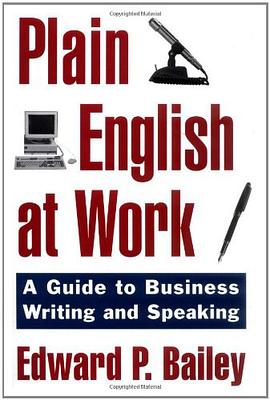
Everyday we write countless memos, letters, and reports without a second thought. Likewise, we give presentations, both, formal and informal. Often this writing and speaking gets criticized for being jargon-ridden, obscure, or long-winded--in short, for not being in "plain English." But what is plain English, and how do we go about writing and speaking it? In Plain English at Work, Edward Bailey gives the answer, with down-to-earth tips and practical advice. Bailey, and expert in business communication, gives us a simple model for writing: BL Style: write more the way you talk. BL Organization: make your point easy to find. BL Layout: use headings, lists, and other white space so readers can see the structure of your writing. Psycholinguists, Bailey points out, have proven that the techniques of plain English writing are far easier on your readers; experience has proven that writing in plain English is easier on you--the writer, too. Bailey also gives you a wealth of practical advice for presentations including: BL How to remember your talk. BL How to design visual aids. BL How to design computer presentations. BL How to set up the room you'll be speaking in. BL How to develop a successful delivery style. Perhaps most impressive are the many detailed tips he gives here. For instance, when using a pointer, hold it in the hand closer to the screen (otherwise, you turn your back on the audience, making it harder to hear you). When designing a visual aid, use at least 28-point type, and seldom use all capital letters (which are harder to read). And when presenting a bar chart during a computer presentation, build it--a bar at a time--to focus your audience's attention. Drawing on two earlier and popular books, The Plain English Approach to Business Writing and A Practical Guide for Business Speaking, this new volume has been significantly updated. It includes up-to-the-minute information on using computers, computer graphics, typography for your writing and on using the same technology for designing your presentations. The result is an authoritative and comprehensive single volume that will be the essential guide for everyone wishing to communicate more easily and effectively at work.
作者简介
目录信息
读后感
I studied the book, and I conclude: o We should study Plain English-in writing and speeking; o Plain English at Work is a good textbook; and o It is just the best smaple to study Plain English.
评分I studied the book, and I conclude: o We should study Plain English-in writing and speeking; o Plain English at Work is a good textbook; and o It is just the best smaple to study Plain English.
评分I studied the book, and I conclude: o We should study Plain English-in writing and speeking; o Plain English at Work is a good textbook; and o It is just the best smaple to study Plain English.
评分I studied the book, and I conclude: o We should study Plain English-in writing and speeking; o Plain English at Work is a good textbook; and o It is just the best smaple to study Plain English.
评分I studied the book, and I conclude: o We should study Plain English-in writing and speeking; o Plain English at Work is a good textbook; and o It is just the best smaple to study Plain English.
用户评价
这本书给我的最大冲击,是它如何将“简洁”与“权威性”解绑。长期以来,我们总有一种误解,认为越是权威的观点,就必须用越复杂的、带有拉丁词根的词汇来包装,否则显得不够“专业”。《Plain English at Work》则用无数的实例证明,真正的权威来自于对事实的精准把握和清晰的表达,而不是晦涩的辞藻堆砌。它指导我们如何用最基础、最常见的词汇,去传达最复杂、最核心的思想。我个人的体验是,自从开始有意识地运用书中的原则后,我在会议上的发言变得更加自信和果断,因为我知道我所说的每一句话都是经过了最严格的“清晰度测试”。此外,书中关于书面沟通的“语气调适”部分也值得称赞,它不仅仅是教你“写对”,还教你“写得恰当”。比如,如何在一封对上级的负面报告中,保持客观、专业又不失委婉。这本书不是一本一劳永逸的秘籍,而是一个持续训练和反思的框架,它让你从根本上重新审视自己与文字的关系,最终的目标是:让你的文字为你服务,而不是成为你表达的障碍。
评分我不得不说,这本书的编排逻辑简直是反直觉的精妙。通常同类书籍都会从基础语法开始讲起,让人听着听着就想打瞌睡,但《Plain English at Work》却反其道而行之,它直奔主题——那些让你的邮件看起来像法律文件的“罪魁祸首”。它对“行话”和“专业术语滥用”的剖析尤其犀利到位,简直像个冷酷的语言侦探,把那些披着“专业”外衣的模糊表达一一揪出来示众。我记得有章节专门讨论了如何将那些冗长的名词性短语(Nominalizations)还原成有力的动词,这个技巧我立刻应用在了我的项目提案上,原本需要三行才能描述清楚的步骤,现在只需要一句简洁有力的陈述就能搞定。更妙的是,它提供的不是生硬的规则,而是一系列的“测试”和“重写”练习。读完一个章节,你会被要求立刻拿起手边的文件进行修改,这种即时反馈的学习过程,大大增强了知识的内化。对我而言,这本书的价值远超一本写作指南,它更像是一本“效率手册”,教你在信息过载的时代,如何用最少的字符承载最大的信息量。每次我打开它,都感觉像是进行了一次小型的、高效的“语言瘦身”手术。
评分说实话,我最初对这类书籍抱有相当大的怀疑,总觉得无非是教你少用“的、地、得”或者把长句拆短,没什么新意。然而,《Plain English at Work》彻底颠覆了我的预期。这本书的视角非常独特,它深入探讨了“文化差异”在清晰沟通中的作用。例如,它提到在某些文化背景下,过度谦虚的表达方式在快节奏的跨国交流中反而被解读为犹豫不决或能力不足。这对我这种需要频繁与海外团队合作的人来说,简直是醍醐灌顶。它不仅仅停留在“说什么”,更深入到“以何种姿态说”的层面。书中关于设计清晰易读的报告结构的论述也极具启发性,它强调视觉层次的重要性,比如如何利用有效的小标题和项目符号来引导读者的视线,而不是仅仅依赖段落的长度来区分重点。我尝试按照书中的建议重新设计了我部门的月度回顾报告,结果收到的反馈是前所未有的正面,同事们反馈说第一次能在一分钟内抓住核心数据。这本书的深度和广度,让它远远超出了初级的“写作入门”范畴,它更像是一本关于“职场影响力构建”的进阶读物。
评分这本《Plain English at Work》简直是为我这种常年在文字泥沼里摸爬滚打的人量身定做的救命稻草。说实话,我过去写报告、发邮件,总觉得自己是在用一种“公司黑话”来自我麻痹,信息明明很简单,非要绕上三个弯子才能表达清楚。这本书的出现,就像是一股强劲的清风,瞬间把那些堆砌的、冗余的形容词和复杂的从句吹散了。我最欣赏它的地方在于,它不是那种空泛地喊“要清晰”的理论书,而是实实在在地教你“怎么做”。比如,它对动词的使用有着非常细致的指导,强调了主动语态的力量,这对我改进日常的工作邮件效果立竿见影。我过去总是习惯用“It has been decided that…”来推卸责任,读完这本书后,我开始大胆地使用“我们决定了…”或者更直接地指出谁应该做什么。而且,书里对于如何构建逻辑清晰的段落结构,那些小小的、不起眼的过渡词和连接词的妙用,都让我茅塞顿开。这不仅仅是关于写作技巧的提升,更是一种思维方式的转变,迫使你站在读者的角度去思考信息传递的效率和准确性。对于那些觉得自己文字功底还行,但总感觉沟通效率不高的职场人士来说,这本书提供的实用工具箱,绝对物超所值。它让你意识到,好的沟通不是秀文字功力,而是达成目标的最快路径。
评分我是一个对排版和细节有着近乎偏执要求的人,所以我对《Plain English at Work》的排版和易读性也格外关注。令人惊喜的是,这本书本身就是一本“清晰沟通”的典范。它没有使用那种密密麻麻、让人喘不过气的字体,相反,它采用了大量的留白,关键术语和对比示例都用粗体或不同的颜色区块做了清晰的标记,使得查阅特定技巧就像在翻阅一本精心设计的工具书一样方便快捷。作者在举例时也极为高明,他们经常并列展示一个“模糊的版本”和一个“清晰的版本”,这种直接的对比效果是任何冗长的文字描述都无法比拟的。我特别喜欢其中一个关于“避免模糊代词指代不清”的章节,书中列举了一串绕口的句子,然后只修改了一个代词,句子立刻变得清晰无比。这种润物细无声的教学方法,让我在学习过程中几乎没有感到任何压力,反而充满了“原来如此”的顿悟感。对于那些希望快速提升工作效率,又不希望在枯燥的理论中迷失的专业人士来说,这本书在形式和内容上都做到了完美的平衡。
评分前半本是写作,后半本是说怎样作报告的,后半部分其实和前半部一样重要的,大家千万不要错过
评分只读了写作部分,非常实用的Skills。 对写work report 有很大的帮助。
评分If you only have one-book time to spend on ur business English writing, then I highly recommend this book with its clear statements and small visual techniques to state your arguments at work.
评分前半本是写作,后半本是说怎样作报告的,后半部分其实和前半部一样重要的,大家千万不要错过
评分The first English book I finally read overall 👨🏻💻 Plain English is an easy understanding style both in the view of speaker and reader. It also provides many useful tips about how to organize the ideas and prepare for a speech. All these can find in Toastmasters’ learning projects.