
具体描述
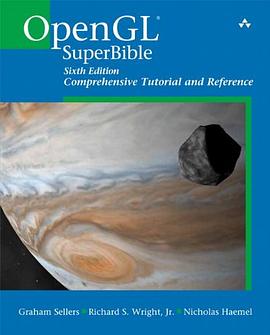
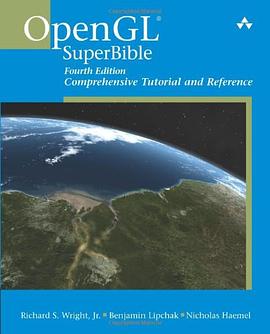
OpenGL ® SuperBible, Fourth Edition, begins by illuminating the core techniques of “classic” OpenGL graphics programming, from drawing in space to geometric transformations, from lighting to texture mapping. The authors cover newer OpenGL capabilities, including OpenGL 2.1’s powerful programmable pipeline, vertex and fragment shaders, and advanced buffers. They also present thorough, up-to-date introductions to OpenGL implementations on multiple platforms, including Windows, Mac OS X, GNU/Linux, UNIX, and embedded systems.
Coverage includes
· An entirely new chapter on OpenGL ES programming for handhelds
· Completely rewritten chapters on OpenGL for Mac OS X and GNU/Linux
· Up-to-the-minute coverage of OpenGL on Windows Vista
· New material on floating-point color buffers and off-screen rendering
· In-depth introductions to 3D modeling and object composition
· Expert techniques for utilizing OpenGL’s programmable shading language
· Thorough coverage of curves, surfaces, interactive graphics, textures, shadows, and much more
· A fully updated API reference, and an all-new section of full-color images
You’ll rely on this book constantly–whether you’re learning OpenGL for the first time, deepening your graphics programming expertise, upgrading from older versions of OpenGL, or porting applications from other environments.
作者简介
<b>Richard S. Wright, Jr.</b>has been using OpenGL for more than 12 years, since it first became available on the Windows platform, and teaches OpenGL programming in the game design degree program at Full Sail in Orlando, Florida. Currently, Richard is the president of Starstone Software Systems, Inc., where he develops third-party multimedia simulation software for the PC and Macintosh platforms using OpenGL.
Previously with Real 3D/Lockheed Martin, Richard was a regular OpenGL ARB attendee and contributed to the OpenGL 1.2 specification and conformance tests. Since then, Richard has worked in multidimensional database visualization, game development, medical diagnostic visualization, and astronomical space simulation.
Richard first learned to program in the eighth grade in 1978 on a paper terminal. At age 16, his parents let him buy a computer with his grass-cutting money instead of a car, and he sold his first computer program less than a year later (and it was a graphics program!). When he graduated from high school, his first job was teaching programming and computer literacy for a local consumer education company. He studied electrical engineering and computer science at the University of Louisville’s Speed Scientific School and made it half way through his senior year before his career got the best of him and took him to Florida. A native of Louisville, Kentucky, he now lives with his wife and three children in Lake Mary, Florida. When not programming or dodging hurricanes, Richard is an avid amateur astronomer and an Adult Sunday School teacher.
<b>Benjamin Lipchak</b> graduated from Worcester Polytechnic Institute with a double major in technical writing and computer science. “Why would anyone with a CS degree want to become a writer?” That was the question asked of him one fateful morning when Benj was interviewing for a tech writing job at Digital Equipment Corporation. Benj’s interview took longer than scheduled, and he left that day with job offer in hand to work on the software team responsible for DEC’s AlphaStation OpenGL drivers.
Benj’s participation in the OpenGL Architecture Review Board began when he chaired the working group that generated the GL_ARB_fragment_program extension spec. While chairing the Khronos OpenGL Ecosystem Technical SubGroup, he established the OpenGL SDK and created the OpenGL Pipeline newsletter, of which he remains editor.
Benj will now participate in the Khronos OpenGL ES Working Group. After 12 years of OpenGL driver development and driver team management at DEC, Compaq, and ATI, he is headed for smaller pastures. Benj recently became manager of AMD’s handheld software team. Although the API is familiar, the new challenges of size and power consumption make for a great change of scenery. In his fleeting spare time, Benj tries to get outdoors for some hiking or kayaking. He also operates an independent record label, Wachusett Records, specializing in solo piano music.
<b>Nicholas Haemel</b>, developer at AMD in the Graphics Products Group, was technical reviewer for OpenGL SuperBible, Third Edition, and contributed the chapters on GLX and OpenGL ES.
目录信息
读后感
这本书非常值得一读, 比 OpenGL 编程指南的价值要高些, 里面的代码都非常具有参考价值, 尤其是在 Shading language 部分的内容和代码, 可以让人们初步体会到着色编程的美妙之处. 其他的例子也很不错, 比如阴影方面, 介绍了不少的方法实现, 这些方法在其他的图形引擎都是可以用...
评分这本书非常值得一读, 比 OpenGL 编程指南的价值要高些, 里面的代码都非常具有参考价值, 尤其是在 Shading language 部分的内容和代码, 可以让人们初步体会到着色编程的美妙之处. 其他的例子也很不错, 比如阴影方面, 介绍了不少的方法实现, 这些方法在其他的图形引擎都是可以用...
评分我是先读的英文版的红宝书,后来再读的这本英文第五版,感觉相对于这本书来说,红宝书更像本工具书,用来查阅更适合,这本更适合入门,建议看英文原版,作者语言风格很幽默,讲述的也很到位,看着不会觉得累,红宝书看会就想换了。 还有一点opengl发展的很快,市面上很多书籍还...
评分这本书非常值得一读, 比 OpenGL 编程指南的价值要高些, 里面的代码都非常具有参考价值, 尤其是在 Shading language 部分的内容和代码, 可以让人们初步体会到着色编程的美妙之处. 其他的例子也很不错, 比如阴影方面, 介绍了不少的方法实现, 这些方法在其他的图形引擎都是可以用...
评分我是先读的英文版的红宝书,后来再读的这本英文第五版,感觉相对于这本书来说,红宝书更像本工具书,用来查阅更适合,这本更适合入门,建议看英文原版,作者语言风格很幽默,讲述的也很到位,看着不会觉得累,红宝书看会就想换了。 还有一点opengl发展的很快,市面上很多书籍还...
用户评价
我必须强调这本书在组织结构上的严谨性。它构建了一个非常清晰的学习路径,从基础的初始化设置,到核心的几何变换,再到光照、纹理映射,直至更复杂的后处理效果,每一步都像是精心设计的课程大纲。最值得称道的是,它对各种渲染错误的排查和调试技巧也有所涉及,这对于独立开发者来说简直是救命稻草。很多时候,我们花费大量时间去寻找一个莫名其妙的渲染错误,而书中提供的几种调试思路,如逐步禁用管线组件或使用特定工具观察缓冲区内容,立刻就能帮助定位问题所在。这种将“如何做”和“如何解决做错的问题”结合在一起的处理方式,体现了作者深厚的工程经验,使得这本书不仅是学习资料,更是一本随身的诊断手册。
评分作为一名自学图形学多年的爱好者,我最大的困扰一直是理论知识与实际应用之间的鸿沟难以跨越。然而,这本著作在这方面做得极为出色。它没有停留在API调用的表面,而是深入剖析了底层渲染管线的每一个阶段,从模型数据的加载、变换,到光栅化、片段处理,都有详尽的论述和清晰的流程图。我特别欣赏作者对于性能优化的探讨,那些关于VBO/IBO的最佳实践、纹理压缩策略的权衡分析,都是实战中沉淀下来的宝贵经验。阅读过程中,我常常停下来思考,对比自己过去的一些低效实现,茅塞顿开之感不言而喻。它不是简单地告诉你“怎么做”,而是让你明白“为什么这么做更优”。对于那些希望在专业图形领域深耕,不甘于仅仅停留在框架之上的开发者而言,这本书无疑是拓宽视野、夯实基础的绝佳选择。
评分这本书的实用价值,主要体现在其对现代图形编程范式的深度契合上。在当前强调可编程管线(Programmable Pipeline)的时代,如何有效地编写和管理复杂的着色器代码至关重要。这本书详尽地覆盖了从顶点着色器到几何着色器、再到片段着色器的完整链条。它不仅仅展示了基础的光照模型,更重要的是,它深入探讨了诸如延迟渲染(Deferred Shading)、环境光遮蔽(Ambient Occlusion)等高级技术的核心思想和实现路径。对于我个人而言,书中关于如何优化资源绑定和状态管理的章节,直接解决了我在项目收尾阶段遇到的性能瓶颈问题。这绝非一本空泛地谈论概念的书籍,它充满了可以立即投入生产环境的代码片段和结构化的思路,真正做到了理论指导实践的无缝衔接。
评分坦白讲,初接触这方面的技术书籍时,常常感觉自己像是在雾里看花,很多术语和概念晦涩难懂,难以形成完整的知识体系。但拿起这本书后,那种挫败感明显减轻了。作者的叙事节奏把握得非常好,从最基础的坐标系转换讲起,循序渐进地构建起整个3D世界的逻辑框架。它的讲解逻辑像是由浅入深的一道道阶梯,每一步都踏实可靠,让人对整体架构的信心倍增。书中对各种投影模式(正交、透视)的几何解释,以及如何处理深度缓冲(Z-buffer)的细节,都处理得非常细腻到位,完全避免了其他书籍中那种生硬的公式堆砌。这种温柔而坚定的引导,极大地增强了学习的连贯性,让人在不知不觉中,就已经掌握了复杂的渲染流程。
评分这本书的排版和插图简直是一场视觉盛宴,尤其是那些复杂的3D渲染效果图,色彩过渡自然得令人赞叹。初次翻阅时,我立刻被那种专业且严谨的艺术感所吸引。对于一个长期在图形编程领域摸爬滚打的人来说,能看到如此清晰、逻辑严密的图文结合,实属难得。它不仅仅是枯燥的代码和晦涩的理论堆砌,更像是一本精心制作的艺术品鉴赏指南,引导你深入理解光影、材质和几何体的内在美学。作者在讲解那些高深的数学原理时,总能巧妙地融入直观的视觉案例,让原本望而生畏的概念变得触手可及。特别是关于高级着色器语言(GLSL)的部分,示例代码的组织结构极具启发性,让人忍不住立刻打开编译器进行尝试。这本书的深度远超一般的入门手册,它更像是为那些渴望将图形编程提升到艺术创作层面的工程师们准备的宝典,每一页都蕴含着打磨多年的经验结晶。
评分业界称为“蓝书",和"红书"配套使用效果更佳.
评分业界称为“蓝书",和"红书"配套使用效果更佳.
评分业界称为“蓝书",和"红书"配套使用效果更佳.
评分业界称为“蓝书",和"红书"配套使用效果更佳.
评分业界称为“蓝书",和"红书"配套使用效果更佳.