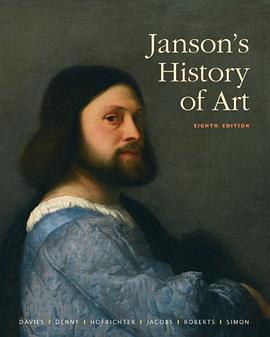

具体描述
For courses in the History of Art.
Rewritten and reorganized, this new edition weaves together the most recent scholarship, the most current thinking in art history, and the most innovative online supplements, including digital art library. Experience the new Janson and re-experience the history of art.
Long established as the classic and seminal introduction to art of the Western world, the Eighth Edition of Janson's History of Art is groundbreaking. When Harry Abrams first published the History of Art in 1962, John F. Kennedy occupied the White House, and Andy Warhol was an emerging artist. Janson offered his readers a strong focus on Western art, an important consideration of technique and style, and a clear point of view. The History of Art, said Janson, was not just a stringing together of historically significant objects, but the writing of a story about their interconnections, a history of styles and of stylistic change. Janson’s text focused on the visual and technical characteristics of the objects he discussed, often in extraordinarily eloquent language. Janson’s History of Art helped to establish the canon of art history for many generations of scholars.
The new Eighth Edition, although revised to remain current with new discoveries and scholarship, continues to follow Janson’s lead in important ways: It is limited to the Western tradition, with a chapter on Islamic art and its relationship to Western art. It keeps the focus of the discussion on the object, its manufacture, and its visual character. It considers the contribution of the artist as an important part of the analysis. This edition maintains an organization along the lines established by Janson, with separate chapters on the Northern European Renaissance, the Italian Renaissance, the High Renaissance, and Baroque art, with stylistic divisions for key periods of the modern era. Also embedded in this edition is the narrative of how art has changed over time in the cultures that Europe has claimed as its patrimony.
作者简介
Penelope J. E. Davies is Associate Professor at the University of Texas, Austin. She is a scholar of Greek and Roman art and architecture as well as a field archaeologist. She is author of Death and the Emperor: Roman Imperial Funerary Monuments from Augustus to Marcus Aurelius, winner of the Vasari Award.
Walter B. Denny is a Professor of Art History at the University of Massachusetts at Amherst. In addition to exhibition catalogues, his publications include books on Ottoman Turkish carpets, textiles, and ceramics, and articles on miniature painting, architecture and architectural decoration.
Frima Fox Hofrichter is Professor and former Chair of the History of Art and Design department at Pratt Institute. She is author of Judith Leyster, A Dutch Artist in Holland’s Golden Age, which received CAA’s Millard Meiss Publication Fund Award.
Joseph Jacobs is an independent scholar, critic, and art historian of modern art in New York City. He was the curator of modern art at the John and Mable Ringling Museum of Art in Sarasota, Florida, director of the Oklahoma City Art Museum, and curator of American art at The Newark Museum, Newark, New Jersey.
David L. Simon is Jetté Professor of Art at Colby College, where he received the Basset Teaching Award in 2005. Among his publications is the catalogue of Spanish and southern French Romanesque sculpture in the Metropolitan Museum of Art and The Cloisters.
Ann M. Roberts, Professor of Art at Lake Forest College has published essays, articles and reviews on both Northern and Italian Renaissance topics. Her research focuses on women in the Renaissance, and her most recent publication is entitled Dominican Women and Renaissance Art:The Convent of San Domenico of Pisa.
H. W. Janson was a legendary name in art history. During his long career as a teacher and scholar, he helped define the discipline through his impressive books and other publications.
Anthony F. Janson forged a distinguished career as a professor, scholar, museum professional and writer. From the time of his father’s death in 1982 until 2004, he authored History of Art.
目录信息
Faculty and Student Resources for Teaching and Learning with Janson’s History of Art xix
Introduction xxi
PART ONE: THE ANCIENT WORLD
Chapter 1: Prehistoric Art
PALEOLITHIC ART 2
MATERIALS AND TECHNIQUES: Cave Painting 5
Interpreting Prehistoric Painting 5
Paleolithic Carving 7
INFORMING ART: Telling Time: Labels and Periods 9
Paleolithic houses 11
NEOLITHIC ART 11
Settled Societies and Neolithic Art 11
Architecture in Europe: Tombs and Rituals 15
INFORMING ART: Dating Techniques 17
Chapter 2: Ancient Near Eastern Art
SUMERIAN ART 22
Temple Architecture: Linking Heaven and Earth 23
MATERIALS AND TECHNIQUES: Mud Brick 23
Sculpture and Inlay 25
PRIMARY SOURCES: The Gilgamesh Epic 25
Visual Narratives 27
Cylinder Seals 29
THE ART HISTORIAN’S LENS: Losses Through Looting 29
ART OF AKKAD 30
Sculpture: Power and Narrative 30
NEO-SUMERIAN REVIVAL 32
Architecture: The Ziggurat of Ur 32
Sculpture: Figures of Gudea 32
PRIMARY SOURCES: Texts on Gudea Figures from Lagash and Surrounding Areas, ca. 2100 33
BABYLONIAN ART 33
The Code of Hammurabi 34
ASSYRIAN ART 34
PRIMARY SOURCES: The Code of Hammurabi 35
Art of Empire: Expressing Royal Power 37
LATE BABYLONIAN ART 37
The Royal Palace 38
REGIONAL NEAR EASTERN ART 38
The Hittites 40
The Phoenicians 40
The Hebrews 41
IRANIAN ART 41
Early Iranian Art 42
The Persian Empire: Cosmopolitan Heirs to the Mesopotamian Tradition 43
Mesopotamia Between Persian and Islamic Dominion 46
Chapter 3: Egyptian Art
PREDYNASTIC AND EARLY DYNASTIC ART 50
The Palette of King Narmer 50
INFORMING ART: Egyptian Gods and Goddesses 52
THE OLD KINGDOM: A GOLDEN AGE 53
Old Kingdom Funerary Complexes 53
INFORMING ART: Major Periods in Ancient Egypt 54
The Pyramids at Giza: Reflecting a New Royal Role 55
MATERIALS AND TECHNIQUES: Building the Pyramids 56
PRIMARY SOURCES: Excerpt from the Pyramid Text of Unis (r. 2341—2311 BCE) 58
Representing the Human Figure 59
THE MIDDLE KINGDOM: REASSERTING
TRADITION THROUGH THE ARTS 62
Royal Portraiture: Changing Expressions and Proportions 62
Funerary Architecture 63
THE NEW KINGDOM: RESTORED GLORY 65
Royal Burials in the Valley of the Kings 65
Temples to the Gods 67
Block Statues 70
Images in New Kingdom Tombs 71
AKHENATEN AND THE AMARNA STYLE 72
The Amarna Style 72
Tutankhamun and the Aftermath of Amarna 75
THE ART HISTORIAN’S LENS: Interpreting Ancient Travel Writers 75
PAPYRUS SCROLLS: THE BOOK OF THE DEAD 77
PRIMARY SOURCES: The Book of the Dead 77
LATE EGYPT 78
Chapter 4: Aegean Art
EARLY CYCLADIC ART 82
MINOAN ART 84
The “Palace” at Knossos 84
Wall Paintings: Representing Rituals and Nature 86
THE ART HISTORIAN’S LENS: Two Excavators, Legend, and Archaeology 87
Minoan Pottery 89
Carved Minoan Stone Vessels 90
Late Minoan Art 92
MYCENAEAN ART 93
Architecture: Citadels 93
Mycenaean Tombs and Their Contents 96
Sculpture 99
Chapter 5: Greek Art
THE EMERGENCE OF GREEK ART: THE GEOMETRIC STYLE 104
INFORMING ART: Greek Gods and Goddesses 105
Geometric Style Pottery 105
Geometric Style Sculpture 107
THE ORIENTALIZING STYLE: HORIZONS EXPAND 107
Miniature Vessels 108
ARCHAIC ART: ART OF THE CITY-STATE 109
The Rise of Monumental Temple Architecture 109
STONE SCULPTURE 113
Architectural Sculpture: The Building Comes Alive 115
Vase Painting: Art of the Symposium 119
THE CLASSICAL AGE 123
Classical Sculpture 123
MATERIALS AND TECHNIQUES: The Indirect Lost-Wax Process 128
Architecture and Sculpture on the Athenian Akropolis 131
PRIMARY SOURCES: Aristotle (384—322 BCE) 133
THE ART HISTORIAN’S LENS: Repatriation of Cultural Heritage 134
PRIMARY SOURCES: Plutarch (ca. 46—after 119 CE) 136
THE LATE CLASSICAL PERIOD 141
Late Classical Architecture: Civic and Sacred 141
Late Classical sculpture 142
Painting in the Late Classical Age 145
THE AGE OF ALEXANDER AND THE HELLENISTIC PERIOD 147
Architecture: The Scholarly Tradition and Theatricality 148
City Planning 150
Hellenistic Sculpture: Expression and Movement 154
THE ART HISTORIAN’S LENS: J.J. Winckelmann and the Apollo Belvedere 157
Hellenistic Painting 161
Chapter 6: Etruscan Art
FUNERARY ART 165
Tombs and Their Contents 166
MATERIALS AND TECHNIQUES: Etruscan Gold-Working 169
ARCHITECTURE 173
City Planning 174
SCULPTURE 175
Dynamism in Terra Cotta and Bronze 175
Chapter 7: Roman Art
EARLY ROME AND THE REPUBLIC 181
THE ART HISTORIAN’S LENS: Recognizing Copies: The Case of the Laocoön 183
NEW DIRECTIONS IN ARCHITECTURE 183
Sculpture 188
PRIMARY SOURCES: Cicero (106—43 BCE) 192
MATERIALS AND TECHNIQUES: Copying Greek Sculptures 193
Painting and Mosaic 194
PRIMARY SOURCES: Polybius (ca. 200—ca. 118 BCE) 194
THE EARLY EMPIRE 195
Architecture 196
THE ART HISTORIAN’S LENS: Two Pantheon Problems 202
Portrait Sculpture 203
Relief Sculpture 207
PRIMARY SOURCES: Josephus (37/8—ca. 100 CE) 210
Art and Architecture in the Provinces 213
Domestic Art and Architecture 216
THE LATE EMPIRE 222
Architecture 222
MATERIALS AND TECHNIQUES: Painted Stone in Greece and Rome 223
Architecture in the Provinces 227
Portrait Sculpture 228
Relief Sculpture 229
PART TWO: THE MIDDLE AGES
Chapter 8: Early Jewish, Early Christian, and Byzantine Art
EARLY JEWISH ART 237
EARLY CHRISTIAN ART 240
Christian Art before Constantine 240
INFORMING ART: The Life of Jesus 241
PRIMARY SOURCES: The Book of the Popes (Liber Pontificalis) 244
Christian Art after Official Recognition of Christianity 245
MATERIALS AND TECHNIQUES: Mosaics 248
BYZANTINE ART 254
Early Byzantine Art 254
PRIMARY SOURCES: Procopius of Caesarea (Sixth Century) 258
The Iconoclastic Controversy 265
Middle Byzantine Art 265
PRIMARY SOURCES: St. Theodore the Studite (759—826 CE) 266
Late Byzantine Art 273
INFORMING ART: Biblical and Celestial Beings 273
Chapter 9: Islamic Art
Religious Architecture 280
PRIMARY SOURCES: Muhammad Ibn Mahmud Al-Amuli (Iran, 14th Century) 280
THE FORMATION OF ISLAMIC ART 281
INFORMING ART: Islam and Its Messenger 283
Secular Architecture 284
THE DEVELOPMENT OF ISLAMIC STYLE 285
Religious Architecture 285
Luxury Arts 287
ISLAMIC ART AND THE PERSIAN INHERITANCE 287
Architecture 287
Figural Art Forms in Iran 288
THE CLASSICAL AGE 290
THE ART HISTORIAN’S LENS: Spanish Islamic Art and Europe in the Middle Ages 290
The Fatimid Artistic Impact 291
The Ayyubids and the Seljuk Turks of Asia Minor 292
LATER CLASSICAL ART AND ARCHITECTURE 294
Mongol Patronage 295
Timurid Patronage 295
Mamluk Patronage 296
Nasrid Patronage: The Alhambra 299
THE THREE LATE EMPIRES 300
PRIMARY SOURCES: The Ottoman Sultan Selim II (1524—1574) 300
MATERIALS AND TECHNIQUES: The Oriental Carpet 301
The Ottomans in Europe and Asia 302
The Safavid Period in Iran 304
The Mughal Period in India 308
PRIMARY SOURCES: Abd Al-Hamid Lahori (d. 1654) 309
CONTINUITY AND CHANGE IN ISLAMIC ART 310
Chapter 10: Early Medieval Art
ANGLO-SAXON ART 314
MATERIALS AND TECHNIQUES: Metalwork 315
The Animal Style 316
HIBERNO-SAXON ART 318
Manuscripts 318
PRIMARY SOURCES: Lindisfarne Gospels 320
VIKING ART 322
CAROLINGIAN ART 324
Sculpture 324
Illuminated Books 325
Architecture 328
PRIMARY SOURCES: Hariulf (ca.1060—1143) 331
PRIMARY SOURCES: St. Angilbert (ca. 750—814) 332
OTTONIAN ART 333
Architecture 333
Metalwork 336
Ivories and Manuscripts: Conveyors of Imperial Grandeur 340
Sculpture 343
Chapter 11: Romanesque Art
FIRST EXPRESSIONS OF ROMANESQUE STYLE 349
Architecture 349
Monumental Stone Sculpture 350
MATURE ROMANESQUE 351
Pilgrimage Churches and Their Art 351
PRIMARY SOURCES: The Pilgrim’s Guide 352
Cluniac Architecture and Sculpture 356
PRIMARY SOURCES: St. Bernard of Clairvaux (1090—1153) 359
Cluniac Wall Painting 365
Cistercian Architecture and Art 366
Other Benedictine Architecture and Wall Painting 367
Book Illustration 368
THE ART HISTORIAN’S LENS: Preserving and Restoring Architecture 369
OTHER REGIONAL VARIANTS OF ROMANESQUE STYLE 372
Western France: Poitou 372
Southeastern France: Provence 373
The Holy Land 374
Tuscany 375
Germany 378
The Meuse Valley: Mosan Style 379
MATERIALS AND TECHNIQUES: Vaulting 380
Normandy and England 381
THE PARADOXICAL MEANING OF ROMANESQUE 386
Chapter 12: Gothic Art
EARLY GOTHIC ART IN FRANCE 391
Saint-Denis: Suger and the Beginnings of Gothic Architecture 391
PRIMARY SOURCES: Suger of Saint-Denis (1081—1151) 393
Chartres Cathedral 395
Laon Cathedral 397
Cathedral of Notre-Dame in Paris 398
HIGH GOTHIC ART IN FRANCE 399
The Rebuilding of Chartres Cathedral 400
PRIMARY SOURCES: Theophilus Presbyter (12th Century) 402
MATERIALS AND TECHNIQUES: Stained Glass 405
THE ART HISTORIAN’S LENS: Modules and Proportions 406
Amiens Cathedral 408
Reims Cathedral 408
RAYONNANT OR COURT STYLE 413
Sainte-Chapelle 413
Saint-Urbain in Troyes 415
Manuscript Illumination 416
LATE GOTHIC ART IN FRANCE 418
Manuscript Illumination 418
Sculpture 420
Architecture: The Flamboyant Phase 422
THE SPREAD OF GOTHIC ART 423
Spain 423
England 426
Germany 430
PART THREE: THE RENAISSANCE THROUGH ROCOCO
Chapter 13: Art in Thirteenth- and Fourteenth-Century Italy
THE GROWTH OF MENDICANT ORDERS AND THE VISUAL ARTS IN ITALY 438
The Franciscans at Assisi and Florence 438
Churches and Their Furnishings in Urban Centers 441
MATERIALS AND TECHNIQUES: Fresco Painting and Conservation 441
Pulpits in Pisan Churches 442
Expanding Florence Cathedral 445
Building for the City Government: The Palazzo della Signoria 448
PAINTING IN TUSCANY 449
Cimabue and Giotto 449
Siena: Devotion to Mary in Works by Duccio and Simone 453
PRIMARY SOURCES: Agnolo di Tura del Grasso 454
THE ART HISTORIAN’S LENS: The Social Work of Images 455
Pietro and Ambrogio Lorenzetti 458
Artists and Patrons in Times of Crisis 461
PRIMARY SOURCES: Inscriptions on the Frescoes in the Palazzo Pubblico, Siena 461
NORTHERN ITALY 465
Venice: Political Stability and Sumptuous Architecture 465
Milan: The Visconti Family and Northern Influences 465
Chapter 14: Artistic Innovations in Fifteenth-Century Northern Europe
COURTLY ART: THE INTERNATIONAL GOTHIC 471
Sculpture for the French Royal Family 471
Illuminated Manuscripts: Books of Hours 473
Bohemia and England 474
URBAN CENTERS AND THE NEW ART 476
Robert Campin in Tournai 477
Jan van Eyck in Bruges 479
MATERIALS AND TECHNIQUES: Panel Painting in Tempera and Oil 479
Rogier van der Weyden in Brussels 485
PRIMARY SOURCES: Cyriacus of Ancona (1449) 485
LATE FIFTEENTH-CENTURY ART IN THE NETHERLANDS 487
Aristocratic Tastes for Precious Objects, Personal Books, and Tapestries 487
THE ART HISTORIAN’S LENS: Scientific and Technical Study of Paintings 488
Panel Paintings in the Southern Netherlands 490
The Northern Netherlands 492
REGIONAL RESPONSES TO THE EARLY NETHERLANDISH STYLE 494
France 494
PRIMARY SOURCES: Fray José De Sigüenza (1544?—1606) 494
Spain 495
Central Europe 495
PRIMARY SOURCES: From the Contract for the St. Wolfgang Altarpiece 499
PRINTING AND THE GRAPHIC ARTS 499
Printing Centers in Colmar and Basel 501
MATERIALS AND TECHNIQUES: Printmaking 501
Chapter 15: The Early Renaissance in Fifteenth-Century Italy
FLORENCE IN THE FIFTEENTH CENTURY 507
The Baptistery Competition 507
PRIMARY SOURCES: In Praise of the City of Florence (ca. 1403—04) by Leonardo Bruni 507
Architecture and Antiquity in Florence 509
PRIMARY SOURCES: Lorenzo Ghiberti (ca. 1381—1455) 509
MATERIALS AND TECHNIQUES: Brunelleschi’s Dome 512
PRIMARY SOURCES: Leon Battista Alberti on what makes a building beautiful 514
Ancient Inspirations in Florentine Sculpture 515
MATERIALS AND TECHNIQUES: Perspective 516
Painting in Florentine Churches and Chapels 525
THE ART HISTORIAN’S LENS: Patronage Studies 525
Florentine Painters in the Age of the Medici 530
DOMESTIC LIFE: PALACES, FURNISHINGS,
AND PAINTINGS IN MEDICEAN FLORENCE 533
Palace Architecture 533
PRIMARY SOURCES: Domenico Veneziano Solicits Work 534
Paintings for Palaces 536
PRIMARY SOURCES: Giovanni Dominici Urges Parents to Put Religious Images in Their Homes 539
Portraiture 541
RENAISSANCE ART THROUGHOUT ITALY, 1450—1500 543
Piero della Francesca in Central Italy 543
Alberti and Mantegna in Mantua 546
Venice 550
Rome and the Papal States 553
Chapter 16: The High Renaissance in Italy, 1495—1520
THE HIGH RENAISSANCE IN FLORENCE AND MILAN 558
Leonardo da Vinci in Florence 559
Leonardo in Milan 559
PRIMARY SOURCES: Leonardo da Vinci (1452—1519) 562
Leonardo Back in Florence and Elsewhere 564
ROME RESURGENT 566
Bramante in Rome 566
Michelangelo in Rome and Florence 568
PRIMARY SOURCES: Michelangelo Interprets the Vatican Pietà 568
Michelangelo in the Service of Pope Julius II 571
MATERIALS AND TECHNIQUES: Drawings 575
Raphael in Florence and Rome 577
THE ART HISTORIAN’S LENS: Cleaning and Restoring Works of Art 578
PRIMARY SOURCES: On Raphael’s Death 583
VENICE 584
Giorgione 584
Titian 585
Chapter 17: The Late Renaissance and Mannerism in Sixteenth-Century Italy
LATE RENAISSANCE FLORENCE: THE CHURCH, THE COURT, AND MANNERISM 593
Florentine Religious Painting in the 1520s 593
The Medici in Florence: From Dynasty to Duchy 595
PRIMARY SOURCES: Benvenuto Cellini (1500—1571) 600
ROME REFORMED 603
Michelangelo in Rome 603
PRIMARY SOURCES: Michelangelo the Poet 603
The Catholic Reformation and Il Gesù 607
NORTHERN ITALY: DUCAL COURTS AND URBAN CENTERS 609
The Palazzo del Te 609
PARMA AND CREMONA 611
Correggio and Parmigianino in Parma 611
Cremona 613
VENICE: THE SERENE REPUBLIC 613
Sansovino in Venice 613
Andrea Palladio and Late Renaissance Architecture 614
PRIMARY SOURCES: Andrea Palladio (1508—1580) 616
Titian 617
MATERIALS AND TECHNIQUES: Oil on Canvas 618
PRIMARY SOURCES: From a Session of the Inquisition Tribunal in Venice of Paolo Veronese 620
Titian’s Legacy 621
Chapter 18: Renaissance and Reformation in Sixteenth-Century Northern Europe
FRANCE: COURTLY TASTES FOR ITALIAN FORMS 625
Chateaux and Palaces: Translating Italian Architecture 626
Art for Castle Interiors 628
MATERIALS AND TECHNIQUES: Making and Conserving Renaissance Tapestries 629
SPAIN: GLOBAL POWER AND RELIGIOUS ORTHODOXY 631
The Escorial 632
El Greco and Religious Painting in Spain 633
CENTRAL EUROPE: THE REFORMATION AND ART 634
Catholic Contexts: The Isenheim Altarpiece 635
Albrecht Dürer and the Northern Renaissance 638
PRIMARY SOURCES: Albrecht Dürer (1471—1528) 641
Religious and Courtly Images in the Era of Reform 643
Painting in the Cities: Humanist Themes and Religious Turmoil 646
ENGLAND: REFORMATION AND POWER 647
PRIMARY SOURCES: Elizabethan Imagery 649
THE NETHERLANDS: WORLD MARKETPLACE 650
The City and the Court: David and Gossaert 651
THE ART HISTORIAN’S LENS: The Economics of Art 651
Antwerp: Merchants, Markets, and Morality 652
PRIMARY SOURCES: Karel van Mander Writes About Pieter Bruegel the Elder 656
Chapter 19: The Baroque in Italy and Spain
PAINTING IN ITALY 663
Caravaggio and the New Style 664
Artemisia Gentileschi 667
PRIMARY SOURCES: Artemisia Gentileschi (1593—ca. 1653) 669
Ceiling Painting and Annibale Carracci 670
ARCHITECTURE IN ITALY 675
The Completion of St. Peter’s and Carlo Maderno 675
Bernini and St. Peter’s 676
Architectural Components in Decoration 678
A Baroque Alternative: Francesco Borromini 679
The Baroque in Turin: Guarino Guarini 682
The Baroque in Venice: Baldassare Longhena 684
SCULPTURE IN ITALY 684
Early Baroque Sculpture: Stefano Maderno 684
The Evolution of the Baroque: Gianlorenzo Bernini 684
A Classical Alternative: Alessandro Algardi 687
MATERIALS AND TECHNIQUES: Bernini’s Sculptural Sketches 688
PAINTING IN SPAIN 689
Spanish Still Life: Juan Sánchez Cotán 690
Naples and the Impact of Caravaggio: Jusepe de Ribera 690
Diego Velázquez: From Seville to Court Painter 691
Monastic Orders and Zurbarán 695
PRIMARY SOURCES: Antonio Palomino (1655—1726) 695
Culmination in Devotion: Bartolomé Esteban Murillo 696
Chapter 20: The Baroque in the Netherlands
FLANDERS 701
Peter Paul Rubens and Defining the Baroque 701
PRIMARY SOURCES: Peter Paul Rubens (1577—1640) 704
Anthony van Dyck: History and Portraiture at the English Court 707
Local Flemish Art and Jacob Jordaens 708
The Bruegel Tradition 709
Still-Life Painting 710
THE DUTCH REPUBLIC 713
The Haarlem Academy: Hendrick Goltzius 713
The Caravaggisti in Holland: Hendrick Terbrugghen 713
The Haarlem Community and Frans Hals 714
The Next Generation in Haarlem: Judith Leyster 717
Rembrandt and the Art of Amsterdam 718
THE ART HISTORIAN’S LENS: Authenticity and Workshops: Rubens and Rembrandt 718
MATERIALS AND TECHNIQUES: Etching, Drypoint, and Selective Wiping 722
THE LANDSCAPE, STILL-LIFE, AND GENRE PAINTING 725
Landscape Painting: Jan van Goyen 725
City Views: Jacob van Ruisdael 726
Architectural Painting: Pieter Saenredam 728
Still-life Painting: Willem Claesz. Heda 729
Flower Painting: Rachel Ruysch 730
Genre Painting: Jan Steen 730
Intimate Genre Painting: Jan Vermeer 732
Exquisite Genre Painting: Gerard ter Borch 734
Chapter 21: The Baroque in France and England
FRANCE: THE STYLE OF LOUIS XIV 738
Painting and Printmaking in France 739
PRIMARY SOURCES: Nicolas Poussin (ca. 1594—1665) 742
THE ART HISTORIAN’S LENS: Forgeries and The Book of Truth 747
French Classical Architecture 748
Sculpture: The Impact of Bernini 754
BAROQUE ARCHITECTURE IN ENGLAND 754
Inigo Jones and the Impact of Palladio 755
Sir Christopher Wren 757
John Vanbrugh and Nicholas Hawksmoor 760
Chapter 22: The Rococo
FRANCE: THE RISE OF THE ROCOCO 762
Painting: Poussinistes versus Rubénistes 763
PRIMARY SOURCES: Jean de Jullienne (1686—1767) 766
MATERIALS AND TECHNIQUES: Pastel Painting 769
Chinoiserie 771
The French Rococo Interior 772
THE ROCOCO IN WESTERN EUROPE OUTSIDE OF FRANCE 774
William Hogarth and the Narrative 774
Canaletto 775
THE ROCOCO IN CENTRAL EUROPE 776
Johann Fischer von Erlach 777
Egid Quirin Asam 779
Dominikus Zimmermann 779
Balthasar Neumann 780
Giovanni Battista Tiepolo and Illusionistic Ceiling Decoration 781
PART FOUR: THE MODERN WORLD
Chapter 23: Art in the Age of the Enlightenment, 1750—1789
ROME TOWARD 1760: THE FONT OF NEOCLASSICISM 787
Artistic Foundations of Neoclassicism: Mengs and Hamilton 788
ROMANTICISM IN ROME: PIRANESI 789
NEOCLASSICISM IN BRITAIN 790
Sculpture and Painting: Historicism, Morality, and Antiquity 791
MATERIALS AND TECHNIQUES: Josiah Wedgwood and Neoclassical Jasperware 792
The Birth of Contemporary History Painting 793
Grand Manner Portraiture in the Neoclassical Style: Joshua Reynolds 795
THE ART HISTORIAN’S LENS: The Elusive Meaning of West’s The Death of General Wolfe 795
Architecture and Interiors: The Palladian Revival 796
EARLY ROMANTICISM IN BRITAIN 798
Architecture and Landscape Design: The Sublime and the Picturesque 799
Early Romantic Painting in Britain 801
Romanticism in Grand Manner Portraiture: Thomas Gainsborough 805
NEOCLASSICISM IN FRANCE 806
Architecture: Rational Classicism 806
The Sublime in Neoclassical Architecture: The Austere and the Visionary 808
Painting and Sculpture: Expressing Enlightenment Values 810
PRIMARY SOURCES: Denis Diderot (1713—1784) 812
The Climax of Neoclassicism: The Paintings of Jacques-Louis David 813
PRIMARY SOURCES: Étienne-Jean Delécluze (1781—1863) 813
Neoclassical Portraiture: Marie-Louise-Élisabeth Vigée-Lebrun 816
ITALIAN NEOCLASSICISM TOWARD 1785 817
Neoclassical Sculpture: Antonio Canova 817
Chapter 24: Art in the Age of Romanticism, 1789—1848
PAINTING 823
Spain: Francisco Goya 823
Britain: Spiritual Intensity and the Bond with Nature 825
MATERIALS AND TECHNIQUES: Blake’s Printing Process 827
PRIMARY SOURCES: John Constable (1776—1837) 829
Germany: Friedrich’s Pantheistic Landscape 831
America: Landscape as Metaphor 832
France: Neoclassical Romanticism 835
France: Painterly Romanticism and Romantic Landscape 840
PRIMARY SOURCES: Eugène Delacroix (1798—1863) 845
Romantic Landscape Painting 847
ROMANTIC SCULPTURE 850
ROMANTIC REVIVALS IN ARCHITECTURE 851
Britain: The Sublime and the Picturesque 851
Germany: Creating a New Athens 854
America: An Ancient Style for a New Republic 854
France: Empire Style 856
Chapter 25: The Age of Positivism: Realism, Impressionism, and the Pre-Raphaelites, 1848—1885
REALISM IN FRANCE 860
Realism in the 1840s and 1850s: Painting Contemporary Social Conditions 861
The Realist Assault on Academic Values and Bourgeois Taste 866
Impressionism: A Different Form of Realism 871
PRIMARY SOURCES: Lila Cabot Perry (1848?—1933) 872
MATERIALS AND TECHNIQUES: Impressionist Color Theory 874
BRITISH REALISM 881
The Pre-Raphaelite Brotherhood 881
The Aesthetic Movement: Personal Psychology and Repressed Eroticism 884
PRIMARY SOURCES: James Abbott McNeill Whistler (1834—1903) 885
REALISM IN AMERICA 887
Scientific Realism: Thomas Eakins 887
Iconic Imagery: Winslow Homer 888
THE ART HISTORIAN’S LENS: An Artist's Reputation and Changes in Art Historical Methodology 889
PHOTOGRAPHY: A MECHANICAL MEDIUM FOR MASS-PRODUCED ART 890
First Innovations 891
Recording the World 891
Reporting the News: Photojournalism 894
Photography as Art: Pictorialism and Combination Printing 895
PRIMARY SOURCES: Charles Baudelaire (1821—1867) 896
ARCHITECTURE AND THE INDUSTRIAL REVOLUTION 897
Ferrovitreous Structures: Train Sheds and Exhibition Palaces 898
Historic Eclecticism and Technology 899
Announcing the Future: The Eiffel Tower 900
Chapter 26: Progress and Its Discontents: Post-Impressionism, Symbolism, and Art Nouveau, 1880—1905
POST-IMPRESSIONISM 905
Paul Cézanne: Toward Abstraction 905
PRIMARY SOURCES: Paul Cézanne (1839—1906) 907
Georges Seurat: Seeking Social and Pictorial Harmony 908
Henri de Toulouse-Lautrec: An Art for the Demimonde 911
MATERIALS AND TECHNIQUES: Lithography 911
Vincent van Gogh: Expression Through Color and Symbol 912
Paul Gauguin: The Flight from Modernity 915
PRIMARY SOURCES: Paul Gauguin (1848—1903) 917
SYMBOLISM 917
The Nabis 917
Other Symbolist Visions in France 918
Symbolism Beyond France 920
Symbolist Currents in American Art 922
THE ART HISTORIAN’S LENS: Feminist Art History 923
The Sculpture of Rodin 924
ART NOUVEAU AND THE SEARCH FOR MODERN DESIGN 927
The Public and Private Spaces of Art Nouveau 927
AMERICAN ARCHITECTURE: THE CHICAGO SCHOOL 931
Henry Hobson Richardson: Laying the Foundation for Modernist Architecture 931
Louis Sullivan and Early Skyscrapers 932
Frank Lloyd Wright and the Prairie House 934
PHOTOGRAPHY AND THE ADVENT OF FILM 936
Pictorialist Photography and the Photo Secession 936
Documentary Photography 939
Motion Photography and Moving Pictures 940
Chapter 27: Toward Abstraction: The Modernist Revolution, 1904—1914
FAUVISM 946
CUBISM 950
Reflecting and Shattering Tradition: Les Demoiselles d’Avignon 950
THE ART HISTORIAN’S LENS: The Myth of the Primitive 951
Analytic Cubism: Picasso and Braque 952
Synthetic Cubism: The Power of Collage 953
THE IMPACT OF FAUVISM AND CUBISM 955
German Expressionism 955
MATERIALS AND TECHNIQUES: The Woodcut in German Expressionism 958
PRIMARY SOURCES: Vasily Kandinsky (1866—1944) 960
Austrian Expressionism 962
Cubism after Picasso and Braque: Paris 963
Italian Futurism: The Visualization of Movement and Energy 964
Cubo-Futurism and Suprematism in Russia 966
PRIMARY SOURCES: Kazimir Malevich (1878—1935) 968
Cubism and Fantasy: Marc Chagall and Giorgio de Chirico 969
MARCEL DUCHAMP AND THE ADVENT OF AN ART OF IDEAS 970
CONSTANTIN BRANCUSI AND THE BIRTH OF MODERNIST SCULPTURE 972
AMERICAN ART 974
America’s First Modernists: Arthur Dove and Marsden Hartley 975
EARLY MODERN ARCHITECTURE IN EUROPE 976
Austrian and German Modernist Architecture 976
German Expressionist Architecture 979
Chapter 28: Art Between the Wars
DADA 985
Zurich Dada: Jean Arp 985
New York Dada: Marcel Duchamp 986
Berlin Dada 987
Cologne Dada 991
PRIMARY SOURCES: Hannah Höch (1889—1978) 991
Paris Dada: Man Ray 992
SURREALISM 993
Picasso and Surrealism 993
Surrealism in Paris: Spurring the Imagination 995
Representational Surrealism: Magritte and Dalí 996
Surrealism and Photography 999
The Surrealist Object 999
ORGANIC SCULPTURE OF THE 1930S 1000
Alexander Calder in Paris 1001
Henry Moore and Barbara Hepworth in England 1002
PRIMARY SOURCES: Barbara Hepworth (1903—1975) 1003
CREATING UTOPIAS 1003
Russian Constructivism: Productivism and Utilitarianism 1003
De Stijl and Universal Order 1005
The Bauhaus: Creating the “New Man” 1007
PRIMARY SOURCES: Piet Mondrian (1872—1944) 1007
The Machine Aesthetic in Paris 1011
PRIMARY SOURCES: Le Corbusier (1886—1965) 1012
MATERIALS AND TECHNIQUES: Reinforced Concrete 1013
ART IN AMERICAN: MODERNITY, SPIRITUALITY, AND REGIONALISM 1015
The City and Industry 1015
Art Deco and the International Style 1020
Seeking the Spiritual 1021
Regionalism and National Identity 1023
The Harlem Renaissance 1024
MEXICAN ART: SEEKING A NATIONAL IDENTITY 1025
Diego Rivera 1025
THE EVE OF WORLD WAR II 1028
America: The Failure of Modernity 1028
Europe: The Rise of Fascism 1030
Chapter 29: Postwar to Postmodern, 1945—1980
EXISTENTIALISM IN NEW YORK: ABSTRACT EXPRESSIONISM 1036
The Bridge from Surrealism to Abstract Expressionism: Arshile Gorky 1036
Abstract Expressionism: Action Painting 1038
PRIMARY SOURCES: Jackson Pollock (1912—1956) 1038
Abstract Expressionism: Color-Field Painting 1040
New York Sculpture: David Smith and Louise Nevelson 1041
EXISTENTIALISM IN EUROPE: FIGURAL EXPRESSIONISM 1042
Jean Dubuffet 1042
Francis Bacon 1043
REJECTING ABSTRACT EXPRESSIONISM: AMERICAN ART OF THE 1950s AND 1960s 1044
Re-Presenting Life and Dissecting Painting 1044
Environments and Performance Art 1046
Pop Art: Consumer Culture as Subject 1049
PRIMARY SOURCES: Roy Lichtenstein (1923—1997) 1050
FORMALIST ABSTRACTION OF THE 1950s AND 1960s 1053
Formalist Painting 1053
Formalist Sculpture: Minimal Art 1056
PRIMARY SOURCES: Frank Stella (b. 1936) 1056
THE PLURALIST 1970s: POST-MINIMALISM 1058
Post-Minimal Sculpture: Geometry and Emotion 1058
Earthworks and Site-Specific Art 1059
THE ART HISTORIAN’S LENS: Studying the Absent Object 1059
Conceptual Art: Art as Idea 1062
Television Art: Nam June Paik 1063
ART WITH A SOCIAL AGENDA 1064
Street Photography 1064
African-American Art: Ethnic Identity 1065
PRIMARY SOURCES: Romare Bearden (1911—1988) 1066
Feminist Art: Judy Chicago and Gender Identity 1068
LATE MODERNIST ARCHITECTURE 1069
Continuing the International Style: Ludwig Mies van der Rohe 1069
Sculptural Architecture: Referential Mass 1070
Chapter 30: The Postmodern Era: Art Since 1980
ARCHITECTURE 1077
Postmodern Architecture: A Referential Style 1077
New Modernisms: High-Tech Architecture 1080
Deconstructivism: Countering Modernist Authority 1082
MATERIALS AND TECHNIQUES: Computer-Aided Design in Architecture 1085
POSTMINIMALISM AND PLURALISM: LIMITLESS POSSIBILITIES IN FINE ART 1085
The Return of Painting 1085
Sculpture 1089
APPROPRIATION ART: DECONSTRUCTING IMAGES 1091
PRIMARY SOURCES: Cindy Sherman (b. 1954) 1091
Photography and LED Signs 1092
Context and Meaning in Art: The Institutional Critique and Art as Commodity 1094
MULTICULTURALISM AND POLITICAL ART 1096
African-American Identity 1096
The AIDS Pandemic and a Preoccupation with the Body 1098
The Power of Installation, Video, and Large-Scale Photography 1100
PRIMARY SOURCES: Ilya Kabakov (b. 1933) 1102
THE ART HISTORIAN’S LENS: The Changing Art Market 1104
GLOBAL ART 1105
El Anatsui, Adinkra Signs, and Postmodern Ambiguity 1105
Cai Guo Qing: Projects for Extraterrestrials 1106
Glossary
Bibliography
Index
Credits
· · · · · · (收起)
读后感
目前市面上流行的多种艺术史书籍,除了贡布里希的名著《艺术的故事》,实际上都是美国大学的艺术史导论教材。《艺术的故事》是一本适于入门的好书,我却更青睐那些教材。说起来,导论教材的阅读门槛其实与面向大众的普及读本相当,更具学术性又兼顾可读性,且在系统性和严谨性...
评分1983年,人民美术出版社打算出版《詹森艺术史》台湾曾堉先生译本。陈允鹤先生托我将台湾版文字校勘一遍。核对原文时,发现译本意译之处较多,甚至还夹有台湾的俏皮话。即把此况报告陈先生,因而决定重译本书。此为译作之始。 如何译制原作?当时学术界正探讨这个问题。从...
评分一直到29章都是非常好的艺术通史著作。 无论对于艺术入门的自学者还是较为专业的人士用来参考都很有价值。 下面只讲问题: 和以前的艺术史相比较,隐约有一条政治正确的线索:即重视女性艺术家、重视非白人艺术家,重视少数民族艺术家。 从28章开始渐渐开始出现一些问题,第一...
评分-导论 艺术是人的意义通过一种视觉符号获得了显现和延伸的那部分,有时候是审美,有时候仅仅具有于意义未必局限于审美。。也就是艺术是扩大化的,美的(为美而美的工艺品和传承下来工具类)和给人触动的东西。 -希腊 艺术是人观察世界的媒介(写实),是人们理解的再投射,观察...
评分1、文字没来得及细看,翻后感觉浅显易懂,十分流畅。是西方艺术史,无中、日、非洲方面内容。 2、图片是我看过国内出版艺术史中色彩最亮的,《梅杜萨之筏》、《夜巡》都可以看得清清楚楚。就《夜巡》而言,我记得有的评论说小女孩是画作中唯一的光源,但在本书中我看到两个:...
用户评价
初次翻阅这本书,我的第一感觉是其“沉甸甸”的质感,这不仅仅是物理上的重量,更是一种知识和历史的厚重感。我一直认为,艺术是人类文明中最具有代表性的遗产,它承载着一个时代的精神、一个民族的情感、以及人类对美的永恒追求。然而,我的艺术史知识,一直像是一片散乱的拼图,我看到了许多精美的碎片,却始终无法将其组合成一幅完整的画面。我希望这本书能够成为我手中的指南,为我指引方向,让我能够系统地了解艺术的发展脉络。我尤其希望能深入理解那些在艺术史上具有重要转折意义的时期和风格,比如古埃及文明的宏伟与神秘,古希腊罗马艺术的理性与和谐,以及中世纪欧洲艺术的宗教主题与象征意义。我希望这本书能够通过生动的事例,让我明白这些艺术形式为何会产生,它们又如何体现了当时的社会文化特征。我也对不同文化背景下的艺术有着极大的好奇心。我常常在欣赏西方经典名作的同时,思考东方艺术,特别是中国、印度、日本等国家的艺术,是如何发展出独特的魅力。我希望这本书能够为我提供一个更广阔的视野,让我能够认识到艺术的全球性和多样性,并理解不同文化如何在艺术的交流与碰撞中相互启迪。我还对艺术家的创作过程和艺术理论的发展很感兴趣。我希望这本书不仅能介绍作品本身,也能探讨艺术家是如何思考和创作的,以及有哪些重要的艺术理论影响了艺术史的发展。能够了解这些,将有助于我更深刻地理解艺术的本质。
评分在我尚未真正翻开它的时候,这本书就以一种“厚积薄发”的姿态吸引了我。我之所以对艺术史着迷,是因为它像是人类心灵的百科全书,记录着不同时代、不同文明的情感、思想和审美。然而,我对艺术史的认知,一直以来都像是站在一个巨大的集市上,看到琳琅满目的商品,却不知道哪些才是最珍贵的瑰宝。我希望这本书能够成为一位经验丰富的导游,带领我穿越时空,去探索艺术发展的宏大叙事。我尤其希望能深入理解那些在艺术史上具有“定海神针”般作用的时期和风格,例如古希腊艺术对理想人体的塑造,文艺复兴时期人文主义的复兴所带来的艺术革新,以及印象派对光影和色彩的全新探索。我希望这本书能通过精炼的文字和详实的案例,让我明白这些艺术运动的独特之处,以及它们为何能对后世产生如此深远的影响。同时,我也对非西方艺术,特别是亚洲和非洲的艺术,一直抱有浓厚的探索欲,却知之甚少。我希望这本书能够为我提供一个更加广阔的视野,让我能够认识到艺术的普世性,以及不同文化如何在独特的语境下创造出令人惊叹的艺术作品。我期待能够看到不同文明的艺术如何相互借鉴、相互启发,共同构成人类艺术的辉煌图景。此外,我还对艺术与社会、艺术与科技之间的互动关系感到好奇。例如,某些艺术形式是如何反映社会现实的,以及科技的进步又如何为艺术创作提供了新的可能性。我希望这本书能够触及到这些更广泛的议题,让我能够更全面地理解艺术在人类历史中的多重角色。
评分这本书的封面设计本身就给我留下了深刻的印象。它不是那种花哨浮夸的风格,而是一种沉稳而富有质感的呈现。柔和的米白色作为主色调,配以简洁的衬线字体,仿佛诉说着历史的厚重与艺术的经典。封面上那一幅精心挑选的艺术品复制画,并非我一开始就熟知的名作,却带着一种难以言喻的吸引力,让我忍不住想要一探究竟。当我翻开这本书,书页的质感也令我惊喜,纸张厚实,触感温润,即使是长期翻阅,想必也不会轻易泛黄磨损。每翻动一页,都能感受到一种对细节的极致追求,这让我对接下来的阅读之旅充满了期待。我对艺术史的了解,此前大多停留在零散的印象和片段式的记忆中,对于艺术的演变脉络、不同流派的关联性、以及它们在历史长河中扮演的角色,始终感觉模糊不清。我总是在看到一幅画或一件雕塑时,会问“这是谁的作品?什么时候的?有什么特别之处?”,但很少能够将这些零散的信息串联起来,形成一个完整的体系。因此,当我决定要深入了解艺术史时,寻找一本能够系统性地梳理和呈现这些知识的图书就变得尤为重要。Janson's History of Art,尽管我尚未深入阅读其内容,单从其装帧和初步的翻阅体验来看,就给我一种“它就是我一直在寻找的那本书”的感觉。我期望它能如同一个经验丰富的向导,带领我穿梭于古今中外的艺术殿堂,为我一一揭示那些隐藏在作品背后的故事和意义。我对艺术的兴趣,源于一种对美的本能追求,以及对人类创造力的无限好奇。我常常被那些能够触动心灵、引发共鸣的艺术作品所震撼,但同时也常常因为不了解其创作背景、时代精神以及艺术家的意图而感到遗憾。我希望通过阅读这本书,能够填补我在这方面的知识空白,让我能够更深入地理解艺术,更深刻地欣赏艺术,并最终形成自己独立的艺术见解。这本书的篇幅看起来相当可观,这让我既感到兴奋又有些许畏惧,兴奋是因为这意味着我将有机会获得大量宝贵的知识,而畏惧则是因为我担心自己能否有效地吸收和消化如此庞大的信息量。然而,封面带来的好感,以及对艺术史探索的渴望,让我下定决心要投入时间和精力去细细品读。
评分即便我尚未开始细读,这本书所展现的“厚重感”就足以让我心生敬意。我指的不仅仅是它物理上的分量,更是其内在所蕴含的知识体系的宏大。在信息爆炸的时代,我们很容易被碎片化的信息所淹没,对于艺术史这样需要系统性梳理的学科,更需要一本能够提供扎实基础的读物。我一直认为,要真正欣赏一件艺术品,仅仅停留在“好看”或者“不喜欢”的层面是远远不够的,我们需要了解它的来龙去脉,理解它所处的语境,才能触及到它更深层的内涵。我的艺术启蒙,更多是来自于一些纪录片和网络上的零散介绍,这使得我对艺术史的认识,就像是一幅未完成的拼图,有很多零散的碎片,却不知道如何将它们完美地拼接在一起。我渴望能有一本书,能够将这些碎片有机地组织起来,形成一个清晰的、逻辑严密的艺术史叙事。我希望它能带领我从最古老的文明开始,循序渐进地了解艺术的发展轨迹,直到近现代。特别是对于那些在艺术史上具有里程碑意义的时期和事件,例如古希腊罗马的古典艺术,中世纪的宗教艺术,以及近代欧洲艺术的各种革新,我希望这本书能提供详实而深入的解读,让我明白它们为何会如此重要,以及它们是如何奠定后世艺术的基础的。我个人对绘画和雕塑尤为感兴趣,但我也意识到,艺术史的范畴远不止于此,建筑、装饰艺术,甚至设计,都与艺术史有着千丝万缕的联系。我希望这本书能为我展现艺术史的广阔图景,让我明白艺术是如何渗透到人类生活的方方面面的。我也期待这本书能提供一些关于艺术品鉴定和收藏的知识,虽然我目前没有这方面的打算,但了解这些能够帮助我更深入地理解艺术的市场和价值体系。
评分我尚未深入阅读,但这本书的“气场”就足以让我感到其非凡。我指的是一种知识的沉淀和经典的重量。我一直对人类文明的发展历程充满好奇,而艺术,在我看来,是文明最直接、最生动的载体。然而,我对于艺术史的认识,一直停留在一些零散的片段和模糊的印象中,仿佛站在一座巨大的博物馆门口,却不知道该如何开始参观。我渴望找到一本能够引领我的书,为我勾勒出艺术史的清晰脉络,让我能够理解不同时期、不同流派的艺术是如何相互关联,又如何独立发展的。我特别希望能了解那些在艺术史上具有划时代意义的事件和人物,比如古希腊雕塑对人体美的极致追求,中世纪宗教艺术的神秘庄严,以及文艺复兴时期人文主义的觉醒如何赋予艺术新的生命。我希望这本书能够提供详实的案例,并通过深入的分析,让我明白这些艺术成就为何如此重要,以及它们对后世产生了怎样的影响。同时,我也对不同地域的艺术风格有着浓厚的兴趣。我常常在欣赏西方艺术的同时,思考其他文明是如何发展出独特的艺术语言的。例如,中国的山水画是如何表达人与自然的和谐,印度的佛教造像又是如何体现精神的超脱。我希望这本书能够为我提供一个更加多元化的视角,让我能够理解世界艺术的丰富性和包容性。我也对艺术的社会功能和意义充满疑问。艺术究竟在多大程度上反映了社会现实?它又能在多大程度上影响人们的思想和情感?我希望这本书能帮助我解答这些问题,让我能够更深入地理解艺术与社会之间的互动关系。
评分初次接触这本书,最先吸引我的并非内容本身,而是其所散发出的那股严谨而又充满魅力的学术气息。书名“Janson's History of Art”本身就带有一种权威感,仿佛是一位在艺术史领域深耕多年的大家,将毕生所学倾囊相授。即使我尚未翻开任何一页,光是这个名字,就已经勾勒出一种值得信赖的学术形象。我之所以对艺术史产生浓厚的兴趣,很大程度上是因为我一直认为,艺术是人类文明最直接、最真挚的表达方式。每一件艺术品,无论其形式如何,都承载着其所处时代的社会背景、文化思潮、宗教信仰,甚至是艺术家个人的情感与哲学思考。然而,缺乏系统的知识体系,我常常在面对浩瀚的艺术作品时,感到无从下手,如同置身于一个琳琅满目却又不知如何挑选的宝藏库。我渴望能够有一条清晰的线索,引导我理解不同时期、不同地域的艺术风格是如何演变的,为何会产生特定的艺术形式,以及这些形式又如何影响了后世。我期待这本书能够为我提供这样一个宏观的框架,让我能够将零散的艺术认知碎片,整合成一幅完整的艺术史长卷。特别是对于那些我不太熟悉的时期和文化,例如早期文明的艺术,或是遥远地域的民族艺术,我抱有极大的好奇心,却鲜少有机会接触到系统性的介绍。我希望这本书能够弥补我在这方面的知识盲区,让我能够对人类艺术的起源和多样性有更全面的认识。我也对那些艺术史上的“转折点”充满了兴趣,比如文艺复兴、印象派的诞生等等,它们是如何颠覆传统的,又为何会引发如此巨大的变革。这本书能否深入浅出地解释这些关键性的艺术事件,并分析其背后的深层原因,是我非常期待的。同时,我个人对西方艺术史的了解相对多一些,而对于东方艺术,特别是亚洲其他国家的艺术,了解得较为有限。我希望这本书也能在一定程度上弥补这方面的不足,为我打开一扇新的视角,让我能够更全面地理解世界艺术的多元魅力。
评分在我尚未真正深入阅读之前,这本书的“存在感”就已经很强烈了。我不是指它占用了多大的空间,而是它所代表的“一部艺术史”的宏大叙事,已经在我脑海中构建了一个初步的轮廓。我之所以对艺术史如此着迷,是因为我总觉得,艺术是连接过去与现在的桥梁,是人类情感与智慧的结晶。然而,长久以来,我对于艺术史的理解,就像是在一个巨大的迷宫里,看到许多美丽的风景,却找不到一条贯穿始终的路径。我希望能有一本书,能像一位经验丰富的导游,带领我穿越时空,领略不同时代、不同文化下艺术的辉煌。我特别期待这本书能够清晰地梳理出各个艺术时期和流派的特点,例如,巴洛克艺术的戏剧性,洛可可艺术的精致,以及新古典主义的庄重,这些标签我耳熟能详,却很难说清楚它们之间的具体区别和联系。我希望这本书能将这些概念具体化,通过详实的案例分析,让我能够真正理解它们的美学内涵和历史意义。我也对艺术家的个人传记和创作故事很感兴趣,我常常觉得,理解艺术家的生活经历和思想,能够帮助我更好地理解他们的作品。我希望这本书不仅是枯燥的理论堆砌,也能包含一些引人入胜的艺术家故事,让我能够感受到艺术创作背后的激情与挣扎。此外,我一直对非西方艺术,特别是亚洲和非洲的艺术,缺乏系统的了解。我希望这本书能够为我打开一扇新的窗户,让我能够认识到艺术的多样性和普世性,而不仅仅局限于西方艺术的视角。能够看到不同文化背景下的艺术如何发展,如何相互影响,将是一件非常有启发的事情。
评分在我还未深入阅读这本书之前,它在我心中已经构建了一个“百科全书式”的形象。我一直认为,艺术史是一门连接过去与现在的学科,它能够帮助我们理解人类的过去,洞察当下的现状,甚至预见未来的趋势。然而,我对于艺术史的了解,一直像是站在一座巨大图书馆的门口,虽然看到书架上的无数藏书,却不知道从何翻起。我渴望找到一本能够为我指明方向的导读,帮助我系统地梳理艺术的发展脉络。我希望这本书能够带领我穿越古埃及的神秘,漫步于古希腊的辉煌,感受中世纪的虔诚,惊叹于文艺复兴的复兴,并探索近现代艺术的无限可能。我尤其希望能深入了解那些在艺术史上具有里程碑意义的艺术运动,例如印象派如何打破了传统学院派的束缚,表现主义如何将内心的情感外化,以及抽象艺术如何拓展了艺术的表现边界。我希望这本书能够通过详实的案例分析,让我明白这些艺术运动的特点、成因以及它们对后世产生的深远影响。同时,我也对不同地域的艺术文化产生了浓厚的兴趣。我常常在欣赏西方艺术的同时,思考中国、日本、印度等东方国家,以及非洲、美洲原住民的艺术是如何发展的。我希望这本书能够为我提供一个更加全面的视角,让我能够认识到艺术的全球性,以及不同文化如何在交流与融合中创造出独特的艺术瑰宝。我还对艺术与科技、艺术与社会思潮之间的关系感到好奇,例如摄影的出现如何改变了绘画的命运,以及某些艺术思潮如何成为了社会变革的先声。
评分这本《Janson's History of Art》在我眼中,不仅仅是一本关于艺术的书,更像是一把解锁人类文明宝藏的钥匙。我之所以如此期待,是因为我深信,艺术是理解一个时代、一个民族最直观的途径。然而,我的艺术史知识,一直以来都像是零散的星星,缺乏一条将它们串联起来的银河。我希望这本书能够为我提供这样一条清晰的路径,让我能够从古老的石器时代,一直走到当代艺术。我尤其好奇那些艺术史上的“分水岭”时刻,例如古希腊的雕塑如何奠定了西方古典美的基础,中世纪的哥特式建筑如何象征着人们对神明的向往,以及文艺复兴时期人文主义精神如何重新点燃艺术的生命力。我希望这本书能够深入浅出地解释这些关键性的转变,并分析其背后的社会、文化和哲学根源。我也对不同地域的艺术特色充满了好奇。我从小接触的艺术作品大多是西方世界的,对于东方艺术,例如中国的水墨画、日本的浮世绘,或是印度充满宗教色彩的雕塑,我了解得非常有限。我希望这本书能为我提供一个更广阔的视野,让我能够认识到艺术的全球性,以及不同文化碰撞出的独特火花。我渴望能够理解这些不同艺术形式背后的思维方式和审美情趣。此外,我还对艺术与科技、艺术与社会运动之间的关系感到好奇。例如,摄影的出现如何改变了绘画,以及某些艺术流派如何成为社会变革的催化剂。我希望这本书能够触及到这些更深层次的互动,让我能够看到艺术在历史长河中扮演的多重角色。
评分初见此书,便感受到一股扑面而来的“学术严谨”与“艺术之美”的交织。我之所以对艺术史产生浓厚兴趣,是因为我坚信,艺术是人类情感、思想和智慧的最直接、最持久的表达。然而,我长期以来对艺术史的认知,就像是在一个巨大的迷宫中寻宝,虽然看到了许多闪耀的宝石,却难以将其串联成一条完整的项链。我希望这本书能够成为我的“藏宝图”,为我指引方向,让我能够系统地了解艺术的发展轨迹。我特别渴望深入理解那些塑造了西方艺术史的重大转折点,例如古希腊雕塑对理想美的追求,古罗马建筑的实用与宏伟,以及中世纪教会艺术的象征意义。我希望这本书能够通过详实的图文结合,让我明白这些艺术风格为何会在特定的历史时期兴起,它们又如何反映了当时的社会文化和宗教信仰。同时,我也对东方艺术,特别是中国、日本、印度等亚洲国家的艺术,一直怀有极大的好奇,却了解甚少。我希望这本书能够为我打开一扇新的窗户,让我能够认识到艺术的多元性,并理解不同文化背景下的艺术如何发展出独特的魅力与哲学思考。我期待能够看到不同文明在艺术上的对话与交融,以及它们各自对美和人类生存意义的独特诠释。此外,我还对艺术理论的演变及其对艺术创作的影响感到好奇。我希望这本书不仅仅是作品的罗列,更能触及到那些影响了艺术家思想和创作的理论流派,例如新柏拉图主义、形式主义等,让我能够更深入地理解艺术的内在逻辑。
评分本来不想标的.....但大一读完大半本也挺不容易的..目前印象最深的还是提到波提切利的那几页(真·illumination /整个西美通史里面有印象的就是这本和贵校自己的教材…《艺术的故事》过脑无痕.总之这本视野还是足够大的
评分这书写得多好啊!!!作为survey非常详尽了!!要是国内能引进出版对国内西方艺术史教育会有很大帮助的
评分暑假课程书目。特别精彩。据说中文版历经三十年才翻译完成,精雕细琢。花了200刀买下来,要结结实实再读几遍才好。
评分这书写得多好啊!!!作为survey非常详尽了!!要是国内能引进出版对国内西方艺术史教育会有很大帮助的
评分这书写得多好啊!!!作为survey非常详尽了!!要是国内能引进出版对国内西方艺术史教育会有很大帮助的