
具体描述
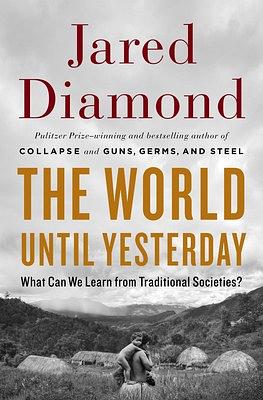
Most of us take for granted the features of our modern society, from air travel and telecommunications to literacy and obesity. Yet for nearly all of its six million years of existence, human society had none of these things. While the gulf that divides us from our primitive ancestors may seem unbridgeably wide, we can glimpse much of our former lifestyle in those largely traditional societies still or recently in existence. Societies like those of the New Guinea Highlanders remind us that it was only yesterday—in evolutionary time—when everything changed and that we moderns still possess bodies and social practices often better adapted to traditional than to modern conditions.
The World Until Yesterday provides a mesmerizing firsthand picture of the human past as it had been for millions of years—a past that has mostly vanished—and considers what the differences between that past and our present mean for our lives today.
This is Jared Diamond’s most personal book to date, as he draws extensively from his decades of field work in the Pacific islands, as well as evidence from Inuit, Amazonian Indians, Kalahari San people, and others. Diamond doesn’t romanticize traditional societies—after all, we are shocked by some of their practices—but he finds that their solutions to universal human problems such as child rearing, elder care, dispute resolution, risk, and physical fitness have much to teach us. A characteristically provocative, enlightening, and entertaining book, The World Until Yesterday will be essential and delightful reading.
作者简介
Jared Diamond is a professor of geography at the University of California, Los Angeles. He began his scientific career in physiology and expanded into evolutionary biology and biogeography. Among his many awards are the National Medal of Science, the Tyler Prize for Environmental Achievement, Japan’s Cosmos Prize, a MacArthur Foundation Fellowship, and the Lewis Thomas Prize honoring the Scientist as Poet, presented by The Rockefeller University. His previous books include Why Is Sex Fun?, The Third Chimpanzee, Collapse, The World Until Yesterday, and Guns, Germs, and Steel, winner of the Pulitzer Prize.
目录信息
Part one. Setting the Stage by Dividing Space. Friends, enemies, strangers, and traders (Boundary ; Mutually exclusive territories ; Non-exclusive land use ; Friends, enemies, and strangers ; First contacts ; Trade and traders ; Market economies ; Traditional forms of trade ; Traditional trade items ; Who trades what? ; Tiny nations). --
Part two. Peace and War. Compensation for the death of a child (An accident ; A ceremony ; What if? ; What the state did ; New Guinea compensation ; Life-long relationships ; Other non-state societies ; State authority ; State civil justice ; Defects in state civil justice ; State criminal justice ; Restorative justice ; Advantages and their price) ; A short chapter, about a tiny war (The Dani war ; The war's time-line ; The war's death toll) ; A longer chapter, about many wars (Definitions of war ; Sources of information ; Forms of traditional warfare ; Mortality rates ; Similarities and differences ; Ending warfare ; Effects of European contact ; Warlike animals, peaceful peoples ; Motives for traditional war ; Ultimate reasons ; Whom do people fight? ; Forgetting Pearl Harbor). --
Part three. Young and Old. Bringing up children (Comparisons of child-rearing ; Childbirth ; Infanticide ; Weaning and birth interval ; On-demand nursing ; Infant-adult contact ; Fathers and allo-parents ; Responses to crying infants ; Physical punishment ; Child autonomy ; Multi-age playgroups ; Child play and education ; Their kids and our kids) ; The treatment of old people : cherish, abandon, or kill? (The elderly ; Expectations about eldercare ; Why abandon or kill? ; Usefulness of old people ; Society's values ; Society's rules ; Better or worse today? ; What to do with older people?). Part four. Danger and Response. Constructive paranoia (Attitudes towards danger ; A night visit ; A boat accident ; Just a stick in the ground ; Taking risks ; Risks and talkativeness) ; Lions and other dangers (Dangers of traditional life ; Accidents ; Vigilance ; Human violence ; Diseases ; Responses to diseases ; Starvation ; Unpredictable food shortages ; Scatter your land ; Seasonality and food storage ; Diet broadening ; Aggregation and dispersal ; Responses to danger). --
Part five. Religion, Language, and Health. What electric eels tell us about the evolution of religion (Questions about religion ; Definitions of religion ; Functions and electric eels ; The search for causal explanations ; Supernatural beliefs ; Religion's function of explanation ; Defusing anxiety ; Providing comfort ; Organization and obedience ; Codes of behavior towards strangers ; Justifying war ; Badges of commitment ; Measures of religious success ; Changes in religion's functions) ; Speaking in many tongues (Multilingualism, The world's language total ; How languages evolve ; Geography of language diversity ; Traditional multilingualism ; Benefits of bilingualism ; Alzheimer's disease ; Vanishing languages ; How languages disappear ; Are minority languages harmful? ; Why preserve languages? ; How can we protect languages?) ; Salt, sugar, fat, and sloth (Non-communicable diseases ; Our salt intake ; Salt and blood pressure ; Causes of hypertension ; Dietary sources of salt ; Diabetes ; Types of diabetes ; Genes, environment, and diabetes ; Pima Indians and Nauru Islanders ; Diabetes in India ; Benefits of genes for diabetes ; Why is diabetes low in Europeans? ; The future of non-communicable diseases). --
At Another Airport. From the jungle to the 405 ; Advantages of the modern world ; Advantages of the traditional world ; What can we learn?
· · · · · · (收起)
读后感
无论从哪个角度来看,贾雷德• 戴蒙德的名字是和《枪炮、病菌与钢铁》这本书紧密联系在一起的。这位加州大学洛杉矶分校的地理学教授以对人类文明演变发展的独到观察和颠覆性见解而声名远播,他的写作横跨历史学、人类学、语言学地理学、遗传学、生理学等众多领域,行文明晰流...
评分找了好久终于在新开图书馆找到~~ 本书的作者经历颇为有趣,该书主要讲述作者通过在原始传统社群的经历与现在西方文明的比较去发觉前者对后者的益处以及后者相对前者的不足。讨论涉及的方面基本囊括以及分析传统原始社群日常生活的各个方面:(主要)人际社群酋邦种族关系,教...
评分无论从哪个角度来看,贾雷德• 戴蒙德的名字是和《枪炮、病菌与钢铁》这本书紧密联系在一起的。这位加州大学洛杉矶分校的地理学教授以对人类文明演变发展的独到观察和颠覆性见解而声名远播,他的写作横跨历史学、人类学、语言学地理学、遗传学、生理学等众多领域,行文明晰流...
评分1. 前三分之一(1-4章)比较像废话,没什么内容。 2. 最有启发的是五六章。狩猎采集部落对下一代平等相待(北美印第安昆族孩子心情不好可以扇父母耳光)与放任其探索的程度(三岁小孩玩刀,切着手就切着)令现代人惊讶(作者是美国人都惊讶,别说某些国家了)。 3. 原始人对老...
评分无论从哪个角度来看,贾雷德• 戴蒙德的名字是和《枪炮、病菌与钢铁》这本书紧密联系在一起的。这位加州大学洛杉矶分校的地理学教授以对人类文明演变发展的独到观察和颠覆性见解而声名远播,他的写作横跨历史学、人类学、语言学地理学、遗传学、生理学等众多领域,行文明晰流...
用户评价
最让我着迷的是书中对“亲属关系”和社会“网络”的细致描绘。我过去总以为,血缘亲情是普适的,但这本书让我看到了亲属关系的多样性和复杂性,以及它在维持社会稳定和传递知识方面的关键作用。作者通过生动的案例,展示了即使在现代社会,这些古老的连接方式依然在某些角落发挥着重要作用,尽管形式可能有所改变。我开始反思,在我们日益原子化的社会里,我们是否正在失去一些宝贵的东西?那些曾经支撑着人们度过艰难岁月的互助网络,那些在群体中建立的深厚情感,在信息爆炸和快速变化的今天,似乎变得越来越脆弱。这本书就像一面镜子,照出了我们与过去社会在联系方式上的巨大差异,也引发了我对当下人际关系模式的深刻思考。
评分总而言之,这本书对我而言,是一次深刻的认知重塑。它挑战了我固有的观念,拓宽了我对人类社会多样性的认知边界,也引发了我对现代社会诸多问题的反思。我无法简单地将它归类为某一个学科的书籍,它融合了人类学、社会学、历史学甚至哲学的元素,而最终呈现给我的,是一幅关于人类过去、现在与未来的宏大而细腻的画卷。这本书让我更加谦逊,也更加敬畏人类文明的复杂性和丰富性。
评分这本书给我带来的冲击,远不止是一次简单的阅读体验,更像是一场深入灵魂的对话。我一直对人类的起源和早期社会形态充满好奇,但过去的了解大多是通过零散的文献和影像资料。读完《昨日的世界》,我才真正意识到,原来我们对“过去”的认知是如此肤浅和片面。作者以一种近乎考古学家的严谨和人类学家的热情,带领我们穿越时空,去探访那些在现代社会几乎消失殆尽的生活方式。那些古老的智慧,那些维系社群的纽带,那些在艰难环境中孕育出的生存法则,都仿佛在我眼前鲜活起来。我惊叹于人类在不同地理环境和历史时期所展现出的惊人适应性和创造力。从非洲丛林的狩猎采集者,到太平洋岛屿的农业社区,再到亚洲的游牧民族,每一个群体都像是一个独立而完整的宇宙,拥有着自己独特的话语体系、社会结构和价值观念。
评分书中的“死亡观”和“生命观”也给我留下了深刻的印象。在许多传统社会中,死亡被视为生命循环的一部分,与生活紧密相连,而不是像现代社会那样被刻意回避和隔离。作者描述了那些在社群中共同经历丧亲之痛,以及由此产生的对生命的珍视和对逝者的纪念方式,这些都让我感受到一种更为深刻的生命连接。这促使我反思,我们是否因为对死亡的恐惧,而失去了对生命更完整的体验?
评分我对书中关于“群体认同”和“身份构建”的分析非常感兴趣。在现代社会,我们的身份很大程度上是由职业、国籍、消费习惯等因素塑造的,而在作者描绘的许多传统社会中,个人的身份与所属的部落、家族、宗教等群体紧密相连。这种强大的群体归属感,既是力量的源泉,也可能带来排他性。我开始思考,在追求个体解放的同时,我们是否也需要重新审视群体在塑造我们身份和价值观方面的作用?
评分这本书的另一个让我印象深刻的方面是作者对“暴力”和“冲突”的探讨。他并没有回避这些人类社会中普遍存在的阴暗面,而是深入分析了不同社会应对暴力的方式,以及这些方式如何受到社会结构、道德规范和历史传统的影响。我看到了许多充满智慧的解决方案,例如通过仪式、仲裁和社区压力来化解冲突,这与我们现代社会倾向于依靠法律和惩罚的模式形成了鲜明对比。这让我思考,是否还有其他更温和、更具建设性的方式来处理社会矛盾?
评分这本书的叙事方式非常引人入胜,作者并非枯燥地罗列事实,而是通过一个个生动的故事和鲜活的人物,将复杂的社会现象展现在读者面前。我仿佛跟随他一同走进了那些遥远的村落,与那些淳朴的村民交谈,感受他们的喜怒哀乐。这种叙事上的亲切感和故事性,使得原本可能沉重和抽象的学术话题,变得易于理解和充满感染力。
评分这本书给我最大的启发在于,它让我重新审视了“进步”这个概念。我们常常将现代科技、经济发展和社会组织形式视为文明的进步,但作者却以一种更加包容和多元的视角,展现了传统社会同样拥有的高度智慧和复杂性。那些看似“原始”的生活方式,在应对环境挑战、维系社会和谐、传递文化遗产等方面,可能比我们自诩的“先进”文明有着更深刻的理解和更有效的实践。我开始质疑,我们是否过早地放弃了那些经过无数代人检验的传统智慧,而盲目地追逐着一种单一的“进步”模式?书中的例子让我看到了,在某些方面,我们似乎在“进步”的过程中,也失去了很多。
评分作者对“道德”和“伦理”的探讨,让我看到了道德观念的演变和多样性。他指出,即使在相似的生活环境下,不同的社会也可能发展出截然不同的道德准则,而这些准则往往与他们的生存方式、历史经历和社会结构息息相关。这让我意识到,我们不能简单地用现代的道德标准去评判过去,也不能将某种道德观念视为普适真理。理解不同文化的道德观,有助于我们建立更开放和包容的心态。
评分作者对“教育”和“知识传承”的论述,也深深触动了我。与我们现代社会高度依赖文字和学校教育不同,书中描绘的许多传统社会,其知识的传递更多是通过口述、模仿和亲身实践。这种“活态”的传承方式,虽然效率上可能不如现代教育体系,但却更加强调体验、情感和社区的参与。我特别喜欢书中关于“游戏”在儿童教育中的作用的描述,这让我回想起自己童年时那些无忧无虑的游戏时光,它们不仅仅是玩乐,更是学习和社交的重要途径。这本书让我意识到,我们是否在追求效率的同时,忽略了教育过程中情感和体验的价值?
评分又一本超有趣的原始部落历险记,作者也是有着九条命的
评分2016年读的这本书,不如Guns, Germs and Steel印象深刻
评分like most of the book, especially the religion chapter
评分like most of the book, especially the religion chapter
评分2016年读的这本书,不如Guns, Germs and Steel印象深刻