具体描述
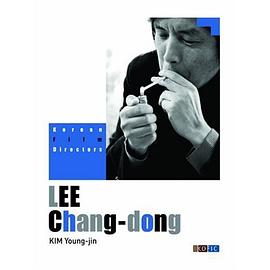
Born in Seoul in 1922, Kim Ki-young graduated from the Dentistry School of Seoul National University. After working both as a performer and as director his own performances, he debuted as a film director in 1955 with “The Box of Death.” This was followed by more than 30 film works, including “The Housemaid” (1960), “The Sea Knows” (1961), “Woman of Fire” (1971) and “Chungnyeo” (1972). A retrospective session of Kim’s works was prepared for the 2nd Pusan International Film Festival, and with this event his unique works were rediscovered. Later, Kim’s works gained a new group of exuberant fans from Japan, US, Germany, France, and many other places. Kim was preparing for a new movie when he passed away with his wife in 1998 in a house fire. After his death, Berlin International Film Festival held a retrospective event in his honor, while France’s Cinematheque screened 18 of his works. Part of Kim’s lost films were rediscovered and restored in 2006.
Korean Cinema’s Shadow Sculptors: Exploring the Uncharted Territories of Early Post-War Directors This volume delves into the vibrant, often turbulent, landscape of South Korean cinema during the crucial decades immediately following the Korean War (1950-1953). Moving beyond the established canons and the celebrated names that have dominated international retrospectives, this collection of essays and critical studies shines a focused light on the directors whose work laid the foundational bedrock for modern Korean visual storytelling, yet whose contributions remain tragically under-examined by contemporary scholarship. The period spanning the mid-1950s through the 1970s was a time of profound social upheaval, rapid modernization, and increasingly stringent government censorship. Directors operating under these volatile conditions were forced to navigate complex ethical and artistic compromises. This book seeks to recover the artistic integrity and thematic daring exhibited by these cinematic pioneers, often working with limited resources and under the pervasive threat of political interference. The thematic structure of this study is organized around three core areas: the negotiation of national identity amidst geopolitical division, the exploration of emerging urban alienation, and the stylistic innovations forged in response to technological and material constraints. Part I: Ghosts of Division and the Search for Self (1955-1965) This section critically examines the immediate cinematic aftermath of the armistice. Directors during this phase often grappled with the psychological scarring of the conflict, frequently manifesting in allegorical narratives rather than direct political commentary, a necessary strategic maneuver to bypass the censors. We move away from the standard focus on reunification tropes to investigate how individual subjectivity was portrayed in the shattered landscape. The Aesthetics of Scarcity: Several chapters meticulously analyze the stylistic choices born out of material poverty. How did directors like Shin Sang-ok (in his lesser-known early works, distinct from his later, more polished productions) and emerging talents utilize deep-focus photography and naturalistic lighting not merely as budgetary necessities but as potent narrative devices reflecting societal decay? We explore the use of long takes and minimal editing in early melodramas to underscore the inescapable nature of post-war trauma. Melodrama as Social Critique: The prevalent genre of melodrama during this decade is re-evaluated not as escapist fare, but as a coded language for expressing dissatisfaction with the nascent authoritarian state. Specific attention is paid to how female protagonists—often victims of patriarchal structures exacerbated by war—became proxies for the wounded nation, their personal tragedies mirroring the collective historical wound. Directors such as Lee Man-hee (beyond his well-known, albeit brief, filmography) are examined for their subversive use of romantic yearning to critique social hypocrisy. Genre Transformation: The introduction of new hybrid genres—the historical epic tempered by documentary realism, and the "sensibility film"—is traced. We map the shift from overt propaganda themes to narratives focusing on the struggle of the common laborer or the intellectual adrift in a newly capitalist, yet deeply unequal, society. Part II: Urban Sprawl and the Shifting Gaze (1965-1975) As Seoul rapidly industrialized, the cinema responded to the jarring contrast between rapid economic modernization and persistent social inequity. This section focuses on directors who began turning their cameras toward the sprawling urban environment, capturing the anxiety of displacement and the fragmentation of traditional community structures. The Architecture of Anxiety: A detailed visual analysis is provided for directors who utilized the emerging concrete landscape of Seoul as a character itself. We explore how framing devices—cramped interiors, endless stairwells, and crowded alleyways—created a visual vocabulary for alienation. This analysis draws comparisons between the emerging realism of Korean directors and concurrent international movements focusing on urban alienation, highlighting the unique pressures faced by Korean filmmakers operating under the Yushin Constitution. The Rise of the Outsider Figure: This study tracks the proliferation of anti-heroes and marginalized figures—the disillusioned student, the struggling artist, the petty criminal—in narratives of the late 1960s. Unlike later, more overtly political films, the critique here is often psychological and existential, focusing on the impossibility of achieving the promised "modern dream." Directors whose work exemplified this trend, often relegated to B-movie status during their active years, are given extensive critical review, focusing on their subtle resistance to homogenization. The Influence of Japanese and Hong Kong Cinema: We assess the complex and often fraught artistic dialogue between contemporary Korean filmmaking and its regional neighbors. How did directors selectively absorb stylistic elements from Japanese New Wave or Hong Kong martial arts films, filtering them through a distinctly Korean socio-political lens? This section deconstructs instances where commercial viability necessitated stylistic borrowing, while thematic core remained stubbornly local. Part III: Stylistic Endurance and Archival Recovery The final section addresses the practical challenges of studying these directors today: the scarcity of archival prints, the destruction caused by political purges, and the historical tendency of critics to favor later, internationally recognized auteurs. Restoration and Rediscovery: This section features case studies of recent efforts to locate, restore, and re-evaluate the surviving works of key figures whose careers were tragically cut short or whose films were suppressed. By examining surviving fragments, production notes, and contemporary reviews, we attempt to reconstruct the full scope of their artistic intent. Challenging the Narrative of Progress: Ultimately, this book argues against a teleological view of Korean film history, one that sees the 1980s and 1990s as the inevitable 'arrival' point. Instead, it posits that the formal experimentation, thematic depth, and ethical rigor displayed by these earlier directors constitute an essential, vibrant, and often overlooked chapter in the nation's cinematic saga. Their endurance under duress offers crucial lessons for contemporary artists navigating pressures of globalization and commercial expectation. This volume is essential reading for scholars of East Asian cinema, film historians, and cinephiles interested in understanding the deep roots of South Korea’s celebrated cinematic heritage. It aims not merely to catalogue lost works, but to resurrect the artistic dialogue forged in the crucible of post-war necessity.