
具体描述
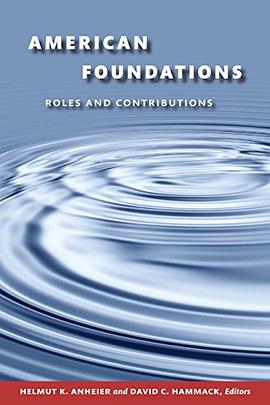
Foundations play an essential part in the philanthropic activity that defines so much of American life. No other nation provides its foundations with so much autonomy and freedom of action as does the United States. Liberated both from the daily discipline of the market and from direct control by government, American foundations understandably attract great attention. As David Hammack and Helmut Anheier note in this volume, Americans have criticized foundations for…their alleged conservatism, liberalism, elitism, radicalism, devotion to religious tradition, hostility to religion—in short, for commitments to causes whose significance can be measured, in part, by the controversies they provoke. Americans have also criticized foundations for ineffectiveness and even foolishness.
Their size alone conveys some sense of the significance of American foundations, whose assets amounted to over $530 billion in 2008 despite a dramatic decline of almost 22 percent in the previous year. And in 2008 foundation grants totaled over $45 billion.
But what roles have foundations actually played over time, and what distinctive roles do they fill today? How have they shaped American society, how much difference do they make? What roles are foundations likely to play in the future?
This comprehensive volume, the product of a three-year project supported by the Aspen Institute s program on the Nonprofit Sector and Philanthropy, provides the most thorough effort ever to assess the impact and significance of the nation s large foundations. In it, leading researchers explore how foundations have shaped—or failed to shape—each of the key fields of foundation work. American Foundations takes the reader on a wide-ranging tour, evaluating foundation efforts in education, scientific and medical research, health care, social welfare, international relations, arts and culture, religion, and social change.
作者简介
Helmut K. Anheier is dean of the Hertie School of Governance, Berlin, academic director of the Center for Social Investment at Heidelberg University, and professor of public policy and social welfare at UCLA. He was previously a Centennial Professor at the London School of Economics, and a researcher at Johns Hopkins University. His publications include Creative Philanthropy, written with Diana Leat (Routledge, 2006) and Nonprofit Organizations (Routledge, 2010).
David C. Hammack is Hiram C. Haydn Professor of History at Case Western Reserve University, where he is also a leader of the Faculty Council of the Mandel Center for Nonprofit Organizations. He is past president of the Association for Research on Nonprofit Organizations and Voluntary Action. His books include Globalization, Philanthropy, and Civil Society, edited with Steven Heydemann (Indiana, 2009) and Making the Nonprofit Sector in the United States (Indiana, 2000).
目录信息
读后感
用户评价
我喜欢这本书传递出的一种独特的、近乎于“探秘”的兴奋感。作者仿佛是一位经验丰富的考古学家,小心翼翼地拂去历史的尘土,向我们展示那些被时间掩盖的、塑造了我们今天所呼吸的空气的原始结构。它对早期思想家们在面对未知世界时所表现出的那种混合着恐惧、希望与无畏的实验精神的描绘,尤其让我动容。那种在信息匮乏的条件下,仅凭理性和初步观察就敢于构建全新社会蓝图的勇气,是令人心潮澎湃的。这本书的行文风格中带有一种深沉的敬意,是对人类求知欲和创造力的致敬,但绝不盲从。它引导我们以批判性的眼光去看待这些“奠基石”,去辨识其中哪些是坚固的,哪些是需要我们在当代继续修正和完善的。读完,我感觉自己对我们这个世界的根基有了一种全新的、更加负责任的认识,知道我们继承的不仅是成就,还有那些未竟的、需要我们继续努力去完善的“基础”工作。
评分这本书的叙事节奏简直让人欲罢不能,仿佛身处一条湍急的河流之中,作者巧妙地将历史的碎片如同打捞起的珍宝般呈现在我们面前,每一块都闪烁着独特的光芒。它并非那种枯燥的教科书式陈述,而是充满了鲜活的生命力和引人入胜的故事性。我尤其欣赏作者对于人物塑造的细腻笔触,那些塑造了我们现代世界的先驱者们,不再是冰冷的名字,而是有了血肉、有了挣扎、有了伟大的远见。阅读过程中,我时常会停下来,沉思那些看似微不足道的决定是如何最终汇聚成一股不可阻挡的历史洪流,深刻地改变了人类文明的航向。文字的张力拿捏得恰到好处,既有史诗般的宏大叙事,又不失对个体命运的深切关怀。读完之后,我感觉自己对“基础”这个概念有了全新的认识,它远比我想象的要复杂、要充满矛盾与张力,是一场持续不断的、充满激情的构建过程。这本书无疑为我对那个时代的理解打开了一扇全新的窗户,视野为之开阔,思维也随之活跃起来。
评分这本书的结构编排简直是大师级的。它没有采用线性叙事的老套路,而是像一个精密的万花筒,从不同的角度和时间切片审视着那些奠定了我们现代世界观的根本性原则。每一个章节的过渡都如行云流水般自然,仿佛不同的声音和视角正在进行一场精彩的对话,共同构建起一个宏大而多维的图景。我发现自己不断地在不同历史阶段之间穿梭,体验着思想的演变、社会契约的重塑,以及那些关于自由、秩序和人性的永恒辩论是如何一步步被具体化为制度和法律的。这种非线性的叙事反而增强了对“基础”这一概念的动态理解——它不是一个静止的时刻,而是一个持续发酵、不断被重新诠释的过程。作者的知识广度和跨学科视野令人印象深刻,将政治理论、经济思想乃至早期科学探索巧妙地编织在一起,构成了一幅既具历史厚度又充满思想活力的画卷。
评分这绝不是一本可以“快速浏览”的书籍,它要求读者投入时间,去品味那些深埋在文字之下的思想矿藏。我不得不承认,某些涉及早期法律概念和哲学思辨的段落,我需要反复阅读才能真正领悟其精髓,但这并非因为作者表达不清,而是因为他们所探讨的主题本身就具有巨大的认知挑战性。然而,每一次需要放慢脚步去理解的地方,最终都带来了丰厚的回报——一种对既有认知的冲击和重塑。它迫使你质疑那些你习以为常的假设,去探究那些被我们视为“理所当然”的社会组织方式,其最初的、有时甚至是混乱的起源。这本书的价值在于,它不仅仅是回顾历史,更像是一份对当代社会病灶的深度诊断,通过追溯病灶的源头,才能更有效地理解其运作机制。阅读它,更像是一次智力上的攀登,虽然辛苦,但登顶后的视野绝对值得。
评分坦白说,起初我有些担心这类主题会显得过于学术化,充满晦涩难懂的术语和冗长的脚注,但这本书完全颠覆了我的预期。作者的语言风格极其优雅且富有洞察力,像一位技艺精湛的工匠,用最精妙的工具雕琢着复杂的历史纹理。它探讨的那些核心思想和哲学基础,往往是以一种极其平易近人、却又不失深刻内涵的方式呈现出来的。我特别喜欢它处理冲突和张力的方式——它没有简单地将历史人物描绘成非黑即白的神祇或恶魔,而是展现了他们在特定历史语境下所做的艰难抉择,那些充满灰色地带的伦理困境和政治博弈,才真正构成了我们今天所继承的遗产。这种对复杂性的坦诚接纳,让整个阅读体验变得极为充实和令人信服。对于任何想要深入理解现代社会结构是如何从那些最初的、充满理想主义又饱含实用主义的努力中生长出来的读者来说,这本书提供了一个极其坚实且引人深思的基石。
评分 评分 评分 评分 评分