
具体描述
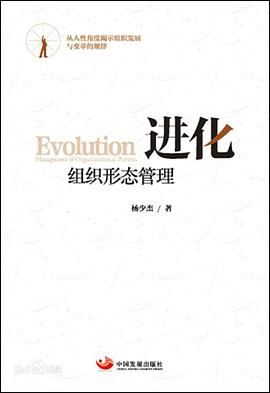
本书是企业管理类图书,从人性角度揭示组织发展与变革规律的创新性管理理念,主要从组织形态角度探索组织的进化规律,分析生态、组织、人三者之间的关系,描述组织形态的进化线路图,并提出一套企业形态分析的方法论,对目前新形势下的中国企业改革具有现实指导意义。
作者简介
杨少杰,第一位系统研究组织形态管理的独立学者,组织形态管理理论、企业形态进化规律的提出者。
咨询公司合伙人,资深管理咨询顾问,为多家企业担任变革指导顾问。
作者拥有多年的管理咨询实践经验,为大量不同类型的经济组织提供过战略规划、公司治理、组织设计、集团管控、流程型组织、人力资源管理、财务管理、营销管理、供应链管理、企业文化等领域的咨询服务,通过对这些经济组织管理问题的研究,发现了组织形态的演变规律,在此基础上提出了组织形态管理理论,希望能够从组织形态进化的角度把握组织发展规律,为中国经济转型、企业变革提供理论依据。
目录信息
第一节 人性——人类的价值属性
一、人性的三个维度
二、两只“无形之手”
三、创造价值的能力
四、价值如何体现
五、价值何所“求”
第二节 生态——人性的价值系统
一、经济生态发展规律
二、产业是最小的经济生态
三、企业组织是一个物种
四、生态、组织、人
第三节 组织——组织的人性特征
一、组织的生命特征
二、人格、独立人格、独特人格
三、法律率先赋予人格
四、首先追求独立人格
第四节 组织形态——管理新视角
一、组织管理新视角
二、结构构成形态
三、十类结构构成企业形态
四、形变始于结构改变
五、改变是对传统的挑战
第五节 企业形态进化规律
一、企业时空形态变化
一、四种典型企业形态
三、企业形态进化历程
四、企业形态进化规律
五、组织形态的价值定位
六、西方管理理论支持
七、理论与实践脱节
第六节 组织形态进化动力
一、外因:市场生态系统改变
二、内因:价值创造能力改变
三、两种进化方式
四、变革最终是变形
第七节 组织形态管理
一、管理的三大原则
二、管理的四种属性
三、管理的四组关系
四、价值平衡管理卡
第2章 进化:10S演变历程(上)
第一节 价值创造能力结构的演变
一、价值创造能力结构演变规律
二、资本与独特资源结合
三、职能与领导力结合
四、需求与创新力结合
五、价值与独特人格结合
六、价值创造能力体现人性
第二节 股权结构的演变
一、股权结构演变规律
二、股东人格就是企业人格
三、两权分离导致双重人格
四、股权分散获得独立人格
五、无形资本塑造独特人格
六、自由资本天性逐利
七、资本的历史使命
第三节 组织结构的演变
一、组织结构演变规律
二、直线型是股东首选
三、职能型离不开精英
四、事业部是巅峰状态
五、矩阵型是过渡形式
六、流程型是颠覆传统
七、网络状是万法归宗
八、业务流程即是结构
九、结构稳定如何实现
第四节 价值单元结构的演变
一、价值单元结构演变规律
二、集体共同创造价值
三、分工协作创造价值
四、独立统一创造价值
五、即时组合创造价值
六、一只“有形之手”
七、价值从何而来
第五节 管理基础结构的演变
一、管理基础结构演变规律
二、以工作为基础的指令性管理
三、以职位为基础的标准化管理
四、以能力为基础的满意度管理
五、以人格为基础的个性化管理
六、从薪酬理念看管理基础结构演变
第3章 进化:10S演变历程(下)
第一节 人才结构的演变
一、人才结构演变规律
二、花瓶形人才结构
三、钻石形人才结构
四、橄榄形人才结构
五、圆球形人才结构
六、从人才标准看人才结构演变
第二节 客户结构的演变
一、客户结构演变规律
二、被独特资源吸引的客户
三、需求稳定且重要的客户
四、需求发散且多变的客户
五、被独特人格吸引的客户
六、产业生态发展与企业价值定位
第三节 产品结构的演变
一、产品结构演变规律
二、简单化成熟型产品
三、专业化标准化产品
四、多元化创新型产品
五、定制型个性化产品
六、质量管理理念演变
七、从波士顿矩阵看产品结构演变
第四节 文化结构的演变
一、文化结构的演变规律一
二、以收益为核心的资本文化
三、以业绩为核心的精英文化
四、以创新为核心的客户文化
五、以人格为核心的价值文化
六、塑造文化也是塑造人性
七、何谓“以人为本”
第五节 治理结构的演变
一、治理结构演变规律
二、股东价值优先
三、精英价值优先
四、客户价值优先
五、价值平等原则
六、维护价值平衡形态
七、董事会角色演变
八、权力治理模式演变
第4章 活化石:杜邦传奇
一、第一个百年——股东价值形态
二、第二个百年——精英价值形态
三、第三个百年——客户价值形态
四、展望未来
第5章现代启示录
一、企业危机路线图
二、第一次发展瓶颈
三、第二次发展瓶颈
四、面对历史转折点
后记:何谓“道”?
· · · · · · (收起)
读后感
用户评价
从书名《进化:组织形态管理》来看,我猜想这本书的核心会探讨组织生命体的生长、演变与自我调整机制。我非常期待作者能够深入剖析“形态”这个概念在组织学上的具体含义。它可能不仅仅指代的是组织架构的固化模式,也可能涵盖了信息流动的网络、决策机制的演变、乃至组织文化的深层烙印。更重要的是,我希望作者能将“进化”这一生物学上的宏大理论,巧妙地嫁接到企业管理实践中。这意味着,这本书可能不会仅仅停留在理论的层面,而是会提供一套观察和干预组织变迁的分析工具。我设想其中可能会涉及达尔文的自然选择理论,但应用于组织层面,将是怎样的淘汰机制?又是怎样的“适应性优势”能够让一个组织在激烈的市场竞争中脱颖而出,甚至实现跨越式发展?我对于书中是否会引用具体的企业案例来佐证其观点非常感兴趣。例如,那些曾经濒临绝境却浴火重生的公司,或是那些在新兴领域迅速崛起的“独角兽”企业,它们在“形态”的演变过程中,又经历了怎样的“自然选择”?我希望能从这本书中获得启发,理解如何在不确定的未来中,为组织注入内在的生命力,使其能够不断优化自身的“形态”,以应对层出不穷的挑战。
评分The title, "Evolution: Organizational Morphology Management," immediately conjures images of biological systems adapting to their environments, and I expect this book will apply similar principles to the world of business and organizations. I’m curious about the author’s definition of “morphology” in this context. Does it refer to the physical layout of an office, the flow of communication, the hierarchical structure, or perhaps a more abstract conceptual framework? The term “evolution” suggests a temporal dimension, implying that organizations are not static entities but are constantly undergoing change. I anticipate the book will explore the drivers of this change, whether they be internal innovations, external market pressures, or societal shifts. The “management” aspect implies that the author will offer practical guidance on how to navigate this evolutionary process. I’m particularly interested in whether the book will discuss strategies for fostering adaptability, resilience, and long-term sustainability within organizations. Will it offer insights into how to identify and leverage emerging trends, or how to shed outdated structures and processes that hinder progress? I hope to gain a deeper understanding of how to cultivate a thriving organizational ecosystem that can effectively adapt to the challenges and opportunities of the future.
评分The very notion of "Evolution: Organizational Morphology Management" sparks my imagination regarding the dynamic and adaptive nature of modern enterprises. I anticipate the book will move beyond static organizational charts and delve into the fluid, almost living, processes that define a company's existence and success. The term "morphology" is particularly intriguing, suggesting a focus on the form and structure, but in a way that acknowledges its susceptibility to change and adaptation. I'm eager to see if the author will explore how environmental pressures, technological advancements, and shifting market demands necessitate transformations in an organization's "morphology." Will there be a discussion on emergent properties, where the collective behavior of individual parts leads to something greater than the sum of its components? The "management" aspect implies a prescriptive element, offering strategies and frameworks to guide this evolutionary process. I'm particularly interested in understanding how organizations can proactively cultivate a culture of continuous improvement and innovation, rather than merely reacting to external stimuli. Will the book provide actionable advice on fostering agility, building resilience, and ensuring long-term sustainability? I hope to gain a deeper appreciation for the interconnectedness of strategy, structure, culture, and leadership in driving successful organizational evolution.
评分这部书的书名《进化:组织形态管理》让我联想到,作者很可能在探索一种超越传统管理理论的视角。我猜想,这本书会把组织比作一个有生命的有机体,强调其在生长、发展过程中必然经历的“进化”过程。这里的“形态”二字,我觉得可能不仅仅是指组织的外部结构,比如部门设置、层级关系,更可能深入到组织内部的运作模式、信息传递的路径、决策的逻辑,甚至是一种无形的“组织基因”。而“管理”则意味着,作者并非只是观察和描述,而是会提供一种指导性的方法论,帮助管理者理解和引导组织的进化方向。我非常期待书中能阐述,究竟是什么样的外部环境变化(比如技术革新、市场格局重塑)会迫使组织进行“形态”上的调整。同时,我也想知道,在组织的“进化”过程中,哪些因素是推动其适应性增强的关键,又有哪些是可能导致其停滞甚至灭亡的“进化陷阱”。这本书或许会提供一些关于如何构建一个能够自我更新、自我优化的组织系统的思路,让组织能够更好地适应未来不可预测的变化,实现可持续的繁荣。
评分这本书的封面设计给我留下了深刻的第一印象,那种深邃的蓝色调,搭配上抽象的、仿佛正在生长的图形,immediately evokes a sense of complexity and organic evolution. It suggests a journey into the fundamental principles that govern how entities, be they biological or organizational, adapt and transform over time. I anticipate that the author will delve into the intricacies of systems thinking, exploring how individual components interact to create a cohesive whole, and how external pressures drive internal changes. The "组织形态管理" part of the title hints at a practical application, a framework for understanding and perhaps even influencing these evolutionary processes within a corporate or societal context. I'm particularly curious about the author's approach to defining what constitutes a "形态" (form/morphology) in the context of organizations. Is it a rigid structure, a fluid network, or something more abstract? Will the book offer case studies or theoretical models to illustrate these concepts? The promise of exploring "进化" (evolution) suggests a longitudinal perspective, examining how organizations change not just in response to immediate challenges, but also in alignment with broader, long-term trends. I’m hoping for insights into how to foster resilience, innovation, and sustainable growth in an ever-changing landscape. The title itself is a powerful invitation to ponder the very nature of existence and adaptation in the modern world.
评分目前读过最系统、完善的组织管理理论书籍,包括国外著作。
评分不错👍
评分作者研究深刻,不愧为行业内知名学者!本书不但诠释了社会的发展导向,还从组织的形态、领导层的视角、企业雇员的视角和个人人格的变化的视角共同出发,给读者淋淋尽致的展现了资本主义的生态及背后的原理逻辑。
评分客观,且适用于中国企业。自己的很多认知读后都有更新。降维打法没有错,错的是无法面对真实的自己。
评分读完《进化 组织形态管理》犹如醍醐灌顶,而不能寐。