
具体描述
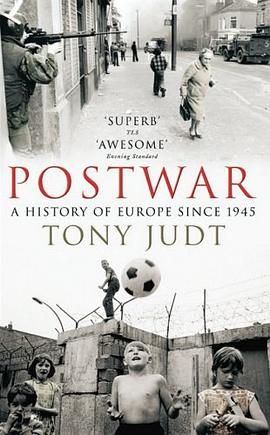
Almost a decade in the making, this much-anticipated grand history of postwar Europe from one of the world's most esteemed historians and intellectuals is a singular achievement. Postwar is the first modern history that covers all of Europe, both east and west, drawing on research in six languages to sweep readers through thirty-four nations and sixty years of political and cultural change-all in one integrated, enthralling narrative. Both intellectually ambitious and compelling to read, thrilling in its scope and delightful in its small details, Postwar is a rare joy.
Finalist for the Pulitzer Prize
Winner of the Council on Foreign Relations Arthur Ross Book Award
One of the New York Times' Ten Best Books of the Year
作者简介
Born in 1948, Tony Judt was raised in the East End of London by a mother whose parents had immigrated from Russia and a Belgian father who descended from a line of Lithuanian rabbis. Judt was educated at Emanuel School, before receiving a BA (1969) and PhD (1972) in history from the University of Cambridge.
Like many other Jewish parents living in postwar Europe, his mother and father were secular, but they sent him to Hebrew school and steeped him in the Yiddish culture of his grandparents, which Judt says he still thinks of wistfully. Urged on by his parents, Judt enthusiastically waded into the world of Israeli politics at age 15. He helped promote the migration of British Jews to Israel. In 1966, having won an exhibition to King's College Cambridge, he took a gap year and went to work on kibbutz Machanaim. When Nasser expelled UN troops from Sinai in 1967, and Israel mobilized for war, like many European Jews, he volunteered to replace kibbutz members who had been called up. During and in the aftermath of the Six-Day War, he worked as a driver and translator for the Israel Defense Forces.
But during the aftermath of the war, Judt's belief in the Zionist enterprise began to unravel. "I went with this idealistic fantasy of creating a socialist, communitarian country through work," Judt has said. The problem, he began to believe, was that this view was "remarkably unconscious of the people who had been kicked out of the country and were suffering in refugee camps to make this fantasy possible."
Career: King's College, Cambridge, England, fellow, 1972-78; University of California at Berkeley, assistant professor, 1978-80; St. Anne's College, Oxford University, Oxford, England, fellow, 1980-87; New York University, New York, NY, professor of history, 1987--, director of Remarque Institute, 1995--.
Awards: American Council of Learned Societies, fellow, 1980; British Academy Award for Research, 1984; Nuffield Foundation fellow, 1986; Guggenheim fellow, 1989; Pulitzer Prize in general nonfiction finalist, 2006, for Postwar: A History of Europe since 1945.
目录信息
读后感
作者被称为世界50大思想家之一,但是本书读完后的感觉与阅读完一遍高中历史教科书一样,在内容与思想上没有任何突破和独特的观点,只是单纯用史实和数据堆积成的垃圾书,没有一点思想和文学价值。单纯的对高中历史知识的重复,不值得阅读和购买。
评分在过去的五百年里,欧洲一直深深推动和影响着世界其余部分的历史进程,以至于在很长一段时间里,了解在欧洲发生了什么事,即便对中国人来说也近乎一种义务,否则就不免被视为对世界潮流一无所知。这种状况在1945年后受到了冲击,经历两次世界大战的欧洲元气大伤,在新的全球格...
评分翻译并不是非常糟糕,至少大多数时候不影响理解作者大意。不过如果在阅读中看到一些令人困惑的表达,以下这个勘误表或许有用。 此外Piccolomini在底下的更正补充比我随手写出来的更好,各位朋友可以一并参考。 P106 “坎南……强权政治” 应为 "转而接受坎南关于‘势力范...
评分关键词:1945年,二战结束后,年轻的雷蒙德•威廉斯从陆军退役回到了剑桥,继续他之前的学业。虽然只离开了四年时间,但重返校园的经验仍然让他觉得陌生,不习惯,他无法与以前的同学建立正常的联系,他甚至感觉他们讲的不是同样的语言。当然,他们确实在讲述同一种英语,但...
评分载于南方都市报http://gcontent.nddaily.com/1/16/116c57ce18c1d5b3/Blog/ffe/2f5341.html 我父亲在上世纪50年代中期因白内障导致双目接近失明,从外语教师的职务上退休,命令我每天给他念报纸,专读国际新闻。因此,什么“西德复活军国主义”、“美、英、法、苏四大国首脑...
用户评价
这本书最让我震撼的,是它对“环境”的塑造达到了近乎魔幻的程度。我读到的不是简单的背景设定,而是仿佛真的能够闻到那个时代特有的气味,感受到那种凝固在空气中的不安与期待。无论是对城市废墟的描绘,还是对乡村图景的刻画,都具有极强的画面感和沉浸感。作者的文字像一台高清摄像机,捕捉了那些被主流历史叙事忽略的微小角落——一张破旧的布告、一个街角模糊的背影、一段不经意的对话。通过这些看似零散的片段,一个立体、复杂、充满生命力的时代轮廓便缓缓浮现。它成功地将宏大的历史事件“去魅”,还原了它应有的粗粝和日常性,让我感觉自己是那个时代的一个隐形观察者。
评分这本书的叙事视角实在是太妙了,作者仿佛拥有穿梭时空的能力,将我们带回了那个风云变幻的年代。那种宏大叙事的魄力与对个体命运细致入微的刻画,达到了惊人的平衡。读到那些关于重建、关于创伤、关于希望的篇章时,我能真切地感受到文字背后蕴含的巨大情感张力。它不像有些历史著作那样冷峻说教,反而充满了生命的热度与温度,让你在跟随历史洪流的同时,也被那些鲜活的人物深深打动。尤其是在描绘战后社会结构如何缓慢而痛苦地重塑时,作者的笔触细腻得令人心惊,每一个选择、每一次妥协,都折射出那个时代特有的复杂性与无奈。读完后,我感觉自己不仅是了解了一段历史,更是与其共同经历了一场漫长而深刻的洗礼,对“重生”这个词有了全新的理解。那种回味无穷的质感,是很少有作品能给予的。
评分这本书的语言风格,初看之下略显晦涩,但细品之下,却充满了古典的韵味与哲学的深度。作者似乎不满足于简单地讲述故事,他更热衷于探讨存在、记忆与遗忘的本质。那些长句的堆砌,那些看似绕口的修辞,实际上都在为表达一个更宏大、更抽象的概念服务。我常常需要停下来,反复咀嚼某一个段落,就像品鉴一杯陈年的佳酿,初尝可能略带苦涩,但回甘却绵长悠远。它不是那种读完后可以立刻放下,去和朋友谈笑风生的“快餐式”读物,而是需要你沉浸其中,与之进行一场长时间的精神对话。对于那些寻求思想碰撞和语言美感的读者来说,这本书无疑是一座宝库。
评分我必须承认,这本书的阅读体验是极其烧脑的,但绝对是值得的。作者在构建世界观和人物关系网时,展现出了近乎偏执的严谨性与精妙的设计感。那些看似不经意的细节,往往在后半部分爆发出惊人的力量,形成了精巧的闭环结构。这已经超越了一般意义上的文学创作,更像是一部精密的结构主义艺术品。我尤其欣赏作者处理时间线的方式,那种非线性的叙述,迫使读者必须全神贯注地去拼凑完整的图景。刚开始阅读时,我甚至需要频繁地回顾前面的章节来确认人物的身份和事件的先后顺序,但一旦进入状态,那种被作者牵引着探索真相的快感是无与伦比的。它挑战了我们对传统叙事节奏的期待,将阅读变成了一场智力上的探险。
评分从纯粹的“故事性”角度来看,这本书的节奏控制简直堪称教科书级别。虽然主题宏大且沉重,但作者非常懂得如何在高压的氛围中穿插令人屏息的瞬间。那些关于人性弱点与坚韧的描写,描绘得极其真实,让你无法对书中的角色产生丝毫的疏离感。我特别喜欢作者处理冲突的方式,它们不是那种脸谱化的善恶对立,而是深植于时代土壤中的复杂矛盾,往往没有绝对的赢家或输家。例如,某个关键性的转折点,作者用了一种近乎平静的笔调写出,反而激起了我内心更剧烈的波澜,那是一种“山雨欲来风满楼”的预感,让人手心冒汗却又忍不住期待下一页的到来。这种对情绪起伏的精准拿捏,使得阅读过程既紧张又充满期待。
评分我喜欢欧洲华丽的宫廷文化、美好而自由的街景,殊不知这背后还深藏着如此多的政治。Tony Judt是个很好的作家!
评分欧洲史..我拿你怎么办..
评分非常好看的欧洲史,准备读完他所有作品。
评分perfect
评分战后的欧洲也是一段废墟重建的历史。