
具体描述
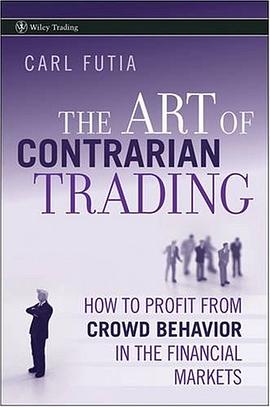
Why is it so hard to beat the market? How can you avoid getting caught in bubbles and crashes? You will find the answers in Carl Futia’s new book, The Art of Contrarian Trading . This book will teach you Futia’s novel method of contrarian trading from the ground up. In 16 chapters filled with facts and many historical examples Futia explains the principles and practice of contrarian trading. Discover the Edge which separates winning speculators from the losers. Find out how to apply the No Free Lunch principle to identify profitable trading methods. Learn about the wisdom and the follies of investment crowds – and how crowds are formed by information cascades that drive stock prices too high or too low relative to fair value. Discover the power of your Media Diary - and how to use it to spot these information cascades, measure the strength of the crowd’s beliefs, and decide when the crowd’s view is about to be proven wrong. You will watch Futia apply these principles of contrarian trading to navigate safely and profitably through the last 26 tumultuous years of roller coaster swings in the U.S. stock market – a time during which Futia kept his own media diary and developed his Grand Strategy of Contrarian Trading. See how this Grand Strategy worked during the Great Bull Market of 1982-2000. Watch the Contrarian Rebalancing technique in practice during the dot.com crash of 2000-2002. Find out when the Aggressive Contrarian Trader bought and sold during the bull market of 2002-2007. Read about the causes of the Panic of 2008 and ups and downs of contrarian trading during that dangerous time. Futia shows you how the market turning points during the 1982-2008 period were foreshadowed by magazine covers and newspaper headlines that astonishingly and consistently encouraged investors to do the wrong thing at the wrong time. By monitoring crowd beliefs revealed by news media headlines – and with the guidance provided by the many historical examples Futia provides – a trader or investor will be well-equipped to anticipate and profit from market turning points.
From the Inside Flap
Contrarian theory in investing and trading is based on the idea that markets are driven in large part by crowd behavior. When crowds form around investing themes in the stock market, they push stock prices too high or too low relative to fair value. Contrarians hold that if investment crowds are responsible for the pricing mistakes made by the stock market, it logically follows that you can do better than buy-and-hold if you can detect those situations in which an investment crowd has driven the stock market too high or too low relative to fair value. The Art of Contrarian Trading shows how to take advantage of the crowd's periodic bouts of enthusiasm and fear, and make wise investment choices that most others may think are ill-advised. Veteran trader Carl Futia explains the contrarian trader's principal tool: his media diary. Since major market turning points are almost always foreshadowed by magazine covers and newspaper headlines that turn out to be completely wrong, by monitoring crowd behavior through both quantitative indicators and news media headlines-and with the hindsight of historical examples-a trader or investor will be well equipped to profit from market turning points. Futia shows specifically how the information contained in a media diary can be interpreted and then coordinated with a statistical view of a market's current and past swings. By looking back at the bull market of 1982–2000, the 2000–2002 bear market, the bull market of 2002–2007, and the crash of 2008, he reveals how his own media diary effectively identified the many valuation mistakes the stock market made during those years. In addition, he explains the development of the theory of contrary opinion, highlights the contrib?utions key individuals made to the theory, briefly discusses several books every contrarian should read, and offers a quick primer on value investing for the contrarian trader. The contrarian trader, says Futia, is not in the business of predicting stock market highs and lows or of making correct forecasts of any kind. Instead, his focus is on a single objective-that of achieving a higher return than that earned by the buy-and-hold strategy. This book will show you how to achieve this elusive goal.
点击链接进入中文版:
股市中的心理学
作者简介
目录信息
读后感
用户评价
这本关于交易的书,实在是让人眼前一亮,它没有落入那些教你如何“追逐热点”或者“紧跟市场”的俗套窠臼。作者的洞察力在于,他深谙市场情绪的周期性,那种人声鼎沸时的盲目乐观,往往是反向操作的最佳时机。我特别欣赏书中对于“逆向思维”的哲学层面的探讨,它不仅仅是一套机械的买卖规则,更像是一种心智模式的重塑。阅读过程中,我不断反思自己过去交易中的非理性冲动,那些因为害怕错过(FOMO)而做出的仓促决定,现在看来是多么可笑。书里强调的“孤独的正确”,需要极强的心理素质来支撑,这比单纯的技术分析要困难得多。作者用了不少篇幅来剖析那些被市场主流观点排斥的资产类别,以及它们在特定经济环境下的价值重估过程。书中对历史案例的引用非常精准,没有那种为举例而举例的牵强感,而是每一次都恰到好处地印证了核心论点。它教会我的不是如何预测明天,而是如何在市场普遍预期形成时,冷静地审视被忽视的风险与机遇。这本书更像是一剂清醒剂,让你在市场狂热时,强迫自己后退一步,问一句:“如果所有人都错了呢?” 这种由内而外的转变,是任何短期策略都无法比拟的深度价值。
评分坦白说,我拿起这本书的时候,内心是有些抵触的,因为“逆向”这个词汇在金融圈已经被过度使用,很多书籍只是把“低买高卖”包装得花哨一些。然而,这本书的处理方式完全不同,它侧重于构建一个坚不可摧的决策框架,这个框架建立在对“群体心理学”的深刻理解之上。作者的叙事节奏非常沉稳,没有那种煽动性的语言,更多的是一种冷静、近乎学术的分析。我尤其喜欢其中关于“确认偏误”如何扼杀交易者潜能的章节,它详细描述了大脑如何倾向于寻找支持自己已有观点的证据,从而让自己陷在错误的交易中无法自拔。书中详细阐述了如何通过构建“反向检验清单”来系统性地对抗这种偏误。这使得“逆向交易”从一种感觉变成了一种可执行的流程。对我个人而言,最大的收获在于风险管理部分,作者将风险定义为“对市场共识的过度依赖”,这个角度非常新颖。他提出的分散化策略不是简单的资产配置,而是“观点分散化”,确保你的组合中存在与主流情绪对立的声音。读完这本书,我感觉自己不再是市场情绪的奴隶,而是一个有能力在噪音中捕捉信号的观察者。
评分这本书最让我感到震撼的,是它对“耐心”这一品质的重新定义。在如今这个追求即时反馈的时代,耐心往往被误解为漫长的等待,而作者将其阐释为一种主动的、有目的性的市场等待——等待市场犯下足够大的错误,让你有能力去利用它。书中详细描述了如何识别市场达到“过度自信”的临界点,以及在那个点位上,应该采取何种程度的仓位和风险敞口。它不是告诉你“什么时候买入”,而是告诉你“市场什么时候会准备好让你做对的事情”。这种对时机的把握,超越了简单的技术形态突破。我尤其欣赏作者在讨论流动性和市场深度时,所展现出的老派金融家的严谨态度,他强调在流动性枯竭时,再好的策略也可能因为无法执行而失效。这提醒了我,交易世界里,现实操作层面的限制,往往比理论模型更重要。这本书提供了一种扎实且反直觉的框架,让我在面对市场噪音时,能够坚定地执行自己的反向逻辑,而不是被市场的喧嚣所裹挟。
评分这本书的文字功底令人赞叹,它不像一本硬邦邦的金融教科书,更像是一部深入探讨人性弱点的哲学著作,只是载体恰好是金融市场。作者的文笔优雅而富有力量,遣词造句之间,流露出对市场运行规律的深刻体悟。比如,他对“共识陷阱”的描述,简直是教科书级别的精准:当一个观点变得如此普及,以至于连最保守的投资者都开始采纳时,它就已经失去了作为交易优势的价值。这种对市场“共谋”的剖析,极大地拓宽了我的视野。书中对技术分析的态度也十分成熟,它并非全盘否定技术指标,而是将其视为市场情绪的表象,而非驱动力。真正的驱动力,永远是那些隐藏在价格曲线背后的贪婪和恐惧。我花了大量时间在那些关于“周期性错位”的章节上,作者如何将宏观经济的长期趋势与微观交易的短期波动巧妙地结合起来,形成了一个多层次的分析体系。这种跨越时间维度的思考能力,是我过去在其他交易书籍中很少看到的。它要求读者不仅要看图表,更要看历史和人性。
评分阅读体验上,这本书的结构设计非常巧妙,它循序渐进地引导读者从一个迷信指标的散户,成长为一个能够独立思考的市场参与者。开篇并没有急于给出“秘诀”,而是先建立了对市场“普遍正确性”的怀疑基础。这一点极其重要,因为很多交易者在学习新方法时,总是急于寻找一个“万灵药”。这本书的魅力在于,它让你明白,真正的优势是难以获取且需要付出代价(通常是心理上的孤独和承受短期浮亏的压力)的。书中关于“信息不对称”的探讨也很有启发性,作者认为,最有利的信息不是那些被公开报道的数据,而是那些尚未被主流市场充分消化的、尚未反映在价格中的“不合时宜”的真相。这种对信息价值的重新定义,极大地改变了我筛选新闻和研究报告的方式。它不再是去寻找“利好消息”,而是去寻找“为什么这个利好消息没有被充分定价”的原因。总而言之,这是一本需要反复阅读的书籍,每次重温,都会在不同的心境下,品味出新的层次和更深的含义。
评分不错的一本书,它令我对股市经历较长时期的牛市(熊市)后报刊杂志的头条或封面文章的反向指标的特性有了更深的印象.另外该书最后还对一些作者觉得对自己很有用的相关书籍做了简介,没准可以也找来读读
评分制作媒体日记这个办法不错。
评分不错的一本书,它令我对股市经历较长时期的牛市(熊市)后报刊杂志的头条或封面文章的反向指标的特性有了更深的印象.另外该书最后还对一些作者觉得对自己很有用的相关书籍做了简介,没准可以也找来读读
评分不错的一本书,它令我对股市经历较长时期的牛市(熊市)后报刊杂志的头条或封面文章的反向指标的特性有了更深的印象.另外该书最后还对一些作者觉得对自己很有用的相关书籍做了简介,没准可以也找来读读
评分不错的一本书,它令我对股市经历较长时期的牛市(熊市)后报刊杂志的头条或封面文章的反向指标的特性有了更深的印象.另外该书最后还对一些作者觉得对自己很有用的相关书籍做了简介,没准可以也找来读读