
具体描述
In high school, I wondered whether the Jamaican Americans who made our track team so successful might carry some special speed gene from their tiny island. In college, I ran against Kenyans, and wondered whether endurance genes might have traveled with them from East Africa. At the same time, I began to notice that a training group on my team could consist of five men who run next to one another, stride for stride, day after day, and nonetheless turn out five entirely different runners. How could this be?
We all knew a star athlete in high school. The one who made it look so easy. He was the starting quarterback and shortstop; she was the all-state point guard and high-jumper. Naturals. Or were they?
The debate is as old as physical competition. Are stars like Usain Bolt, Michael Phelps, and Serena Williams genetic freaks put on Earth to dominate their respective sports? Or are they simply normal people who overcame their biological limits through sheer force of will and obsessive training?
The truth is far messier than a simple dichotomy between nature and nurture. In the decade since the sequencing of the human genome, researchers have slowly begun to uncover how the relationship between biological endowments and a competitor’s training environment affects athleticism. Sports scientists have gradually entered the era of modern genetic research.
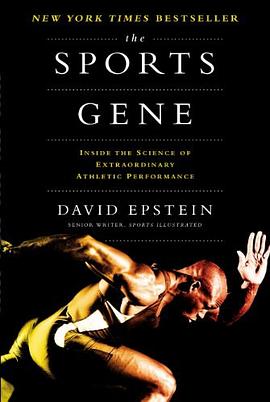
In this controversial and engaging exploration of athletic success, Sports Illustrated senior writer David Epstein tackles the great nature vs. nurture debate and traces how far science has come in solving this great riddle. He investigates the so-called 10,000-hour rule to uncover whether rigorous and consistent practice from a young age is the only route to athletic excellence.
Along the way, Epstein dispels many of our perceptions about why top athletes excel. He shows why some skills that we assume are innate, like the bullet-fast reactions of a baseball or cricket batter, are not, and why other characteristics that we assume are entirely voluntary, like an athlete’s will to train, might in fact have important genetic components.
This subject necessarily involves digging deep into sensitive topics like race and gender. Epstein explores controversial questions such as: Are black athletes genetically predetermined to dominate both sprinting and distance running, and are their abilities influenced by Africa’s geography? Are there genetic reasons to separate male and female athletes in competition? Should we test the genes of young children to determine if they are destined for stardom? Can genetic testing determine who is at risk of injury, brain damage, or even death on the field? Through on-the-ground reporting from below the equator and above the Arctic Circle, revealing conversations with leading scientists and Olympic champions, and interviews with athletes who have rare genetic mutations or physical traits, Epstein forces us to rethink the very nature of athleticism.
作者简介
David Epstein has a master’s degree in environmental science and is an award-winning senior writer for Sports Illustrated, where he covers sports science, medicine, and Olympic sports. His investigative pieces are among Sports Illustrated's most high-profile stories. An avid runner himself, he earned All-East honors on Columbia University's varsity track squad. This is his first book. He lives in Brooklyn.
目录信息
读后感
比较奇怪,这本书在Amazon好评如流,国内却没什么人读 “以大多数人努力程度之低,还远未到拼天赋的地步” —— 这是知乎里很流行的一句话。我还记得刚开始知道“10000小时”时,确实有种“震撼”的感觉,发现原来要变得出色,不需要那么多的天赋,自己努力就行 可读了这本书,...
评分比较奇怪,这本书在Amazon好评如流,国内却没什么人读 “以大多数人努力程度之低,还远未到拼天赋的地步” —— 这是知乎里很流行的一句话。我还记得刚开始知道“10000小时”时,确实有种“震撼”的感觉,发现原来要变得出色,不需要那么多的天赋,自己努力就行 可读了这本书,...
评分比较奇怪,这本书在Amazon好评如流,国内却没什么人读 “以大多数人努力程度之低,还远未到拼天赋的地步” —— 这是知乎里很流行的一句话。我还记得刚开始知道“10000小时”时,确实有种“震撼”的感觉,发现原来要变得出色,不需要那么多的天赋,自己努力就行 可读了这本书,...
评分比较奇怪,这本书在Amazon好评如流,国内却没什么人读 “以大多数人努力程度之低,还远未到拼天赋的地步” —— 这是知乎里很流行的一句话。我还记得刚开始知道“10000小时”时,确实有种“震撼”的感觉,发现原来要变得出色,不需要那么多的天赋,自己努力就行 可读了这本书,...
评分比较奇怪,这本书在Amazon好评如流,国内却没什么人读 “以大多数人努力程度之低,还远未到拼天赋的地步” —— 这是知乎里很流行的一句话。我还记得刚开始知道“10000小时”时,确实有种“震撼”的感觉,发现原来要变得出色,不需要那么多的天赋,自己努力就行 可读了这本书,...
用户评价
这本书的深度远超出了我对一本体育类读物的预期,它更像是一部关于人类演化与选择的社会学著作,只是它的切入点恰好是竞技场上的巅峰表现。作者对“刻意练习”和“先天禀赋”两者之间关系的探讨,提出了许多发人深省的观点。我被其中关于早期环境对神经通路重塑的章节深深吸引,那种精妙的论证过程,仿佛把我带入了一个微观的细胞世界,去观察那些决定了未来速度与耐力的细微变化。更让我感到震撼的是,作者将目光投向了那些未被主流精英体育选中的群体,探讨了那些被社会结构无意中遗漏的“潜力股”。这使得这本书不再仅仅是颂扬成功者,而是对“可能性”本身进行了一次哲学层面的审视。全书的论据支撑非常扎实,引用了大量跨学科的文献,但阅读体验却丝毫不显枯燥,这得益于作者高超的叙事技巧,总能在关键时刻插入引人入胜的个体故事,让冰冷的科学数据瞬间有了温度和生命力。
评分坦白说,我一开始以为这会是一本充斥着“超级运动员基因”这类耸人听闻标题的快餐读物,但事实证明我的预设立场被彻底颠覆了。这本书的智慧之处在于,它将焦点从“谁是最好的”转移到了“如何理解卓越是如何产生的”。作者对不同文化背景下的体育选材机制进行了细致入微的比较分析,这些对比清晰地揭示了,所谓的“天赋”,很大程度上是文化和机遇共同塑造的产物,而不是仅仅被封装在DNA螺旋中的一个固定代码。书中对于现代体育产业化如何进一步固化和放大这种“天赋筛选”的机制的批判,也显得尤为犀利和必要。读完后,我对那些奖牌背后的复杂社会运作有了更深层次的理解,不再仅仅为比赛结果欢呼,而是开始思考整个体系的公平性与可持续性。语言风格上,作者的幽默感和克制感拿捏得恰到好处,使得即便是探讨复杂的遗传学概念时,读者也不会感到被排斥在外。
评分这本书最让我感到震撼的,是它如何将那些宏大的、几近宿命论的“天赋决定论”拆解成一系列可以被理解、甚至在某种程度上可以被管理的微小变量。作者的叙事视角非常独特,他似乎拥有某种“上帝视角”,能够同时观察到个体细胞的运作和全球体育格局的变化。书中关于“训练窗口期”的讨论尤其发人深省,它让我反思了自己年轻时错失的一些机会,同时也对现行教育体系中对儿童体育发展的关注不足感到忧虑。他通过大量详实的案例,构建了一个动态的、流动的“能力图景”,而非僵硬的“能力终点”。这种动态视角极大地拓宽了我对“潜力”这个词的理解。全书的论证过程充满了说服力,即使是对科学背景不甚了解的读者,也能凭借作者清晰的比喻和结构化的论述,轻松跟上他的思路。总而言之,这是一部真正能改变你观察世界、尤其是观察人类成就的著作,它带来的思考价值远超其阅读时间成本。
评分这本书的叙事节奏简直是教科书级别的示范,作者巧妙地在历史的厚重感与现代体育的尖端科技之间搭建了一座令人信服的桥梁。我尤其欣赏他对“天赋”这个概念的解构过程,它不是一个简单的遗传宿命论,而是一个复杂交织的网络,牵扯到社会环境、早期训练的微小差异,甚至是运气这种难以量化的因素。阅读过程中,我常常停下来,去思考自己身边那些运动健将的成长轨迹,试图在他们的成功中寻找作者所描绘的那些隐秘的基因印记。作者的笔触在描述那些突破性时刻时,那种强烈的画面感仿佛能让人闻到跑道上的橡胶味和汗水的气息。这种对细节的执着,使得整本书读起来既有学术研究的严谨性,又不失大众科普的流畅性。他没有回避那些模棱两可的科学发现,而是坦诚地指出目前研究的局限,这种诚实的态度非常加分。书中对不同运动项目中的关键生理指标的对比分析,尤其精彩,展现了人类身体潜能的巨大多样性与可塑性。
评分这本书的结构设计堪称精妙,它如同一个层层剥开的洋葱,每一层都揭示了关于人类运动能力更深一层的秘密。作者没有满足于简单地罗列已知的事实,而是深入挖掘了那些科学界仍在激烈辩论的灰色地带。我印象最深刻的是他对“特定运动的基因表达”那一章节的论述,那种对生理极限的探索精神,令人肃然起敬。他用一系列精彩的案例说明,一个在某个项目中表现平庸的运动员,可能因为转换了运动模式,反而能焕发出惊人的潜力——这有力地证明了基因的表达是情境依赖的。而且,作者在处理伦理问题时展现出的审慎态度,让我非常欣赏。他没有急于给出简单的道德判断,而是引导读者去思考,当我们有能力预测并“优化”下一代的运动潜力时,我们应该如何平衡科技进步与人性的自然发展。这本书的行文流畅,逻辑严密,读起来酣畅淋漓,仿佛完成了一次知识上的长途跋涉。
评分Everything's genetic(脑补Lego movie主题曲
评分没读完。
评分Everything's genetic(脑补Lego movie主题曲
评分#基因vs练习,软件vs硬件,男vs女,黑vs白……到底是什么因素决定了运动成绩?有些人天资优越,有些勤能补拙(trainable),身高不够、臂长来补……基因确实很重要,但似乎每个人都会有自己的发展方式。
评分没读完。