
具体描述
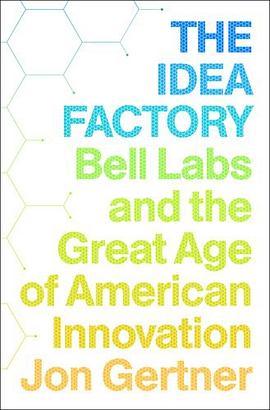
A sweeping, atmospheric history of Bell Labs that highlights its unparalleled role as an incubator of innovation and birthplace of the century's most influential technologies. Bell Laboratories, which thrived from the 1920s to the 1980s, was the most innovative and productive institution of the twentieth century. Long before America's brightest scientific minds began migrating west to Silicon Valley, they flocked to this sylvan campus in the New Jersey suburbs built and funded by AT&T. At its peak, Bell Labs employed nearly fifteen thousand people, twelve hundred of whom had PhDs. Thirteen would go on to win Nobel prizes. It was a citadel of science and scholarship as well as a hotbed of creative thinking. It was, in effect, a factory of ideas whose workings have remained largely hidden until now. "New York Times Magazine" writer Jon Gertner unveils the unique magic of Bell Labs through the eyes and actions of its scientists. These ingenious, often eccentric men would become revolutionaries, and sometimes legends, whether for inventing radio astronomy in their spare time (and on the company's dime), riding unicycles through the corridors, or pioneering the principles that propel today's technology. In these pages, we learn how radar came to be, and lasers, transistors, satellites, mobile phones, and much more. Even more important, Gertner reveals the forces that set off this explosion of creativity. Bell Labs combined the best aspects of the academic and corporate worlds, hiring the brightest and usually the youngest minds, creating a culture and even an architecture that forced employees in different fields to work together, in virtually complete intellectual freedom, with little pressure to create moneymaking innovations. In Gertner's portrait, we come to understand why both researchers and business leaders look to Bell Labs as a model and long to incorporate its magic into their own work. Written with a novelist's gift for pacing and an ability to convey the thrill of innovation, "The Idea Factory" yields a revelatory take on the business of invention. What are the principles of innovation? How do new technology and new ideas begin? Are some environments more favorable than others? How should they be structured, and how should they be governed? Can strokes of genius be accelerated, replicated, standardized? The history of Bell Labs provides crucial answers that can and should be applied today by anyone who wants to understand where good ideas come from.
作者简介
I’m a book author and a contributing writer for the New York Times Magazine, and I tend to describe myself as both a journalist and historian. In addition to the Sunday Magazine, my writing has appeared in the New York Times Book Review, Wired, The New Yorker, The Washington Post, The Wall Street Journal, Technology Review and Fast Company. Usually I write about science, nature, technology, and business. But oftentimes my articles explore the intersections between all those areas. At least to me, that’s where the most interesting things happen.
My first book, The Idea Factory: Bell Labs and the Great Age of American Innovation, was published by Penguin Press in 2012. The Ice at the End of the World, my new book, is being published by Random House and chronicles 150 years of exploration and investigation on the Greenland ice sheet. The book was conceived as a story about ice and the process of scientific discovery; it aims to explain how the work in Greenland, aided by an evolving array of technological tools, has led us to a profound understanding of our current climate crisis. In truth, I like to think the book might be more than that. The story of Greenland’s ice sheet—the world’s largest laboratory—includes hair-raising tales of adventure and frostbite; a cast of characters who suffered misery on an almost unimaginable level; and a number of scientists who perceived in the ice a method to decipher clues to the ancient and future earth. It’s a human saga, in other words, as well as an epic of nature.
I live in New Jersey with my wife and kids. I’m a lifelong New Jersey native, in fact—my father was a medical school professor and my mother taught first grade—and I grew up in the town of Berkeley Heights, not far from where I live now.
目录信息
读后感
《贝尔实验室与美国革新大时代》真的是一本好书。其中谈到一个很有意思的旧闻。 1938年凯利(贝尔实验室研发负责人,负责真空管的核心业务)去拜访他在工作初期一起共事的物理学家戴维森。顺便认识了和他同一间办公室的肖克利(肖克利是贝尔实验室招募进去的,有非常强的学习能...
评分讲述了贝尔实验室的兴与衰。得益于电话刚刚发展起来时大规模、长距离通讯系统的复杂性和脆弱性,AT&T 说服了美国政府让他们能在几十年间保持垄断状态,使得贝尔实验室有充足的资金和自由度去做各种大规模前沿性科研项目,鼎盛时期员工数量达到近三万人,晶体管、微波通讯塔...
评分讲述了贝尔实验室的兴与衰。得益于电话刚刚发展起来时大规模、长距离通讯系统的复杂性和脆弱性,AT&T 说服了美国政府让他们能在几十年间保持垄断状态,使得贝尔实验室有充足的资金和自由度去做各种大规模前沿性科研项目,鼎盛时期员工数量达到近三万人,晶体管、微波通讯塔...
评分《贝尔实验室与美国革新大时代》真的是一本好书。其中谈到一个很有意思的旧闻。 1938年凯利(贝尔实验室研发负责人,负责真空管的核心业务)去拜访他在工作初期一起共事的物理学家戴维森。顺便认识了和他同一间办公室的肖克利(肖克利是贝尔实验室招募进去的,有非常强的学习能...
评分创新有无模式?如果有的话,贝尔实验室的模式是不能绕过的。有如此多的具有革命性的技术产生于此,晶体管,信息论,移动通信,卫星通信,激光。其中的任何一个都对现在的世界有着革命性的影响。 这得从ATT公司的垄断地位说起。垂直方向的结构:贝尔实验室在最底层‘生产’创新...
用户评价
这本书的封面设计就足以吸引我。那是一种复古的、略带神秘感的风格,仿佛预示着一段穿越时空的旅程。书名“The Idea Factory”本身就充满了引人遐想的空间,它让我联想到那些孕育着无数奇思妙想的神秘场所,或是那些将平凡事物转化为惊世之作的创造引擎。我迫不及待地想知道,在这“创意工厂”里,究竟会诞生出怎样令人目眩神迷的故事。它的字体选择、颜色搭配,都透露着一种精心雕琢的艺术感,让人忍不住想去探究它所蕴含的灵魂。每一次翻阅,都像是在拆解一份精致的礼物,期待着里面隐藏的惊喜。我甚至开始想象,作者在构思这本书时,是否也带着类似的心情,一点点地打磨着每一个字句,每一个情节,就像一个技艺精湛的工匠,在自己的“创意工厂”里辛勤劳作。这种对细节的关注,让我对作者的用心程度充满了期待,也让我对即将阅读的内容有了更高的预设。它不仅仅是一本书,更像是一件艺术品,值得细细品味。
评分我一直对那些能够挑战我固有认知,或者提供全新视角的作品情有独钟。这本书的名字“The Idea Factory”恰恰点燃了我内心深处对这种探索的渴望。它暗示着一种颠覆,一种创新,一种突破常规的思维模式。我希望它能像一个智慧的引路人,带领我走进一个充满无限可能性的领域,在那里,想法不仅仅是火花,而是可以被系统化、被规模化生产出来的强大力量。我期待书中能有一些令人拍案叫绝的理论,或者是一些颠覆性的实践案例,能够让我对“创意”这个概念有一个更深刻、更全面的理解。也许,它会揭示一些隐藏在成功创新背后的普遍规律,或者是一些鲜为人知的“创意工业”运作模式。我希望它能为我打开一扇新的窗户,让我看到世界运作的另一种方式,并从中汲取灵感,应用到我自己的生活中。这种对知识和启发的渴求,让我迫切地想要一探究竟。
评分我是一位对历史和文化有着浓厚兴趣的读者,尤其喜欢那些能够挖掘时代精神,展现社会变迁的作品。“The Idea Factory”这个书名,在我看来,不仅仅指向当下的创新,更可以是一种对历史进程中思想火花的汇聚与升华的隐喻。我很好奇,在历史的长河中,究竟是哪些“工厂”孕育了那些影响深远的思想和文化?又是什么样的机制,让这些“创意”得以传播和发展,最终改变了人类的进程?我希望这本书能够带领我回溯过去,去探寻那些伟大的思想是如何诞生的,它们在当时的社会环境中扮演了怎样的角色,又如何一步步地影响了后世。也许,它会聚焦于某个特定的历史时期,某个特定的文化运动,或者某个特定的思想流派,通过生动的叙述,展现出那个时代独特的“创意生态”。我期待能在这本书中,找到历史的脉络,理解思想的力量,并从中获得跨越时空的智慧。
评分作为一名终身学习者,我总是积极寻找能够拓展我视野、提升我能力的读物。“The Idea Factory”这个书名,让我联想到的是一个不断产生新知识、新技能的场所。我期待这本书能提供一种系统性的方法,教我如何去发掘、孕育和实现自己的想法。它可能不仅仅是关于“点子”本身,更重要的是关于如何将这些零散的“火花”转化为实际的成果。我希望书中能够包含一些实用的工具、技巧,或者是一些经过验证的流程,能够帮助我更好地进行头脑风暴、筛选创意、并最终将它们落地。我也期待它能分享一些成功人士在创意道路上的经验和教训,让我能够从中学习,避免走弯路。总而言之,我希望这本书能够成为我个人成长道路上的一个重要启示,让我能够在一个不断变化的世界里,保持学习的热情,并不断创造出属于自己的价值。
评分我是一名业余的科幻爱好者,对那些构建宏大世界观、描绘未来科技、或者探讨人性在极端环境下的作品总是充满热情。“The Idea Factory”这个书名,在我看来,带有浓厚的未来主义色彩,让我不禁联想到那些在遥远星系中运作的巨型科技设施,或者是在虚拟现实中诞生的全新文明。我脑海中浮现出的画面,是无数奇思妙想在高速运转的机器中被加工、被塑造,最终变成改变世界的力量。我希望能在这本书中找到那些令人惊叹的科幻元素,无论是关于人工智能的突破,还是关于人类意识的延伸,抑或是对未知宇宙的探索。我期待作者能够用生动的笔触,描绘出一个引人入胜的未来图景,让我们得以窥见人类文明可能的发展方向。同时,我也希望书中能融入一些对科技伦理和社会影响的深刻思考,让这份想象之旅更具深度和意义。
评分推荐给学物理的,做通讯的,做计算机的,做测试的,以及受益于这个伟大的实验室的所有人读。什么叫人类的群星闪耀时?
评分写人还是写机构,傻傻分不清楚,还不如大学时看AT&T的书养分多
评分a good story about bell lab. btw, Shannon and Pierce is my idol~they not only have awesome idea but also charming personal character.
评分apple-like company
评分a good story about bell lab. btw, Shannon and Pierce is my idol~they not only have awesome idea but also charming personal character.