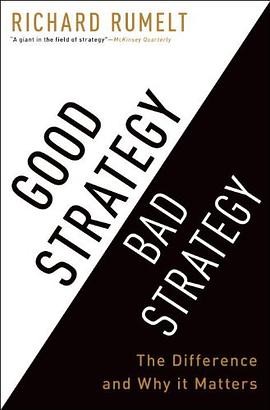

具体描述
Clears out the mumbo jumbo and muddled thinking underlying too many strategies and provides a clear way to create and implement a powerful action-oriented strategy for the real world
Developing and implementing a strategy is the central task of a leader, whether the CEO at a Fortune 100 company, an entrepreneur, a church pastor, the head of a school, or a government official. Richard Rumelt shows that there has been a growing and unfortunate tendency to equate Mom-and-apple-pie values, fluffy packages of buzzwords, motivational slogans, and financial goals with “strategy.” He debunks these elements of “bad strategy” and awakens an understanding of the power of a “good strategy.”
A good strategy is a specific and coherent response to—and approach for overcoming—the obstacles to progress. A good strategy works by harnessing and applying power where it will have the greatest effect in challenges as varied as putting a man on the moon, fighting a war, launching a new product, responding to changing market dynamics, starting a charter school, or setting up a government program. Rumelt’s
nine sources of power—ranging from using leverage to effectively focusing on growth—are eye-opening yet pragmatic tools that can be put to work on Monday morning.
Surprisingly, a good strategy is often unexpected because most organizations don’t have one. Instead, they have “visions,” mistake financial goals for strategy,
and pursue a “dog’s dinner” of conflicting policies and actions.
Rumelt argues that the heart of a good strategy is insight—into the true nature of the situation, into the hidden power in a situation, and into an appropriate response. He shows you how insight can be cultivated with a wide variety of tools for guiding your
own thinking.
Good Strategy/Bad Strategy uses fascinating examples from business, nonprofit, and military affairs to bring its original and pragmatic ideas to life. The detailed examples range from Apple to General Motors, from the two Iraq wars to Afghanistan, from a small local market to Wal-Mart, from Nvidia to Silicon Graphics, from the Getty Trust to the Los Angeles Unified School District, from Cisco Systems to Paccar, and from Global Crossing to the 2007–08 financial crisis.
Reflecting an astonishing grasp and integration of economics, finance, technology, history, and the brilliance and foibles of the human character, Good Strategy/Bad Strategy stems from Rumelt’s decades of digging beyond the superficial to address hard questions with honesty and integrity.
作者简介
(美)理查德·鲁梅尔特, 《经济学人》评他为“当今25位对管理理念和公司行为最具世界影响力的思想家之一”。
麦肯锡公司则将其形容为“战略中的战略家”。
他是加州大学洛杉矶分校约翰·安德森管理学院教授,在著名的欧洲工商管理学院任教多年。他为全球知名跨国公司担任管理咨询,以其多年的企业管理咨询和研究经验,提出关于战略管理的深刻见解,帮助企业理清思路,迎接挑战。
目录信息
读后感
战略管理的书籍很多,经典案例也非常丰富,可惜纵观全世界的企业家们,甚至包括500强的各个行业巨头,犯了“坏战略”错误的现象比比皆是,大家对好战略的标准都可以描述的很准确,为什么很难做出好战略呢?即便战略管理的领导者非常的出色,做出了完美的战略设计,可实际落地也...
评分最近在重读好书,再追加书评。本书《好战略 坏战略》算是一本,2012年入手,2013年读完第一遍写评,2016年再读一遍,追加本评论,以后应该还会读。 如果你是爱思考的人,随着每个人对世界不断理解的加深,对事务的认识也会更加深入,这样好处于可以更清醒地认识我们自己和世界...
评分作者讲述了他多年为很多成功的商业公司作战略顾问的案例,我们所有的人都在每天说,战略,你们公司战略是啥,来,咱们两家公司战略合作一下,这个词很随意在用了。 通过作者的讲述,我们日常说的并不是战略,而是一个目标。真正的战略需要三个基本的核心因素: 一,调查分析 我...
评分 评分什么样的战略是好战略呢?作者认为明智的预测、弱化复杂性的指导方针、设计思维的力量、集中化战略、运用自身的优势、驾驭变革的大潮、竞争对手的惯性与门内部熵等。下面具体说说什么是坏战略、什么是好战略。 坏战略的特点: 空喊口号:例如发挥“中介作用”“以客户为中心” ...
用户评价
“有一本关于商业策略的书,让我脑海里一直挥之不去的是它对‘战略’本质的重新定义。作者似乎在挑战我们对传统战略的固有认知。我记得书中有一段话,大概意思是说,很多所谓的战略家,他们所做的只是在制定计划,而不是在制定战略。计划是关于如何执行的,而战略是关于‘做什么’和‘不做什么’的。这一点我非常赞同。我们经常看到很多企业花了大量的时间和精力去制定五年计划,十年计划,但到头来却发现,市场已经发生了翻天覆地的变化,原有的计划早已失去了意义。这本书就深入剖析了这种现象背后的原因。它指出,很多时候,我们之所以制定出‘坏’的战略,是因为我们混淆了目标和手段,或者我们被眼前的困难和诱惑所蒙蔽,未能看到问题的本质。作者用了很多非常鲜活的例子,比如某个公司因为过度追求规模而忽视了核心竞争力,最终被小而精的竞争对手颠覆。这本书让我意识到,制定战略不仅仅是头脑风暴,更是一种深刻的洞察和选择,它需要勇气去拒绝那些不重要的、分散注意力的事物,去专注于那些真正能带来决定性优势的事情。”
评分“我近期阅读了一本非常引人入胜的商业策略书籍,书中对‘战略’的论述,让我有了耳目一新的感觉。它不仅仅是讲述如何制定一个‘好’的战略,更重要的是,它剖析了导致‘坏’战略的根源。我记得书中反复提到一个观点,那就是‘洞察’。作者认为,一个好的战略,必须建立在对市场、竞争对手以及自身优势的深刻洞察之上。很多时候,企业之所以会陷入战略困境,是因为他们缺乏这种深层的洞察,而只是被一些表面的现象所迷惑。书中有一个非常鲜活的例子,讲的是一家公司,他们为了在竞争激烈的市场中脱颖而出,花费了巨额的资金去进行广告宣传,但效果却微乎其微。后来他们才发现,真正的原因是他们的产品质量存在严重问题,而消费者对产品质量的关注远高于广告宣传。这本书让我深刻地认识到,战略不是空谈,而是基于对现实的准确判断和对机会的敏锐把握。它需要我们摆脱那些陈旧的思维定势,用一种全新的视角去审视我们所面临的挑战,并且勇于做出艰难但正确的选择。”
评分“有这么一本书,它让我彻底改变了对‘战略’的看法。它不像很多商业管理书籍那样,告诉你如何制定一份完美的商业计划,而是教你如何识别和避免那些导致企业失败的‘坏’策略。我至今还记得书中一个关于‘僵化’的观点,作者认为,很多所谓的战略家,他们一旦制定了某种战略,就会固执地坚持下去,即使市场环境已经发生了变化,即使原有的战略已经不再适用。这种‘僵化’是战略失败的重要原因之一。书中列举了许多公司,它们因为未能及时调整战略,而错失了发展的良机,甚至走向了灭亡。这本书强调的是一种‘动态’的战略思维,它需要我们保持警惕,不断地审视和评估我们所处的环境,并且随时准备调整我们的策略。它鼓励我们去拥抱变化,而不是害怕变化。让我印象深刻的是,作者并没有给出太多的‘如何做’的指令,而是通过大量的案例分析,让我们自己去体会‘为什么’。这种‘以终为始’的教育方式,比直接告诉答案更能激发我的思考。”
评分“我最近读到了一本非常有启发的关于商业策略的书,虽然书名我有点记不太清了,但书中的一些观点却深深地烙在了我的脑海里。这本书花了大量的篇幅去区分‘好的’和‘‘坏的’策略。它并没有提供一套放之四海而皆准的战略模板,而是强调了一种思考模式。我印象最深刻的是,作者反复在强调‘诊断’的重要性。也就是说,在制定任何战略之前,你必须首先准确地诊断出问题的本质,找出核心的挑战和障碍。很多时候,我们之所以制定出无效的策略,是因为我们没有真正理解问题的根源,只是在头痛医头,脚痛医脚。书中有一个案例,讲的是一家零售公司,他们发现销售额在下滑,于是就想到了打折促销。但实际上,销售额下滑的真正原因是客户的购物习惯改变了,他们不再喜欢去实体店购物了。如果这家公司没有去诊断出这个根本原因,而只是盲目地打折,那只会加剧亏损。这本书让我意识到,战略不是凭空想象出来的,而是建立在对现实深刻理解的基础之上的。它需要我们具备敏锐的洞察力,能够透过现象看到本质,并且敢于面对残酷的现实。”
评分“我最近读了一本非常有趣的商业策略类书籍,虽然我不太确定书名是什么,但它给我留下了深刻的印象。这本书的核心在于强调‘有效’策略的重要性,并且区分了‘好’与‘坏’的策略。作者通过一系列生动的故事和案例,揭示了许多所谓的‘战略’实际上是混乱、无效甚至适得其反的。我记得书中有一个例子,讲的是一家公司如何试图通过不断地推出新产品来应对市场竞争,结果却因为分散了资源和精力,最终导致全线溃败。这个故事让我对‘聚焦’的力量有了全新的认识。它不像很多市面上讲战略的书那样,充斥着各种抽象的模型和晦涩的理论,而是非常接地气,用大白话就能讲明白。作者反复强调,一个好的策略不应该是一份厚厚的报告,或者一堆华丽的愿景,而应该是一个清晰的、可执行的行动方案,它能明确地告诉你‘我们要做什么,不做什么’,并且能够帮助你避开那些看起来很诱人但实际上是陷阱的机会。这本书让我对‘战略’这个词有了更深刻的理解,不再是那些高高在上的概念,而是实实在在的决策和行动。”
评分尼玛。。我在给出版社翻译这本书啊!!!!!
评分对于好策略的基本结构以及解释非常有帮助 不过干货都在前半 后半基本就是拿故事来填书了
评分能写得更短。
评分泛泛而談
评分很有启发~